

Key Takeaways
- Carry medications and critical health items in your personal carry-on, never in checked luggage.
- A simple checklist approach helps you pack only what you'll genuinely use on your specific trip.
- Lightweight, multipurpose items can significantly reduce bag weight without sacrificing comfort.
- Mobility aids and support equipment should be accounted for first before any clothing is selected.
- Arriving with less to manage reduces physical strain and eases navigation through airports and hotels.
Start With What Cannot Be Left Behind
Before deciding what clothes or comfort items to pack, seniors should identify their non-negotiables first. These are the items that, if forgotten, could genuinely disrupt health, safety, or mobility during the trip.
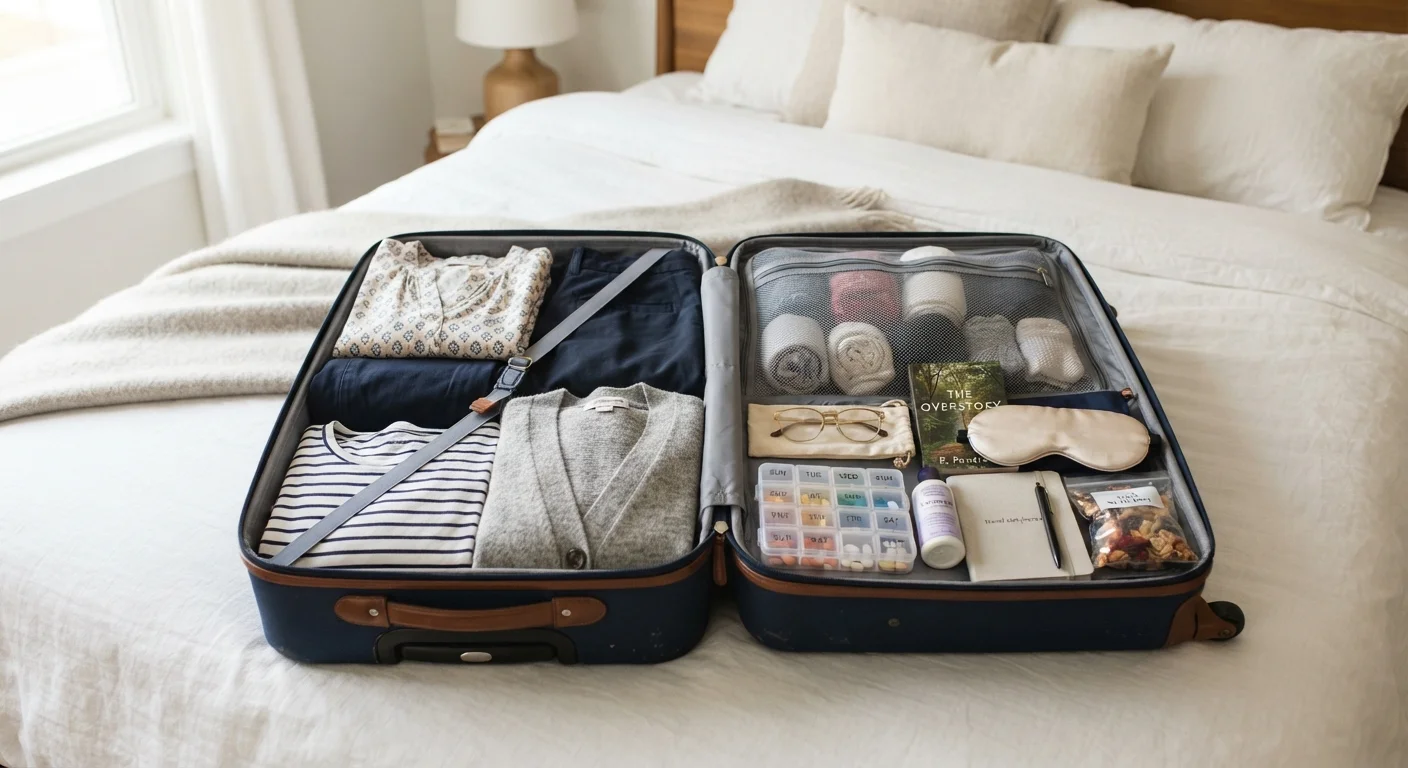
Medications top this list. All prescription medications — including extras to cover delays — should be packed in your carry-on bag, never in checked luggage. See our guide to traveling with medications for TSA documentation tips and storage advice. Alongside prescriptions, include any over-the-counter items you rely on regularly: antacids, pain relievers, or allergy medications.
Mobility aids — including canes, folding walkers, or knee braces — come next. These are protected items under airline regulations and should never be left home to save space. For a fuller picture of what belongs in a senior health kit, our senior travel health kit guide offers a detailed breakdown.
Pack Medications Last — and Check Twice
Medications are the easiest essential to forget when you're focused on clothing and toiletries. Make a habit of packing all prescriptions last, right before zipping your bag, so they're fresh in your mind. Cross-reference against your weekly pill organizer or pharmacy printout to confirm nothing is missing.
Build Your Packing List Around the Specific Trip
Generic packing lists often lead to overpacking. A weekend city visit requires very different items than a two-week cruise or an RV road trip. Tailoring your list to your actual itinerary is the single most effective way to reduce bag weight.
Ask yourself a few straightforward questions before adding any item: Will I use this more than once? Can I access this at my destination if needed? Does this item serve only one purpose?
Write a trip-specific packing list three to five days before departure — not the night before.
Preparing early allows you to think through each day of the trip rather than packing from habit or anxiety. It also gives you time to realize if something you need is out of stock or requires a prescription refill.
Apply the one-in, one-out rule: every item added must justify replacing or removing something already on the list.
This creates a natural ceiling on how much ends up in the bag, forcing deliberate choices rather than gradual accumulation.
Pack clothing that can mix and match across at least three different combinations.
Versatile pieces dramatically reduce the number of items needed without limiting what you can wear. A neutral color palette makes this straightforward to achieve.
Keep your carry-on reserved for health essentials, travel documents, and one change of clothes.
Checked bags can be delayed or lost. Keeping critical items on your person protects against disruption and ensures medications are always accessible.
For cruise-specific packing, our cruise packing checklist for seniors covers what to prioritize. If you're planning an RV trip, the senior RV packing guide addresses space-saving strategies specific to that mode of travel.
Lighten the Load Without Sacrificing Comfort
Reducing luggage weight does not mean giving up comfort. Several practical strategies can meaningfully cut down on what you carry.
50%
Items packed but never used on typical trips
Travel industry surveys consistently find that roughly half of packed items go unused — highlighting the value of list-based, deliberate packing.
15–20 lbs
Common carry-on weight after thoughtful packing
Travel ergonomics guidance generally suggests keeping carried bags within a weight range manageable without strain for older adults, though individual limits vary.
Choose lightweight, wrinkle-resistant fabrics. Merino wool and moisture-wicking blends are packable, breathable, and easy to hand-wash, reducing the number of outfits needed.
Decant toiletries into small refillable containers. Bringing full-size bottles of shampoo or lotion adds surprising weight. Reusable travel-size containers keep things light and TSA-friendly for carry-ons.
Use packing cubes to compress and organize. These keep clothing compact and make it easy to find items without emptying the whole bag — especially helpful for seniors who may find bending or searching physically tiring.
Ship ahead when appropriate. For longer trips, consider shipping bulky items like CPAP machines, extra shoes, or books to your hotel or cruise cabin in advance. Many accommodations will accept packages before your arrival.
For ongoing medication organization while traveling, our medication management guide covers safe storage and time zone considerations.
Do a Test Run Before You Travel
Once your bag is packed, do a quick physical review. Lift the bag — can you comfortably manage it through an airport, on stairs, or over uneven pavement? If not, it's too heavy. A general guideline used by many travel health professionals is that a travel bag should feel manageable when fully packed, though individual ability varies. If you're uncertain, consult your healthcare provider about safe lifting limits based on your own health.
Lay everything out on a bed and walk through your itinerary day by day. Remove any item you can't picture using on a specific day. This exercise alone typically reveals several things that seemed necessary but aren't.
For broader travel health tips or travel safety strategies, our hub pages offer additional resources to help you prepare with confidence.
This article provides general travel planning information only. Consult your healthcare provider about any health-related packing needs, medication requirements, or physical limitations before traveling.