

| Recommended minimum door width | 24 inches (28–32 inches for walker users) (ADA residential guidelines, used as a reference benchmark) |
| Maximum safe single step rise | 7 inches (Standard residential stair-building code reference) |
| Grab bar load rating to look for | 250 lbs. minimum (General safety engineering guidance) |
| Ideal aisle width for walker use | 30 inches or more (Accessibility planning guidance) |
| Low-threshold shower step height | 2 inches or less (Commonly cited in accessible design references) |
| Overhead storage reach limit | 48 inches from floor (ADA reach range guidelines, applied as reference) |
Why Accessibility Features Matter Before You Commit
Choosing the right RV is one of the most consequential decisions a senior traveler makes — and accessibility features are often the detail that separates a comfortable trip from an exhausting one. Whether you're renting for a single season or purchasing for the long term, evaluating these features systematically saves time, money, and frustration on the road.
This reference guide covers the specific features worth requesting, inspecting, and prioritizing. For a broader look at how floor plan shapes affect daily movement, see our guide to RV layouts for older adults with mobility considerations. If you're also weighing RV travel against hotel stays, the accessibility features that actually matter in a hotel room offers a useful comparison point.
| Recommended minimum door width | 24 inches (28–32 inches for walker users) (ADA residential guidelines, used as a reference benchmark) |
| Maximum safe single step rise | 7 inches (Standard residential stair-building code reference) |
| Grab bar load rating to look for | 250 lbs. minimum (General safety engineering guidance) |
| Ideal aisle width for walker use | 30 inches or more (Accessibility planning guidance) |
| Low-threshold shower step height | 2 inches or less (Commonly cited in accessible design references) |
| Overhead storage reach limit | 48 inches from floor (ADA reach range guidelines, applied as reference) |
Entry and Exterior: The First Test
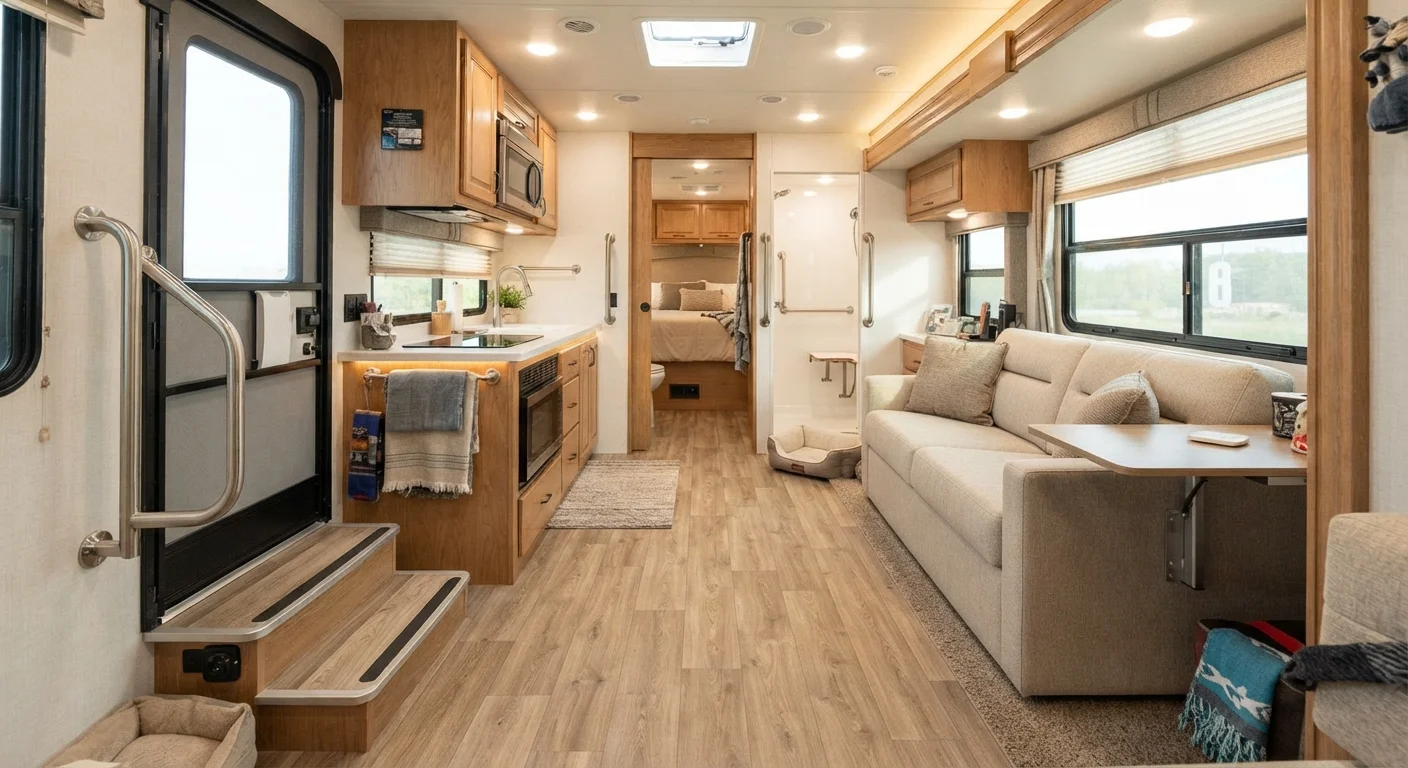
Entry steps are among the most common sources of falls in RV travel. When evaluating a unit, count the number of steps and note their individual rise height — ideally no single step should exceed seven inches. Look for:
- Grab bars or handrails on both sides of the entry stairwell, firmly anchored to the frame rather than the door panel
- Step lighting for nighttime use, either built-in or easily added via battery-operated LEDs
- Powered entry steps that retract automatically and deploy at a lower angle than manual alternatives
- Non-slip step surfaces, either textured rubber or aftermarket grip tape
For renters, confirm that the rental unit's steps are in good working condition before accepting delivery. Ask specifically whether the handrail is load-bearing or decorative.
Grab bar
A fixed bar mounted to a wall or frame designed to provide a secure handhold during movement. In an RV context, grab bars near steps, in showers, and beside toilets are critical safety features — look for models anchored into structural framing, not just the wall panel.
Low-threshold shower
A shower enclosure with a minimal or flush entry curb, reducing the need to step over a raised edge. Thresholds of two inches or less significantly lower trip risk for older adults.
Comfort-height toilet
A toilet with a seat height between 17 and 19 inches from the floor, similar to a standard chair. This height makes sitting and standing easier for people with limited knee or hip mobility compared to standard 15-inch RV toilets.
Slide-out
A section of the RV that extends outward when parked to increase interior living space. When evaluating accessibility, consider how slide-outs affect aisle width both when deployed and retracted.
Rollator
A wheeled walking frame with handlebars and often a built-in seat. Rollators require wider clearances than standard canes — typically 28 inches minimum — making door widths and aisle dimensions especially important for users.
Powered entry steps
Motorized steps that extend and retract automatically, often at a shallower angle than manual folding steps. These can reduce the physical effort and tripping risk associated with boarding and exiting the RV.
Bathroom and Sleeping Area Features
The bathroom is typically the most space-constrained area in any RV, making accessibility features here especially important. Key items to inspect:
- Door width: A clear opening of at least 24 inches allows comfortable passage; 28–32 inches accommodates a rollator walker. Sliding or barn-style doors remove swing clearance problems entirely.
- Grab bars in the shower and near the toilet: Look for bars rated to hold at least 250 lbs., positioned at heights that aid lowering and rising — not just decorative rails.
- Walk-in or low-threshold shower: A step-in curb of two inches or less dramatically reduces trip risk.
- Raised or comfort-height toilet: Standard RV toilets often sit lower than residential models; a raised seat adapter can compensate.
In the sleeping area, look for a bed frame low enough to sit on comfortably without stepping up, or verify there's a sturdy bedside surface for leverage. Fixed queen or king beds with aisle access on both sides are generally preferred over slide-out or bunk configurations.
After purchase or rental, many seniors make targeted modifications to further improve safety. Our article on RV comfort modifications worth making as you age covers practical upgrades like non-slip flooring and improved lighting.
36%
Adults 65+ who fall each year
According to the U.S. Centers for Disease Control and Prevention, roughly one in three older adults experiences a fall annually, underscoring why step and floor safety in RVs matters.
80%
Falls occurring at home or familiar environments
CDC injury data suggests most older adult falls happen in everyday settings, reinforcing the need to treat an RV interior with the same safety planning as a primary residence.
Interior Clearances and Kitchen Usability
Beyond the bathroom, evaluate how freely you can move through the main living space. A minimum 24-inch aisle width allows single-file movement; 30 inches allows easier maneuvering with a cane or walker. Note where slide-outs fall — when closed for travel, do they narrow the aisle significantly?
In the kitchen, counter height and storage reach matter. Overhead cabinets placed above 48 inches can be difficult to access safely without a step stool. Pull-out shelves, deep drawers, and lazy-Susan corners reduce the need to reach or bend awkwardly. A residential-style refrigerator with a bottom freezer is generally easier to use than a top-freezer unit.
Flooring deserves particular attention. Smooth laminate or vinyl can be slippery when wet; look for textured surfaces or area rugs with non-slip backing. Transitions between flooring types — a common feature where the slide-out meets the main floor — should be flush or beveled, not raised.
Your campground choices matter just as much as the RV itself. Accessibility features to look for when choosing RV campgrounds outlines what to look for in the site, not just the vehicle. You can also find a fuller range of comfort and safety priorities in our Senior RV Living hub.
Ask Before You Rent or Sign
When renting, accessibility features may not be listed in the standard unit description. Contact the rental provider directly with a written list of your requirements — step height, grab bar placement, door widths — and request photos or a video walkthrough before committing. For purchases, bring a tape measure and a mobility aid (if applicable) to any in-person inspection. Features that look adequate in photos can prove inadequate in person.