

Key Takeaways
- Inside cabins cost less but lack natural light — a real drawback on longer voyages.
- Oceanview cabins offer daylight without the premium price of a balcony.
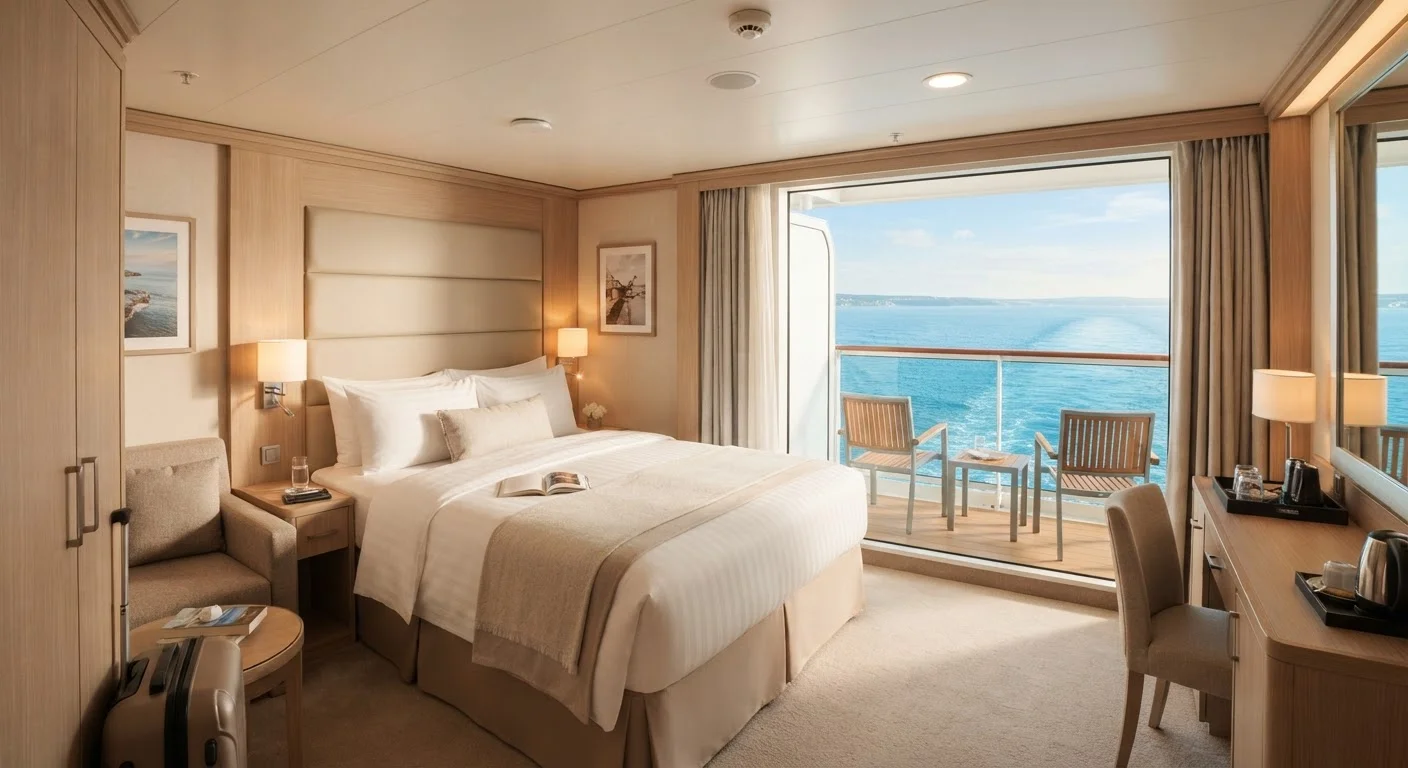
- Balcony cabins provide private outdoor space, highly valued by seniors who prefer fresh air and rest at sea.
- Suites offer the most space and amenities, including priority boarding and dedicated service.
- Accessibility features vary by cabin type and must be confirmed directly with the cruise line before booking.
Our Verdict
Each cabin category serves a different traveler profile. For seniors prioritizing comfort on a moderate budget, balcony cabins offer the strongest combination of space, natural light, and private outdoor access. Those with specific mobility needs should confirm accessible room availability regardless of category chosen.
| Best for | Recommended |
|---|---|
| Travelers watching their budget on shorter sailings | Inside Cabin |
| Those who want daylight without paying for a balcony | Oceanview Cabin |
| Seniors prioritizing fresh air, rest, and scenic viewing from their room | Balcony Cabin |
| Travelers valuing maximum space, privacy, and premium service | Suite |
Why Cabin Category Matters More for Senior Travelers
Where you sleep on a cruise ship shapes far more than just your nights. The cabin you choose affects how rested you feel, how easily you move around the ship, and how much of the voyage you actually enjoy. For senior travelers — especially those managing mobility considerations or simply seeking a calmer, more restorative experience — cabin selection deserves careful thought.
The four main categories are inside, oceanview, balcony, and suite. Each involves tradeoffs in price, space, natural light, and onboard access. This breakdown is designed to help you weigh those tradeoffs honestly, so you can match the cabin to your travel style and needs rather than to marketing language.
For a broader overview of how to plan your entire voyage, see our senior cruising comfort guide.
The Four Cabin Categories at a Glance
Before diving into detail, here is how the four categories compare across the criteria that matter most to senior travelers.
| Inside Cabin | Oceanview Cabin | Balcony Cabin | Suite | |
|---|---|---|---|---|
| Natural light | None | Window or porthole | Full glass door + balcony | Full windows, often large |
| Private outdoor space | No | No | Yes — private balcony | Yes — often larger balcony |
| Typical room size | Smallest | Small to moderate | Moderate | Largest |
| Relative cost | Lowest | Low to moderate | Moderate to higher | Highest |
| Accessible cabin availability | Often available | Often available | Limited — confirm early | Very limited — book early |
| Best voyage length | Short sailings | Short to medium | Any length | Any length |
| Added services | Standard | Standard | Standard | Butler, priority boarding, exclusive dining |
Prices, layouts, and specific features vary considerably between cruise lines and ship classes. Always verify current details directly with the cruise line or a licensed travel agent.
Inside and Oceanview Cabins: Budget-Friendly with Real Limitations
Inside Cabins
Inside cabins have no windows or portholes. They are the most affordable option and tend to be the smallest in square footage. The lack of natural light can disrupt sleep rhythms — particularly relevant for older travelers who already experience changes in circadian patterns. On a short three- or four-night sailing, this is manageable. On a seven-night or longer voyage, the absence of daylight can feel genuinely disorienting.
On the positive side, inside cabins are typically very dark and quiet, which some travelers find helps them sleep deeply. If you plan to spend most of your time on deck or in port, an inside cabin may be a practical choice.
Oceanview Cabins
Oceanview cabins include a fixed porthole or picture window, providing natural light and a sense of connection to the sea without outdoor access. They cost more than inside cabins but meaningfully less than balconies. For seniors who value waking to daylight but don't feel they'll use a private balcony frequently, oceanview cabins can represent sensible value.
Note that portholes on lower decks sometimes sit at or near the waterline, limiting the actual view. When booking, confirm the window type and deck location.
Request a Mid-Ship, Mid-Deck Cabin
When booking an inside or oceanview cabin, ask specifically for a mid-ship location on a middle deck. These positions experience the least ship movement, which can significantly reduce discomfort for those sensitive to motion at sea. Avoid cabins at the very front (bow) or back (stern) of the ship if stability is a priority.
Balcony Cabins: The Senior Traveler's Sweet Spot
Balcony cabins — sometimes called veranda cabins — include a private outdoor space accessed through a sliding or hinged glass door. For many senior travelers, this is the single most important upgrade available. You can step outside for fresh sea air, watch coastlines approach at sunrise, or simply sit quietly without navigating crowded public decks.
Balconies also provide natural ventilation, useful for those who prefer not to rely solely on ship air conditioning. The outdoor space offers a private resting option, which matters on sea days when public lounges fill quickly.
From an accessibility standpoint, balcony doors typically have a raised threshold (the lip at the base of the door frame). If you use a walker, wheelchair, or have balance concerns, ask the cruise line specifically whether accessible balcony cabins with flush or low thresholds are available. For more detail on what to look for, see our guide to cabin accessibility features.
Suites: Maximum Comfort, Maximum Cost
Suites occupy the top tier of cabin categories. They vary widely — from junior suites that add a seating area and slightly more floor space, to full suites with separate bedrooms, butler service, priority embarkation, and access to exclusive lounges or dining venues.
For seniors with significant mobility needs, suites often offer the largest accessible cabin options on a ship, including wider doorways, roll-in showers, and more maneuvering room. However, accessible suite availability is limited and books early. Reserving well in advance and communicating mobility requirements directly to the cruise line is strongly advisable.
The cost premium for suites is substantial. Whether that premium is worthwhile depends on how much time you anticipate spending in your cabin and how much the added services — dedicated dining, concierge support, and priority access — matter to you on a day-to-day basis.
If you're considering how cabin size and layout compare to hotel room choices for longer stays on land, our suite vs. standard room comparison applies many of the same principles.
30–50%
Typical suite price premium over balcony cabin
Suite pricing varies widely by cruise line and ship class; this range reflects general industry patterns rather than a guaranteed figure.
~160 sq ft
Typical inside cabin floor area
Standard inside cabin sizes vary by ship; accessible inside cabins are generally larger to accommodate mobility equipment and turning space.
What to Confirm Before You Book
Regardless of category, several questions are worth raising directly with your cruise line or travel agent before finalizing a reservation:
- Cabin location on the ship: Midship cabins on lower-to-middle decks experience the least motion in rough seas — a meaningful consideration for those prone to seasickness or balance sensitivity.
- Proximity to elevators: Shorter walks from elevator to cabin reduce fatigue, especially after long port days.
- Accessible cabin specifications: If you have mobility needs, request written confirmation of features such as grab bars, shower chair availability, and threshold heights.
- Noise levels: Cabins near nightclubs, theatres, or engine rooms can be disruptive. Ask about specific deck positions when possible.
For practical guidance on staying comfortable throughout your cruise — not just in your cabin — visit our Cruise Comfort Tips hub.
This article provides general educational information about cruise cabin categories. Specific cabin layouts, features, prices, and accessible options vary by cruise line and ship. Always verify details directly with your cruise provider before booking. This content is not a substitute for personalised travel or medical advice.