

Key Takeaways
- Suites offer more square footage but do not automatically include the accessibility features seniors may require.
- Standard rooms are more likely to have ADA-compliant accessibility configurations readily available.
- Longer stays of a week or more often justify a suite's extra space and self-catering potential.
- Always confirm specific accessibility features directly with the hotel before booking any room type.
- Room layout, bathroom configuration, and furniture arrangement matter more than overall size alone.
Option A
Suite
The spacious, multi-room option with living and sleeping areas.
Best for: Seniors on extended stays who need room to move, rest, and self-cater without feeling confined.
Option B
Standard Room
The efficient, familiar layout found in nearly every hotel.
Best for: Seniors on shorter trips who prioritize predictability, proximity to elevators, and verified accessibility features.
If you're staying five or more nights and need a dedicated space to rest and recharge
Suite
A separate sitting area reduces the cabin-fever feeling of a single room and allows one travel companion to be active while the other rests.
If mobility aids or roll-in shower access are non-negotiable requirements
Standard Room
ADA-compliant accessible rooms are most consistently available in standard configurations; suites may not share the same bathroom layout.
If you're traveling with a family member or caregiver who needs separate sleeping space
Suite
A suite with distinct sleeping zones provides privacy and reduces disruption for both the senior traveler and their companion.
If you want the most predictable, lowest-friction hotel experience on a short trip
Standard Room
Standard rooms are consistent across visits, easier to navigate in unfamiliar hotels, and often closer to key amenities like elevators.
How Suite and Standard Rooms Actually Differ
A standard room is the baseline hotel offering: one room that contains a bed, a bathroom, and basic furnishings. Square footage typically ranges from 250 to 400 square feet, depending on the property. Everything is within a short walk — which can be helpful or limiting, depending on your needs.
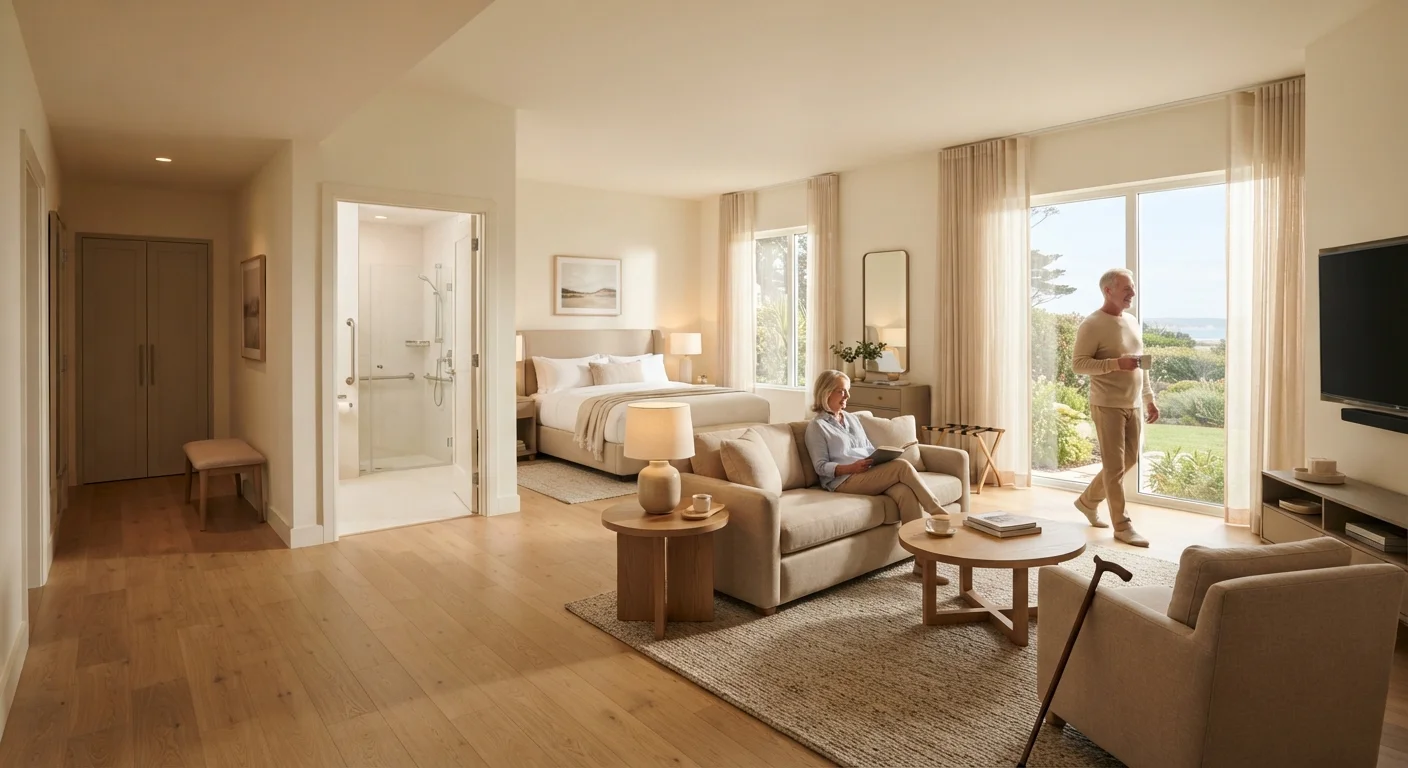
A suite — in its most common form — adds a separate living area, often a kitchenette or wet bar, and sometimes a second bathroom. Sizes vary widely, from 500 to well over 1,000 square feet in upscale properties. The additional rooms create distinct zones for sleeping, sitting, and sometimes light meal preparation.
For context on how these differences play out in a cruise setting, the cabin category breakdown offers a comparable look at space trade-offs in a marine environment. The core question is similar: does extra space translate into practical comfort for your travel style?
| Criterion | Suite | Standard Room |
|---|---|---|
| Typical size | 500–1,000+ sq ft | 250–400 sq ft |
| ADA accessible options | Less common, confirm directly | More reliably available |
| Separate sleeping zone | Yes, in most configurations | No — single combined space |
| Kitchenette access | Often included | Rarely included |
| Step-free layout | Not guaranteed — verify | More consistently level |
| Best stay length | 5+ nights | 1–4 nights |
| Caregiver accommodation | Separate sleep space available | Limited — sofa bed only |
The Accessibility Gap No One Warns You About
Here's the issue many seniors encounter only after arriving: more space does not mean better accessibility. In US hotels, ADA-compliant accessible rooms are designated configurations — specific bathrooms with roll-in showers or tub grab bars, lowered furniture, and cleared turning radii. These are most reliably found in standard room categories, because that's where hotels allocate their accessible inventory.
Suites are often designed with aesthetics and luxury in mind. A larger bathroom may have a soaking tub but no grab bars. A wide living area may still have a narrow bathroom doorway. Steps between suite levels — common in split-level designs — can be a serious obstacle for anyone using a cane, walker, or wheelchair.
Before assuming a suite's size makes it more senior-friendly, review the accessibility features that actually matter and ask the hotel directly whether the suite you're considering meets those criteria.
28%
Hotel guests who are age 60 or older
The American Hotel & Lodging Association has reported that older adults represent a substantial and growing share of hotel occupancy across the US.
1 in 4
US adults living with a disability
According to the CDC, approximately one in four US adults has some form of disability — many of whom require specific room features when traveling.
When Extra Space Genuinely Helps on Longer Stays
Despite the accessibility caveat, there are real, practical reasons why a suite can be the right call — particularly when the stay extends beyond a few nights. Extended hotel stays introduce logistics that a single standard room handles poorly: where do you store medication that needs refrigeration? Where does a caregiver sleep without disrupting your rest? Where do you sit comfortably when you're not in bed but not ready to leave the room?
A suite's kitchenette can also support dietary needs — heating a specific meal, keeping preferred snacks, or simply making morning coffee without calling room service. For seniors managing chronic conditions that affect diet, this level of control can be genuinely valuable.
The Comfort & Rest hub explores how rest quality during travel affects overall wellbeing — and how room environment plays a direct role. A suite's quieter sleeping zone, separated from a TV-equipped living area, can meaningfully improve sleep on multi-night stays.
Making the Right Call Before You Book
The decision comes down to three factors: length of stay, specific accessibility needs, and travel companions. Use the room-by-room accessibility checklist to evaluate any room type before confirming a reservation.
When calling to confirm details, ask specifically:
- Does this suite have a step-free entrance and bathroom?
- Is the bathroom equipped with grab bars and a roll-in or walk-in shower?
- What is the bed height, and can it be adjusted?
- How far is the suite from the nearest elevator?
Floor placement matters too. The ground floor vs. high floor comparison addresses how elevator dependence and noise levels interact — factors that apply whether you're in a suite or a standard room.
If you're comparing hotel types as well as room types, the independent vs. chain hotel comparison explains why chain properties often offer more standardized accessibility inventory, which can simplify the confirmation process considerably.
This article provides general travel planning information. Accessibility features, room configurations, and availability vary by property. Always confirm details directly with your hotel before booking.