
Before You Book: A Room-by-Room Accessibility Checklist for Senior Hotel Stays

Key Takeaways
- Accessibility features vary widely between hotels — always verify before confirming a reservation.
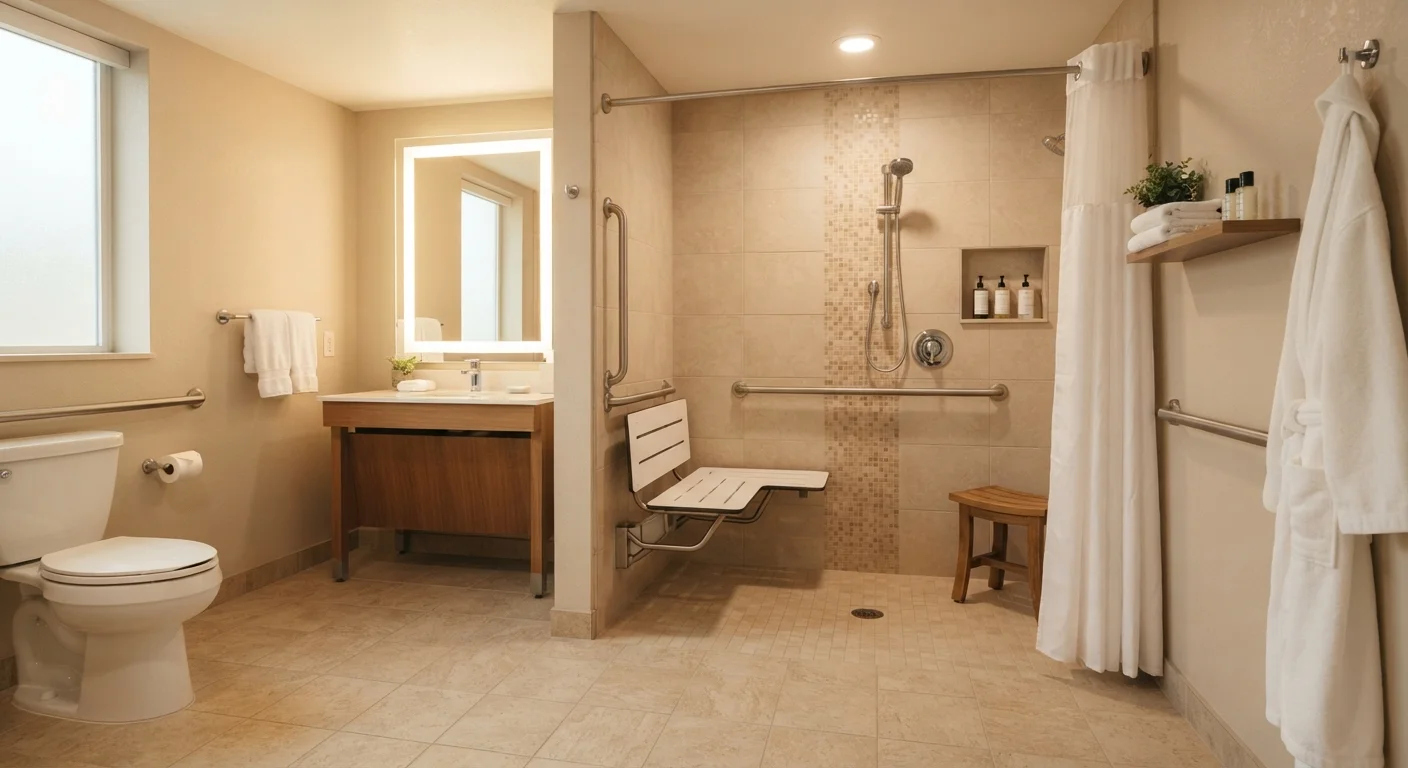
- The bathroom is the highest-risk area in any hotel room; prioritize it in your evaluation.
- Bed height, lighting, and door width are frequently overlooked but significantly affect comfort and safety.
- A brief phone call to the hotel can confirm details that aren't visible in online listings.
- Mobility aid users need to assess room layout and turning radius, not just doorway width.
Summary
24 items · 20–35 minutes
Why This Checklist Matters Before You Book
Hotel listings often describe a room as "accessible" without clarifying what that actually means in practice. A room with one grab bar in the bathroom may technically qualify, yet still pose real challenges for a traveler who uses a walker or has limited balance. The gap between what's advertised and what's usable is exactly where this checklist helps.
Working through these items before you confirm a booking — not after you arrive — gives you time to ask questions, request a different room type, or choose a different property entirely. For a deeper look at which physical features carry the most weight, see our guide on accessibility features that actually matter in a hotel room.
Use the categories below to evaluate each area of a potential room systematically. Not every item will apply to every traveler, so focus on the areas most relevant to your own mobility, vision, or health needs.
Hotel's accessibility information page or ADA disclosure
Provides the baseline list of accessibility features the property claims to offer — your starting point for cross-referencing this checklist.
Guest review platforms (filtered for accessibility mentions)
Surfaces real-guest experiences with room accessibility, elevator reliability, and staff responsiveness to special requests.
Hotel phone or email contact
Allows you to ask specific follow-up questions that online listings don't answer, such as exact bed heights or shower seat availability.
Measuring tape or room dimension reference card
Useful on arrival to quickly verify that doorways and floor clearances meet your mobility aid requirements.
Room-by-Room Accessibility Checklist
Work through each category below when reviewing hotel listings, reading through amenity descriptions, or speaking directly with hotel staff. Check off items that are confirmed, and flag any that need follow-up before you finalize your reservation.
Bathroom Safety
Bed and Sleep Area
Doorways and Room Navigation
Lighting and Visual Clarity
Common Areas and Building Access
"Accessible Room" Doesn't Mean the Same Thing Everywhere
In the United States, the Americans with Disabilities Act (ADA) sets minimum accessibility standards for hotels, but older properties or those with limited renovations may only partially comply. Always ask specifically which features are present in the room you're reserving — not just whether an "accessible" category exists. A room described as ADA-compliant online may still vary in grab bar placement, shower type, or bed height.
If you're traveling with a walker, wheelchair, or scooter, room layout and turning radius matter as much as individual features. Our guide on hotel stays with mobility aids covers what to confirm in advance for those situations.
Once you've worked through this checklist, a short call to the hotel can confirm any outstanding details. Our article on calling ahead to ask the right questions offers a ready-made list of what to raise with hotel staff before arrival.
How to Use Your Findings
Once you've reviewed a property against this checklist, you'll likely fall into one of three situations: the room clearly meets your needs, there are a few gaps worth confirming by phone, or there are too many unknowns to book with confidence.
For the middle scenario, a direct call to the hotel is often the most efficient path forward. Staff can frequently offer room photos, confirm specific measurements, or note whether a particular accessible room has already been reserved.
Reading guest reviews with a focused eye can also fill in gaps that official listings miss. Learn how to filter and interpret reviews for senior-specific concerns in our article on reading hotel reviews as a senior traveler.
Finally, keep in mind that room-level accessibility is only part of the picture. The surrounding destination — its terrain, infrastructure, and proximity to medical services — also affects how comfortable and safe your trip will be. Our guide to evaluating accessible destinations covers these broader factors.
Request the Accessible Room in Writing
When you call to confirm accessibility features, follow up with an email or written request summarizing what was promised — accessible room number if possible, specific equipment like a shower chair, and your arrival date. Verbal assurances can be lost in shift handovers. Having a written record gives you a clear reference point if something is incorrect when you check in.