
Accessible Destinations and Safe Environments: What Seniors Should Evaluate Before Booking

Key Takeaways
- Healthcare proximity is one of the most critical — and most overlooked — factors when choosing a senior travel destination.
- Terrain, pavement quality, and public transit reliability directly affect how comfortable and safe daily movement will be.
- Checking government travel advisories and local emergency infrastructure should be part of every pre-booking checklist.
- Accessible accommodations vary widely even within the same city — verify specific room features before confirming.
- Travel insurance tailored to pre-existing conditions adds an important safety net when health emergencies arise abroad.
Why Destination Evaluation Matters More as You Age
Choosing a destination is rarely just about scenery. For senior travelers, the physical environment of a place — its terrain, infrastructure, healthcare system, and emergency readiness — can determine whether a trip feels relaxing or exhausting, safe or stressful.
Many travelers focus on attractions and hotel photos, but skip the practical questions that matter most: How far is the nearest hospital? Are the sidewalks even? What happens if a mobility aid breaks down? Taking time to evaluate these factors before booking gives you far more control over how your trip unfolds.
This guide walks through the key areas to assess, so you can choose destinations where the conditions genuinely support a comfortable, safe experience. For a broader look at what makes a place work well for older visitors, see our guide on what makes a country truly senior-friendly.
Healthcare Access and Emergency Readiness
The most important question to ask about any destination is: what happens if something goes wrong medically? This isn't pessimism — it's responsible planning.
1 in 4
US adults aged 65+ fall each year
According to the CDC, falls are the leading cause of injury among older adults — making terrain assessment a critical part of destination planning.
Over 50%
Of seniors report travel anxiety related to health concerns
Research published by AARP has consistently found that health and safety concerns are among the top barriers to international travel for adults over 65.
Before booking, research whether your destination has a hospital or urgent care clinic within a reasonable distance of where you'll be staying. In rural or remote areas, the nearest facility with English-speaking staff or advanced cardiac care may be hours away. For seniors managing chronic conditions, that gap can be significant.
Also consider the quality and availability of local emergency services. Some international destinations have excellent private hospitals in tourist zones but limited public emergency coverage outside those areas. Knowing the distinction matters. Our Travel Health Tips hub offers guidance on preparing medically for trips of all kinds.
Travel insurance with medical evacuation coverage is worth understanding before any international trip. General information on coverage types can help you ask better questions of a licensed insurance adviser — but always read actual policy documents carefully, as terms vary widely by provider and situation.
Terrain, Walkability, and Physical Environment
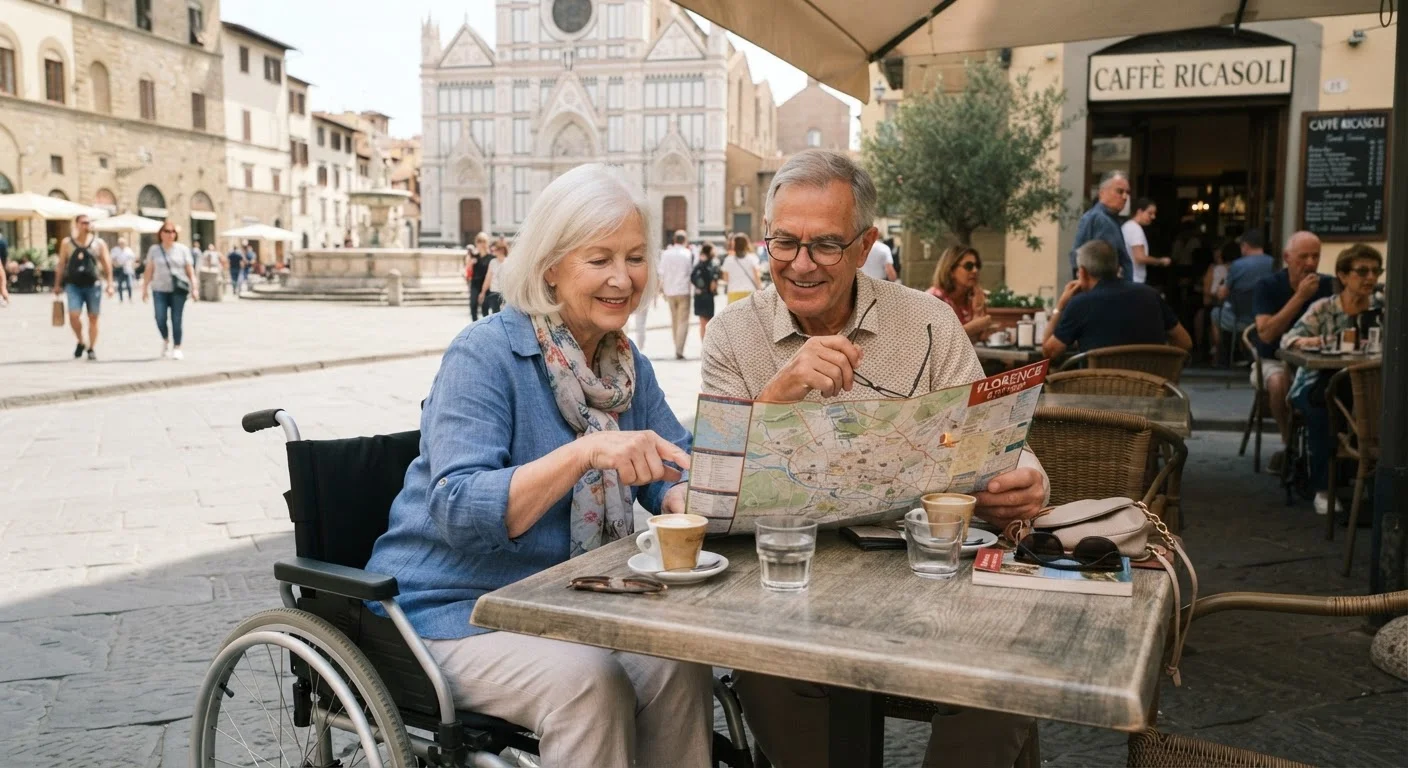
A destination can look beautiful in photos and be genuinely difficult to navigate on foot. Cobblestone streets, steep hills, unpaved paths, and broken pavement are common in many popular destinations — and they pose real fall risks for older travelers.
Research pavement and terrain conditions before committing to a destination
Uneven surfaces, steep inclines, and cobblestones are leading causes of falls for older travelers. Knowing what the ground looks like day-to-day helps you plan appropriate footwear, pacing, and whether mobility aids will work effectively.
Confirm public transit accessibility, including step-free boarding options
Even if you plan to walk, having reliable accessible transit as a backup reduces fatigue and gives you safe options when energy runs low or weather changes unexpectedly.
Identify the nearest hospital or urgent care facility to each planned accommodation
Response time matters in a medical emergency. Knowing where the nearest suitable facility is — and how to reach it — is basic preparation that most travelers skip until they need it.
Assess climate conditions and how they affect physical exertion at your destination
High altitude, extreme heat, or high humidity can significantly affect cardiovascular health and energy levels. These factors are especially relevant for seniors with heart conditions or respiratory concerns — always discuss travel plans with your healthcare provider.
Before booking, look for information on a city's walkability and terrain. Some destinations have invested significantly in accessible tourism infrastructure. Others — including many historic European centers — prioritize preservation over accessibility. Our article on destinations that have built accessibility into their tourism infrastructure outlines what to look for.
If you're considering a destination with mixed terrain, like Sedona, Arizona, check whether accessible shuttle options or paved trail alternatives exist. Our guide on what older travelers should know about Sedona covers this specifically.
Accommodation Safety and Accessibility
Even in an accessible destination, your hotel room can undermine everything. Grab bars, step-in versus roll-in showers, bed height, elevator reliability, and room location relative to exits all affect daily comfort and safety.
Call the Hotel Directly to Verify Accessibility
Online listings often use accessibility terminology loosely. Before you confirm any reservation, call the property and ask specific questions: Is there a roll-in shower? Does the elevator reach all floors? How far is the room from the entrance? You can find a full list of questions to ask in our guide on accessibility questions every senior traveler should ask.
Don't rely on photos or the label "ADA compliant" alone — these don't always translate to genuine comfort for older guests. Our guide on what ADA compliant really means for seniors explains what the designation covers and where it falls short.
Before confirming, use a room-by-room checklist to verify specific features. You can find a practical version in our room-by-room accessibility checklist for senior hotel stays. Also consider reading filtered reviews — our guide on reading hotel reviews as a senior traveler explains how to spot the details that matter most.
Safety Environment and Local Context
Personal safety extends beyond health — it includes the political stability of a destination, crime patterns in specific neighborhoods, and how well local systems support tourists in difficulty.
Check your government's official travel advisory page for any destination you're considering. In the US, the State Department publishes regularly updated advisories at travel.state.gov. These cover safety levels, entry requirements, and local emergency contacts — and should be verified close to your departure date, as conditions can change.
Consider also the pace and culture of a destination. Some cities are fast-moving and loud, with limited rest areas and long walking distances between attractions. Others are naturally slower-paced, with good public seating, accessible transit, and a culture that tends to be accommodating toward older visitors. For US-based options, our guide on what makes a US city genuinely senior-friendly outlines the factors that define a truly supportive environment.
Finally, if you're also evaluating flights as part of your destination decision, see our guide to booking a senior-friendly flight for what to consider before you confirm.
This article is for general informational purposes only and does not constitute medical, legal, financial, or insurance advice. Always consult qualified professionals and verify travel conditions with official sources before booking.