

Key Takeaways
- Walkability, flat terrain, and accessible transit are the most practical markers of a senior-friendly US city.
- Proximity to quality healthcare matters especially for seniors managing chronic conditions while traveling.
- Mild, stable climate reduces weather-related physical stress and broadens the travel season for older adults.
- Senior discounts on transit, museums, and attractions are a useful but secondary consideration.
- Safety, neighborhood character, and the presence of rest areas all shape the real travel experience.
- No single city is universally ideal — matching a city's strengths to your personal needs is key.
Senior-Friendly US City
A senior-friendly US city is one that supports older adults' comfort, safety, and independence through thoughtful infrastructure, accessible transportation, proximity to healthcare, and a manageable physical environment. It's a place where aging visitors — and residents — can move around, find services, and enjoy daily life without undue physical strain or logistical frustration. The concept goes beyond a single amenity: it reflects an overall ecosystem that considers the real-world needs of people over 60.
Urban planners often use the term 'age-friendly city,' a framework developed by the World Health Organization, to evaluate these qualities across eight domains including outdoor spaces, transportation, housing, and social participation.
Why 'Senior-Friendly' Means More Than a Wheelchair Ramp
The phrase "senior-friendly" gets used loosely in travel writing, but it represents a genuinely complex mix of qualities. A city might have excellent museums with elevator access yet lack safe sidewalks between them. Another might offer beautiful, flat streets but sit at high altitude — a challenge for anyone with cardiovascular concerns. Understanding what the term actually means helps seniors and their families make better, more personalized decisions.
True senior-friendliness is systemic. It shows up in urban planning choices, healthcare infrastructure, transit investments, and even the pace of local life. For travelers, it's also about what a city feels like to move through — not just what's technically available on paper.
For a broader starting point, Senior Travel in the US: A First-Timer's Orientation covers the wider landscape of domestic travel considerations for older adults.
The AARP Age-Friendly Network
The AARP has partnered with the World Health Organization's global Age-Friendly Cities initiative to recognize US communities formally committed to improving conditions for older adults. Membership in this network signals intent and planning effort, though the depth of implementation varies. It can serve as a useful starting filter when researching destinations, but always verify current conditions on the ground.
The Core Factors That Define Senior Accessibility in US Cities
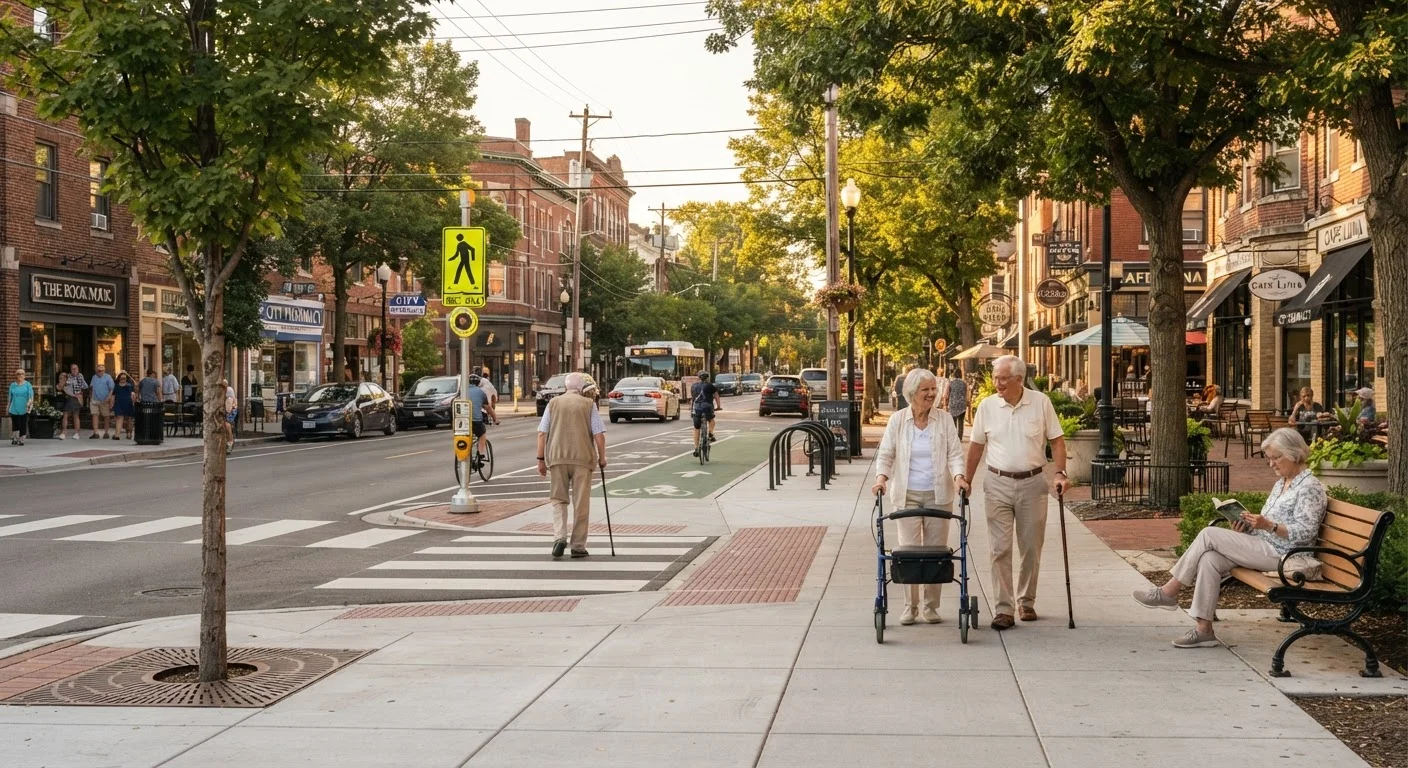
Walkability and terrain: Flat, well-maintained sidewalks with curb cuts, benches for rest, and pedestrian signals with adequate crossing time are foundational. Hilly cities — while scenic — can create real barriers for seniors with joint issues or limited stamina. Walk Score data provides a useful starting benchmark, though ground-level exploration (or recent traveler accounts) fills in what scores miss.
Public transportation: Cities with reliable, accessible bus and light-rail systems allow seniors to travel without renting a car or navigating ride-share apps. Look for systems with low-floor boarding, audio announcements, and senior fare programs. A transit system that's easy to understand matters as much as one that's technically comprehensive.
Healthcare proximity: For seniors managing chronic conditions, knowing that a hospital or urgent care center is within a reasonable distance provides essential peace of mind. Cities with major medical centers and a dense network of pharmacies give travelers a practical safety net.
Climate: Mild temperatures, low humidity, and minimal extreme weather events reduce physical stress and expand the window for comfortable travel. That doesn't mean seniors should avoid all cold-weather cities — but it's worth understanding how seasonal conditions align with personal health factors.
10,000+
Americans turning 65 every day
According to the US Census Bureau, approximately 10,000 Baby Boomers reach age 65 daily, making senior-accessible infrastructure an increasingly pressing urban planning priority.
79%
Seniors who cite walkability as a top travel priority
AARP public policy research has consistently found that walkable neighborhoods rank among the highest priorities for older Americans when evaluating places to live and visit.
Over 500
US communities in AARP's Age-Friendly Network
As of recent AARP reporting, more than 500 US cities, towns, and counties have formally joined the AARP Network of Age-Friendly States and Communities.
Neighborhood character: Compact, pedestrian-oriented neighborhoods with mixed-use retail — where a traveler can find a coffee shop, pharmacy, or rest spot within a few blocks — are far more practical than sprawling districts designed around cars.
Real-World Examples of What These Factors Look Like
For seniors curious about how US city accessibility compares internationally, Europe's most accessible cities for senior travelers offers a useful point of comparison. And if your travel style involves RVs rather than city hotels, what makes an RV park truly senior-friendly addresses a different but equally important set of accessibility criteria.
Safety, Social Environment, and the Softer Signals
Beyond infrastructure, senior-friendly cities tend to share a certain social character. They're places where older adults are visible in public spaces — at parks, at cafés, on transit — which itself reflects an environment that supports aging well. Cities with vibrant senior centers, accessible cultural institutions, and community programming signal genuine investment in older residents and visitors alike.
Safety deserves nuanced evaluation. Citywide crime statistics can be misleading; what matters more is the specific neighborhoods a traveler plans to visit. Well-lit streets, active daytime foot traffic, and proximity to hotel or accommodation clusters all contribute to felt safety — which directly affects how relaxed and enjoyable a trip will be.
Accessible destinations and safe environments provides a structured checklist for evaluating these factors before booking any US destination.
Use Street-Level Research, Not Just Rankings
Published walkability scores and 'best cities for seniors' lists are helpful starting points, but they often miss ground-level realities. Before booking, look for recent travel reviews specifically from older adults, check whether hotels are within walking distance of key attractions, and review transit maps for the neighborhoods you plan to visit. Practical legwork before departure pays off significantly during the trip itself.
Matching a City's Strengths to Your Own Needs
No US city is perfect for every senior traveler. A city that scores highly on walkability may have cold winters. A warm-weather destination may have sprawling, car-dependent layout. The goal isn't to find a universally ideal city — it's to identify which factors matter most for your specific situation and find destinations where those factors align.
Seniors with mobility limitations may prioritize flat terrain and accessible transit above all else. Those managing respiratory conditions might weight climate and air quality more heavily. Solo travelers may look for density and social infrastructure. Couples with varied fitness levels benefit from cities where both active and restful options coexist nearby.
For those ready to explore specific destinations, warm-weather destinations that prioritize accessibility spotlights places where climate and infrastructure converge for older travelers.