

Key Takeaways
- Level, paved, and pull-through sites reduce physical effort and mobility challenges for seniors.
- Accessible bathhouses with grab bars and roll-in showers are among the most valued campground features.
- Proximity to medical services and pharmacies adds an important safety layer for older travelers.
- A welcoming community atmosphere and organized activities can greatly enhance the senior RV experience.
- Always confirm accessibility features directly with the park, as listings are not always detailed or accurate.
Senior-Friendly RV Park
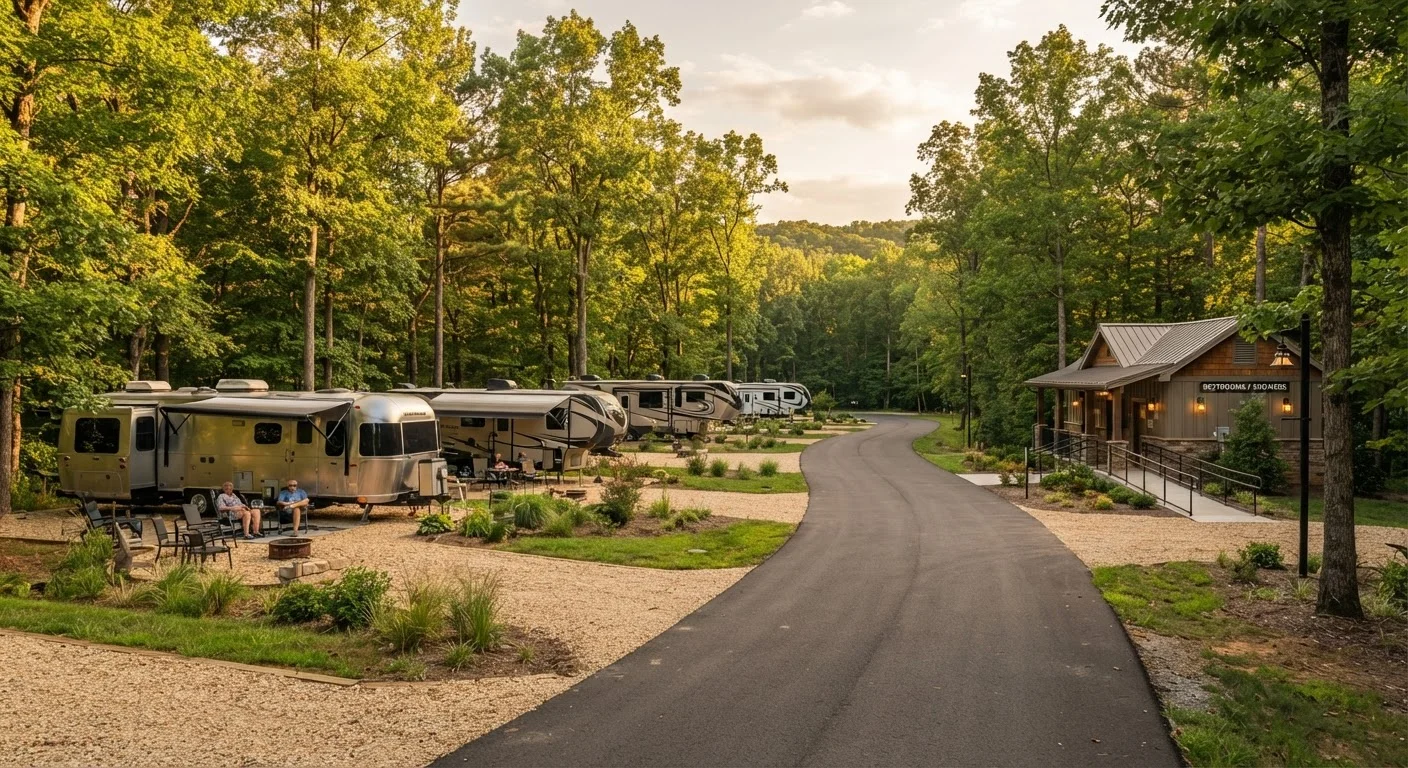
A senior-friendly RV park is a campground specifically suited to the comfort, safety, and practical needs of older adults. It goes beyond basic amenities to offer level, accessible sites; well-maintained facilities; and an environment that minimizes physical strain. These parks may also foster a social atmosphere and proximity to services that matter most to older travelers.
Accessibility features at RV parks are not uniformly regulated at the federal level, so standards vary widely. Travelers should always verify specific features directly with the park before booking.
Why 'Senior-Friendly' Means More Than a Pool
The phrase "senior-friendly" gets used loosely in campground marketing, but what it actually means in practice involves a specific set of physical, logistical, and social qualities. A park might advertise amenities that sound appealing while lacking the accessibility basics that make daily life comfortable for older adults.
For senior RV travelers, the difference between a well-suited park and a frustrating one often comes down to details: whether the roads are wide enough, whether the bathroom door opens easily, whether there's a doctor nearby. Understanding those specifics before you arrive is part of thoughtful trip planning. Our Senior RV Living hub covers many of these topics in depth, including how to adapt your rig and routine for comfort on the road.
10,000+
Americans turning 65 each day
According to the Pew Research Center, roughly 10,000 Baby Boomers reach age 65 daily — a demographic shift driving growing demand for senior-accessible travel infrastructure.
~30%
RV owners aged 55 and older
The RV Industry Association has consistently reported that adults 55 and over represent a substantial share of RV owners, making senior-focused amenities an increasingly relevant market consideration.
Site Design and Physical Accessibility
The campsite itself is the foundation of a good stay. For senior travelers, several site characteristics matter most:
- Pull-through sites: These allow you to drive straight in and out without backing up — a significant advantage for anyone who finds maneuvering a large RV stressful or physically demanding.
- Level pads: An unlevel site means an unlevel coach, which affects sleep quality, appliance function, and the simple act of walking from front to back without bracing yourself.
- Paved or compacted gravel surfaces: Loose gravel, soft dirt, and uneven ground increase fall risk. Firm, even surfaces around the site — including the path to the bathhouse — make a meaningful difference.
- Wide spacing between sites: Room to set up a ramp, mobility aid, or outdoor furniture without feeling crowded improves both safety and comfort.
For a detailed breakdown of what to look for, see our article on campground accessibility features.
Call Ahead Before You Book
Online listings rarely capture every accessibility detail. Before reserving a site, call the park directly and ask specific questions: Is the site level and paved? Are there pull-through options? Does the bathhouse have grab bars? A five-minute phone call can prevent a frustrating surprise on arrival.
Bathhouse and Common Facility Standards
Even travelers with fully self-contained rigs often use park bathhouses, and the quality of those facilities signals how seriously a park takes accessibility. Look for:
- Grab bars in shower stalls and near toilets
- Roll-in or walk-in shower options (not just tub/shower combos)
- Wide doorways and turning space for walkers or wheelchairs
- Non-slip flooring throughout
- Adequate lighting, especially at night
Laundry facilities are another consideration — front-loading machines at accessible heights are easier to use than stacked or high-mounted units. If the park has a rec hall or gathering space, check whether it's step-free and comfortably furnished.
Self-Contained Rigs Still Benefit From Good Bathhouses
Even if your RV has a full bathroom, many travelers prefer using park facilities during extended stays to conserve water and tank capacity. Accessible bathhouses are worth evaluating regardless of your rig's self-sufficiency level. Some parks also have better hot water reliability in their facilities than in smaller coach water heaters.
Location, Services, and Safety Proximity
A beautiful setting loses appeal quickly if you're far from the services you depend on. Senior RVers benefit from parks that are within a practical distance of medical care, pharmacies, and grocery stores. This doesn't mean avoiding rural locations entirely — it means being intentional about the trade-offs.
When evaluating a park's location, consider:
- Distance to the nearest hospital or urgent care facility
- Availability of a pharmacy within a reasonable drive
- Cell service quality (relevant for telehealth appointments and emergency calls)
- Park security or staffed entrance, especially for solo travelers
The campground selection priorities beyond price explores these location factors in more detail, particularly for travelers managing ongoing health conditions.
Community Atmosphere and Social Value
Many senior RVers cite the social dimension of park life as one of its greatest rewards. A park with a warm, active community can make a solo traveler feel less isolated, and provide a ready network of neighbors who look out for one another.
Indicators of a strong community atmosphere include organized potlucks or social hours, a staffed activities calendar, and a respectful, welcoming tone in online reviews. Some parks cater specifically to the 55-and-older demographic, which can mean quieter evenings, shared interests among guests, and programming designed for older adults.
That said, community tone is hard to assess from a website alone. Reading recent traveler reviews — particularly from guests around your own age — often gives the clearest picture of what daily life at the park actually feels like.
For a broader perspective on what makes a destination genuinely work for older visitors, the end-to-end senior RV living resource brings together planning, adapting, and destination considerations in one place.
This article provides general travel information for educational purposes. Accessibility features, services, and conditions at specific parks vary and may change. Always verify details directly with the campground before booking, and consult a qualified healthcare professional about any personal health considerations related to travel.