

| Minimum ADA doorway clearance | 32 inches (36 inches preferred for wheelchair use) (ADA Standards for Accessible Design) |
| Recommended bed height | 20–23 inches from floor to mattress surface (General accessibility guidance) |
| Roll-in shower minimum opening | 36 inches wide (ADA Standards for Accessible Design) |
| Grab bar weight rating | Must support at least 250 lbs (ADA Standards for Accessible Design) |
| Best way to confirm room features | Call hotel directly; follow up in writing (General travel guidance) |
| Related travel type | Also relevant for accessible cruise cabins and RV travel |
Why Accessibility Labels Don't Tell the Full Story
Hotels in the United States are required under the Americans with Disabilities Act (ADA) to provide accessible rooms, but the term "ADA-compliant" covers a broad range of configurations. Two rooms can both carry that label while offering very different levels of practical comfort and safety for a senior traveler.
Understanding which specific features matter — and knowing how to ask about them — is far more useful than relying on a checkbox label. This reference guide breaks down the features that have the most meaningful impact on day-to-day comfort and safety. For a room-by-room evaluation tool, see the room-by-room accessibility checklist before you confirm any reservation.
| Minimum ADA doorway clearance | 32 inches (36 inches preferred for wheelchair use) (ADA Standards for Accessible Design) |
| Recommended bed height | 20–23 inches from floor to mattress surface (General accessibility guidance) |
| Roll-in shower minimum opening | 36 inches wide (ADA Standards for Accessible Design) |
| Grab bar weight rating | Must support at least 250 lbs (ADA Standards for Accessible Design) |
| Best way to confirm room features | Call hotel directly; follow up in writing (General travel guidance) |
| Related travel type | Also relevant for accessible cruise cabins and RV travel |
Bathroom Features With the Highest Impact
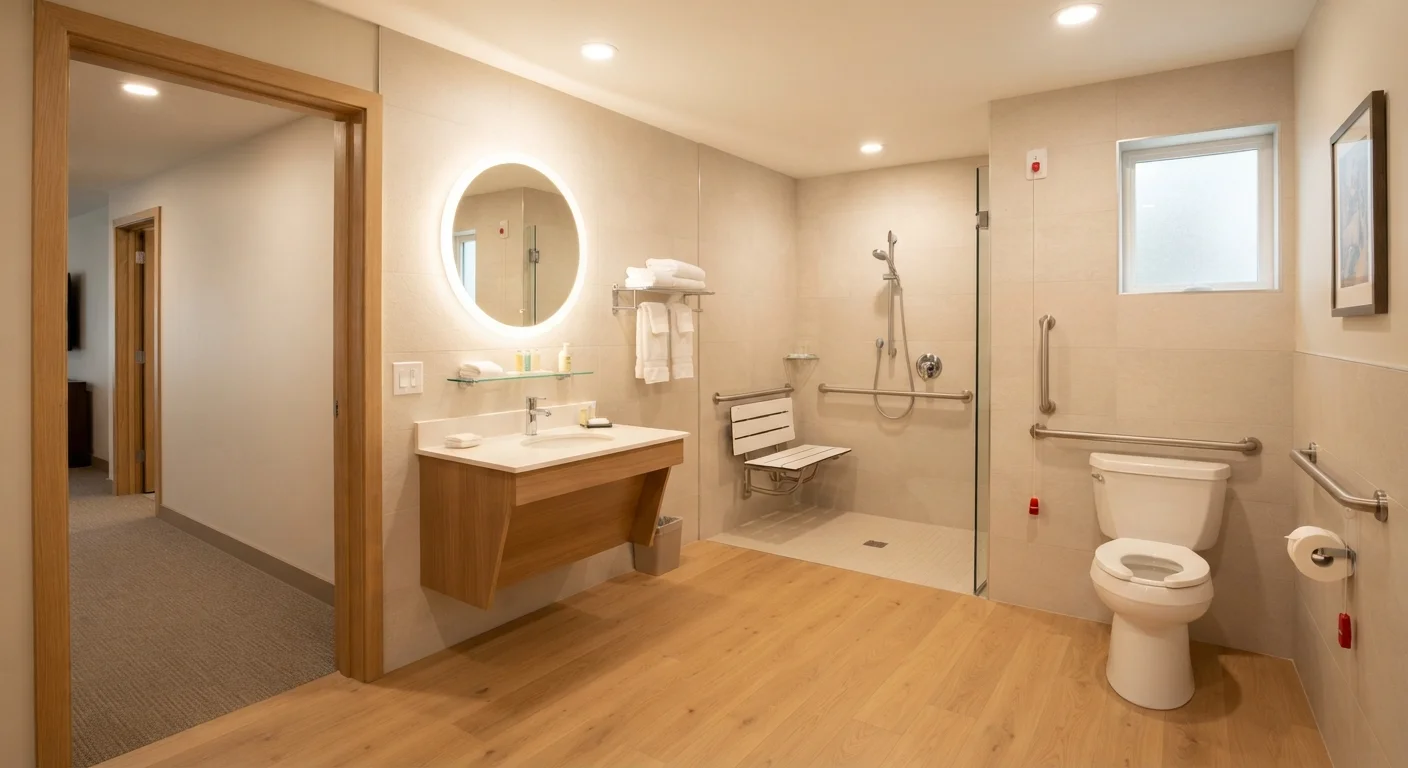
The bathroom is consistently where accessibility matters most. A fall in the bathroom is among the most common hotel-related injuries for older adults, making the following features essential rather than optional.
Roll-in shower
A curbless shower designed so that a person using a wheelchair or walker can enter without stepping over a threshold. The floor is sloped toward a drain rather than enclosed by a raised ledge.
ADA-compliant room
A hotel room that meets minimum accessibility standards set by the Americans with Disabilities Act. Compliance covers a range of configurations, so the specific features available can vary significantly between properties.
Grab bar
A fixed, load-bearing bar mounted to a wall to provide support and stability during transfers or movement. Unlike towel bars, grab bars are anchored into wall studs and rated to bear body weight.
Transfer space
The clear floor area beside a bed, toilet, or shower needed to move safely from a mobility aid to a fixed surface. Adequate transfer space — typically 36 inches or more — is essential for wheelchair and walker users.
Handheld showerhead
A showerhead mounted on a flexible hose that can be detached and directed manually. It allows a person to bathe while seated and is a key feature in accessible shower configurations.
- Roll-in shower: A curbless shower large enough to enter with a wheelchair or walker. Standard tub-shower combos require stepping over a ledge — a significant fall risk. Confirm the shower opening is at least 36 inches wide.
- Fold-down or removable shower seat: Allows seated bathing without using a separate shower chair. Ask whether the seat is permanently installed or a detachable add-on.
- Grab bars: Should be mounted near the toilet (on both sides if possible), inside the shower, and at the shower entry. Towel bars are not grab bars — they are not load-bearing. Ask specifically about grab bar locations.
- Handheld showerhead: Allows rinsing while seated. Look for adjustable-height mounting brackets.
- Lever-style faucet handles: Easier to operate than round knobs for travelers with arthritis or reduced grip strength.
If you travel with a mobility aid, also review the planning guide for walkers, wheelchairs, and scooters for room layout considerations beyond the bathroom.
Bedroom and Room Layout Features
Accessibility in the sleeping area is often overlooked but affects comfort throughout your stay.
32"
Minimum clear doorway width required by ADA
Per ADA Standards for Accessible Design; 36 inches or more is generally recommended for wheelchair users navigating hotel rooms.
36"
Recommended clear path around hotel room bed
General accessibility guidance indicates 36 inches of unobstructed floor space around a bed supports safe navigation with walkers and wheelchairs.
- Doorway width: ADA guidelines specify at least 32 inches of clear passage. For wheelchair users, 36 inches or more is more practical. Ask about both the main entrance and the bathroom door.
- Bed height: A bed that is too high or too low makes transfers difficult and strains joints. Ideally, the mattress surface should sit at roughly 20–23 inches from the floor. This is not always listed online — call ahead to confirm.
- Clear floor space: At least 36 inches of clear path around the bed is needed to navigate comfortably with a walker or wheelchair. Request a room diagram or ask staff to describe the layout.
- Furniture arrangement: Heavy, fixed furniture close together creates obstacles. Ask whether the hotel can rearrange pieces before arrival.
- Lowered closet rods and accessible storage: Useful for travelers with limited reach or shoulder mobility.
Room accessibility doesn't exist in isolation — on-site amenities like dining hours, elevator reliability, and concierge services also shape the overall quality of a stay.
How to Confirm Features Before You Book
Booking platforms vary in how completely they describe accessible rooms. Photos may not show the bathroom. Listings may say "roll-in shower available" without confirming it's assigned to your specific room category.
The most reliable approach is to call the hotel directly and ask specific questions — not just "is the room accessible?" but: Does the shower have a fold-down seat? What is the bed height? Are grab bars on both sides of the toilet? Document the name of the person you spoke with and the answers you received. Then follow up in writing via email so you have a record.
You may also find useful detail in guest reviews. Not all reviews address accessibility, but filtering reviews with senior needs in mind can surface information that listings miss. For a step-by-step approach to communicating your needs to hotel staff, see the guide on requesting special accommodations.
Accessibility standards also vary significantly by destination. Some cities and regions have invested more heavily in accessible tourism infrastructure than others — learn more through the guide to destinations with accessible tourism infrastructure.
This article provides general travel information for educational purposes. Accessibility configurations vary by property; always verify specific features directly with your hotel before booking.