

Key Takeaways
- Request accessibility accommodations at booking, not at check-in, to maximize availability.
- Written confirmation of your requests creates a paper trail that protects you if problems arise.
- Specific, detailed language — not vague terms like 'accessible room' — gets better results.
- Following up 48–72 hours before arrival reduces the risk of overlooked requests.
- Knowing your legal rights under the ADA helps you advocate confidently at the front desk.
What you will need
Why the Booking Process Is Where Most Problems Start
For senior travelers with accessibility needs, the gap between what is requested and what is actually provided often comes down to how and when the request was made. Many guests assume that selecting an 'accessible room' during online checkout is sufficient. In practice, it rarely is.
Hotels — particularly larger properties — manage a complex inventory of room types. Accessible rooms vary in their specific features, and staff may not automatically match your needs to the right room unless you've communicated those needs in detail. The Booking Made Easy hub offers broader guidance on navigating this process with confidence.
Starting the process correctly — with specific language, direct hotel contact, and written follow-through — is what separates travelers who arrive to a well-prepared room from those who spend their first hour troubleshooting at the front desk.
What you will need
Email or messaging platform
Used to send written accommodation requests and receive confirmation from the hotel.
Hotel direct phone number
Allows you to reach the property directly — not the booking platform — to discuss accessibility needs with staff.
Personal accommodations summary document
A prepared written summary of your needs that can be shared quickly with hotel staff at any stage.
Booking confirmation with reservation number
Needed when following up with the hotel to ensure staff can locate and update your reservation.
Step-by-Step: How to Request Accommodations That Hold
The following steps walk you through the full process, from preparing your needs list before booking to advocating effectively at check-in. Each step builds on the last, so working through them in order gives you the strongest result.
"Accessible Room" Means Different Things to Different Hotels
Hotels vary widely in how they define and label accessible rooms. A room categorized as accessible at one property may not include a roll-in shower, a lowered bed, or a bathtub grab bar at another. Always specify each feature you need by name rather than relying on the label alone. See our guide to accessibility features that actually matter for a breakdown of what to ask for specifically.
Identify and list every accommodation you need
Before contacting the hotel, write down every feature that affects your comfort and safety. Think room by room: does the bathroom need a roll-in shower or a tub with grab bars? Do you need a lowered bed, a firm mattress, or a bed rail? Will you require a refrigerator for medication? Do you travel with a CPAP machine that needs a bedside outlet?
Being thorough at this stage prevents multiple follow-up calls and reduces the chance that something critical gets overlooked. Use our room-by-room accessibility checklist to make sure nothing is missed.
Contact the hotel directly — not just the booking platform
Third-party booking sites often have limited fields for accessibility notes, and those notes may not reach the property reliably. After making your initial reservation, call or email the hotel directly using their property contact information. Ask to speak with the front desk manager or a reservations specialist rather than a general call center.
Introduce yourself by name and reservation number, then clearly state that you are calling to discuss accessibility accommodations. This direct contact establishes a record at the property level.
Use specific, descriptive language in your request
Replace vague terms with precise descriptions. Instead of asking for an 'accessible room,' say: 'I need a room with a roll-in shower, a fold-down shower bench, and grab bars on both sides of the toilet.' Instead of 'a low bed,' say: 'I need a bed height of approximately 20–22 inches from the floor.'
Specific language gives staff something concrete to verify against available inventory. It also reduces the likelihood of assumptions being made on your behalf that don't match your actual needs. For guidance on which features matter most, see our article on accessibility features that actually matter in a hotel room.
Request written confirmation of every accommodation
After your phone or in-person conversation, send a brief follow-up email summarizing everything discussed. Include your name, reservation number, check-in date, and a bulleted list of each accommodation you requested. Ask the hotel to reply confirming that these have been noted.
This email record is your primary protection if something goes wrong at check-in. Print a copy or save it to your phone so you can reference it at the front desk.
Follow up 48–72 hours before arrival
Call the property directly two to three days before your stay to verify that your accommodations are still reflected in your reservation. Staff turnover and system updates can occasionally cause notes to be lost between booking and arrival. A brief confirmation call takes only a few minutes and significantly reduces day-of surprises.
During this call, ask whether your specific room assignment has been made. If it has, ask for the room number so you can confirm it on arrival. For broader planning advice on communicating needs in advance, see planning around mobility needs before you book.
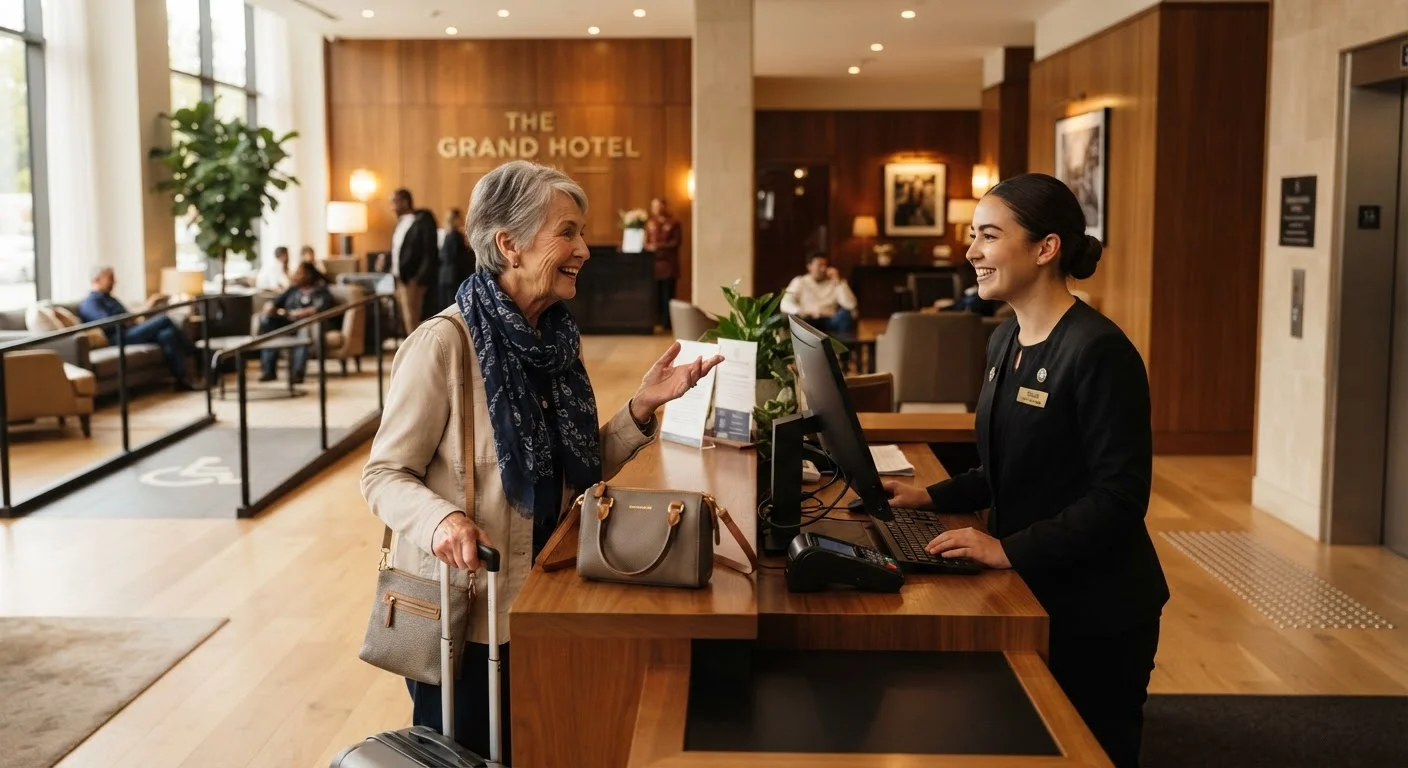
Advocate clearly and calmly at check-in
At the front desk, provide your reservation number and ask the agent to confirm your accommodations before you accept a room key. If something is missing or incorrect, calmly state what was requested and reference your written confirmation. Ask to speak with a manager if the issue cannot be resolved at the front desk level.
Under the Americans with Disabilities Act (ADA), hotels are generally required to provide accessible rooms to guests who need them. Knowing this gives you a factual basis for your conversation without escalating unnecessarily.
Keep a Personal Accommodations Summary Ready
Write a short, one-paragraph summary of your accessibility needs that you can copy and paste into emails or read aloud to hotel staff. Include mobility aids you use, bathroom features required, and any equipment you're bringing. Having this ready saves time and reduces the chance of forgetting something important during a rushed phone call.
Verbal Requests Alone Are Not Enough
A staff member's verbal assurance does not guarantee your room will be set up correctly. Always follow up phone or in-person conversations with an email summarizing what was requested and what was confirmed. Keep that email accessible on your phone or in print when you check in.
What to Do If Your Request Isn't Honored
Despite careful preparation, you may occasionally arrive to find that your accommodations haven't been arranged as requested. Stay calm and methodical. Present your written confirmation at the front desk and ask the manager on duty to review available inventory for a suitable alternative.
If the hotel cannot meet your documented accessibility needs, ask whether they can arrange a room at a partner property or provide a full refund. Keep notes on what was promised and what was provided — this documentation matters if you need to follow up with the hotel's corporate office or file a complaint.
For situations involving mobility equipment or assistance needs that extend beyond the hotel itself, see our article on requesting special assistance at airports and train stations, which covers how formal assistance programs work across transportation hubs.
Accessibility needs are legitimate, documented requirements — not preferences. Approaching the conversation from that framing, respectfully and with evidence in hand, puts you in the strongest position to reach a workable solution.