

Key Takeaways
- Extended dining hours and in-room meal options matter far more than most seniors anticipate when booking.
- Concierge medical assistance and pharmacy referrals can be critical in an unfamiliar city.
- Elevator placement, room proximity to exits, and hallway width are often overlooked accessibility factors.
- Laundry services and accessible storage make a significant difference on longer stays.
- Asking specific questions before booking — not after check-in — protects your comfort and budget.
Why the Standard Amenity Checklist Falls Short for Seniors
Most hotel booking platforms highlight pools, gyms, and free Wi-Fi. For senior travelers, these features often rank well below practical considerations that rarely appear on a standard listing. Things like how far the room is from the elevator, whether the restaurant serves early dinners, or whether staff can assist with a medical errand — these details define the quality of a stay far more than amenities built for younger guests.
The gap between a hotel that looks accessible and one that genuinely supports senior travelers is real and worth understanding before you book. Our guide to in-room accessibility features covers the physical room specifics; this article focuses on the broader property amenities that shape daily comfort.
Call the Hotel Directly Before Booking
Online listings rarely capture amenity details relevant to senior travelers. Calling the property directly — rather than relying on the booking platform's description — gives you the chance to ask specific questions and get answers from staff who know the property. Ask about elevator proximity, dining hours, and whether the concierge can assist with medical referrals. Document the responses in writing if possible.
When evaluating options, it also helps to understand how different hotel types approach guest services. The comparison of independent vs. chain hotels for seniors offers a useful framework for weighing those trade-offs.
The Amenities That Actually Deliver
Flexible and Extended Dining Hours
Many seniors prefer to eat dinner earlier than the 6–8 p.m. windows that hotel restaurants typically target. If a property's dining closes at 5:30 p.m. or doesn't open until 7 p.m., guests without a car or those with dietary restrictions can find themselves in a difficult position.
When evaluating hotels, ask specifically about: breakfast start times, whether room service is available in the evening, and whether the kitchen can accommodate common dietary needs such as low-sodium or diabetic-friendly meals with advance notice. In-room dining that goes beyond continental options can meaningfully reduce the stress of navigating unfamiliar restaurants every meal.
Extended dining hours and room service options can eliminate one of the most common daily stressors for senior hotel guests.
Concierge Medical Referral Assistance
A concierge desk that can reliably point you to a nearby urgent care clinic, pharmacy, or specialist is an undervalued asset. In an unfamiliar city, locating a pharmacy that carries a specific medication — or finding a clinic that accepts your insurance — takes time and can cause real anxiety.
Properties with experienced concierge staff often maintain lists of local medical resources, including after-hours clinics. This is different from emergency services; it covers the everyday medical needs that arise during travel, from replacing a lost prescription to managing a minor injury. Ask the hotel directly about this capability before booking.
A well-connected concierge can be the most important resource on a senior trip when a medical need arises unexpectedly.
Elevator Placement and Room Location Options
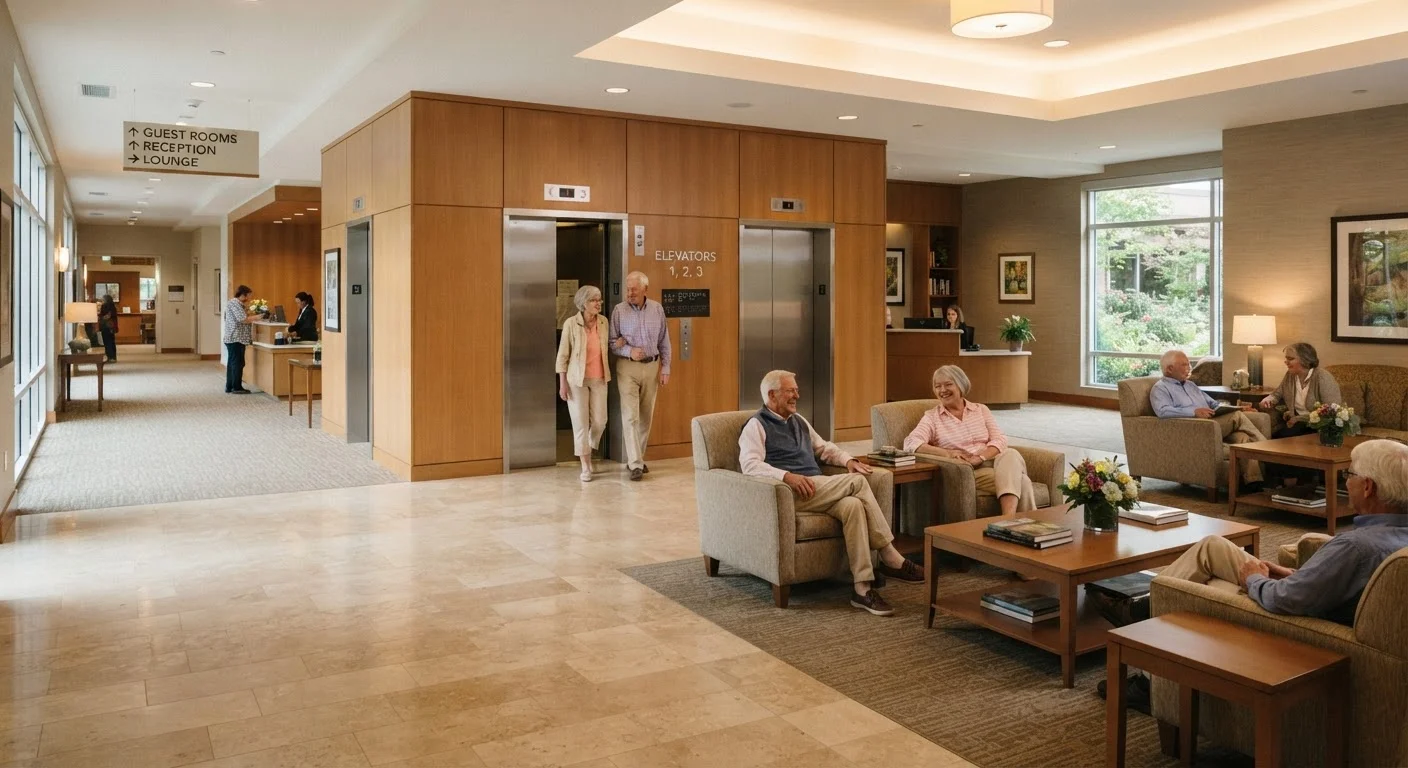
Elevator access is listed as standard at most hotels, but placement varies enormously. A single elevator bank at the far end of a long corridor can mean a significant walk multiple times per day — a real issue for guests with joint pain, fatigue, or mobility aids.
When booking, ask whether rooms near the elevator are available. Also ask about hallway length from the elevator to the available room types, and whether any rooms are on the ground floor with direct exterior access if preferred. These are specific, answerable questions that can prevent daily discomfort.
Room placement relative to the elevator often matters more than the room type itself for seniors with limited mobility.
On-Site or Accessible Laundry Services
For trips lasting more than three or four days, laundry access becomes a practical necessity. A hotel with a guest laundry room, same-day valet laundry service, or a nearby laundromat the concierge can direct you to makes packing significantly lighter and travel less physically demanding.
Valet laundry is convenient but can be expensive; guest laundry rooms on each floor are the most practical option for seniors who prefer to manage their own. Confirm the location of guest laundry facilities when booking — floors served, machine height, and seating availability nearby are all worth asking about. Understanding which comfort upgrades genuinely pay off can help you weigh this against other add-ons.
Reliable laundry access means packing lighter — a genuine physical benefit for seniors managing luggage on their own.
Accessible Ground-Floor Common Areas
Lobbies, breakfast areas, and seating spaces that are step-free, well-lit, and furnished with chairs that have armrests make a meaningful difference for guests with limited mobility or balance concerns. Hotels that were built decades ago and haven't been renovated often have sunken seating areas, heavy doors, or narrow café arrangements that are genuinely difficult to navigate.
Photos on hotel websites don't always reveal these details. Reading recent guest reviews specifically from travelers who mention mobility considerations is one of the more reliable ways to assess this in advance. Third-party accessibility review platforms exist specifically for this purpose and can supplement hotel-provided information.
Step-free, well-lit common areas with armrest seating may seem minor but define daily ease for guests with mobility needs.
Quiet Zones and Noise Management Policies
Sleep quality is directly tied to recovery and overall wellbeing during travel. Hotels that enforce quiet hours, position senior-friendly rooms away from elevator banks, ice machines, and event spaces, and use solid-core doors offer a meaningfully better rest environment.
This is especially relevant at conference hotels or resort properties where large gatherings are common. Ask about the noise environment around your assigned room type. Properties that designate specific floors or wings as quieter zones — sometimes called club floors or residential floors — can be worth the modest upgrade for guests who are light sleepers. See our resources on maximizing rest and comfort during travel for broader strategies.
Proactively requesting quieter room placement is one of the simplest ways to protect sleep quality during a hotel stay.
How to Ask for What You Actually Need
Most of the amenities on this list won't appear in a hotel's standard marketing copy. That means the responsibility falls on you — or whoever is assisting with your booking — to ask directly, ideally by phone or email before confirming a reservation.
Prepare a short list of your personal priorities. For example: "Is there an elevator near the room types available to me?" or "Can the kitchen accommodate a low-sodium diet with advance notice?" Written confirmation of accommodations is always advisable.
Destination Infrastructure Also Matters
Hotel amenities don't exist in isolation — they interact with the broader destination environment. A property with excellent on-site amenities in a city with poor public transit or limited medical infrastructure still poses challenges. Our destination accessibility evaluation guide and overview of senior-friendly destination factors offer complementary guidance on assessing the surrounding environment before committing to a booking.
For seniors planning extended stays, these considerations become even more pressing. The planning guide for extended hotel stays walks through what changes logistically when a hotel room becomes your home base for a week or more. Separately, travel health tips for seniors can help you prepare for the wellness side of any trip.