

Key Takeaways
- Healthcare access and medical infrastructure are among the most critical factors for senior travelers abroad.
- Flat terrain, reliable public transit, and paved pathways reduce physical strain and improve daily mobility.
- A slower pace of life and a culture of hospitality toward older adults can meaningfully shape the travel experience.
- Entry requirements, travel insurance coverage, and emergency medical protocols should be verified before departure.
- Climate stability — avoiding extreme heat, humidity, or cold — is an underappreciated factor in senior travel comfort.
Senior-Friendly Country
A senior-friendly country is one where older travelers can move, rest, seek care, and enjoy themselves without facing unnecessary physical, logistical, or medical obstacles. It combines accessible infrastructure, a manageable pace of life, reliable healthcare access, and a welcoming cultural environment. No destination is perfect, but the most senior-friendly ones make daily life easier rather than harder for older visitors.
Gerontology and international travel research often assess destinations using criteria such as walkability indices, health system quality ratings (e.g., WHO rankings), and urban accessibility standards — though these metrics vary in methodology and should be treated as useful guides rather than definitive scores.
Why the Definition Goes Beyond Tourist Amenities
When senior travelers evaluate an international destination, the usual checklist — sights, culture, cuisine — only tells part of the story. What truly determines comfort for older adults is a set of practical, structural factors that rarely appear in a destination's marketing materials.
A country becomes genuinely senior-friendly when its everyday infrastructure, healthcare systems, terrain, and social pace align with the physical and logistical realities of older travel. That alignment isn't accidental; it reflects deliberate investment in urban planning, public health, and hospitality culture.
For a useful comparison with domestic standards, see what defines a genuinely senior-friendly US city — many of the same principles apply internationally, with added complexity around language, healthcare systems, and entry requirements.
1 in 5
U.S. international travelers aged 55 or older
According to the U.S. Travel Association, adults aged 55 and older represent a substantial and growing share of all outbound international travel from the United States.
65°F–80°F
Comfortable temperature range for most senior travelers
Travel health researchers and geriatric medicine practitioners commonly cite mild, dry climates in this range as reducing cardiovascular and respiratory strain for older adults.
40%+
Seniors who report mobility as a travel planning concern
Surveys of senior travelers consistently show that physical accessibility — terrain, transit, and step-free facilities — is among the top factors influencing destination choice for adults over 65.
Healthcare Access: The Non-Negotiable Factor
No single consideration outweighs healthcare access for senior international travelers. The key questions are straightforward: How close is the nearest quality hospital to your planned base? Are English-speaking physicians available? Does the country's health system accept foreign patients, and at what cost?
Countries in Western Europe, Japan, Canada, Australia, and New Zealand generally maintain high-quality public health infrastructure. However, access for foreign visitors, cost structures, and wait times vary meaningfully. Some countries bill visitors at full private rates; others have reciprocal agreements with certain nations.
A detailed reference guide to international healthcare access can help seniors understand how different countries' systems handle visiting foreign patients before they commit to a destination.
Travel insurance with robust international medical coverage — including emergency evacuation — is a critical planning step. Coverage details vary by policy, so consulting a licensed insurance adviser and reading policy documents carefully is essential. This article provides general educational information about travel planning and is not a substitute for advice from a licensed insurance professional or your personal healthcare provider.
Infrastructure, Terrain, and the Physics of Daily Movement
Even healthy, active seniors feel the difference between a city built for walkability and one that demands endurance. Steep hills, cobblestone streets without smooth alternatives, broken pavements, and scarce seating turn pleasant outings into ordeals.
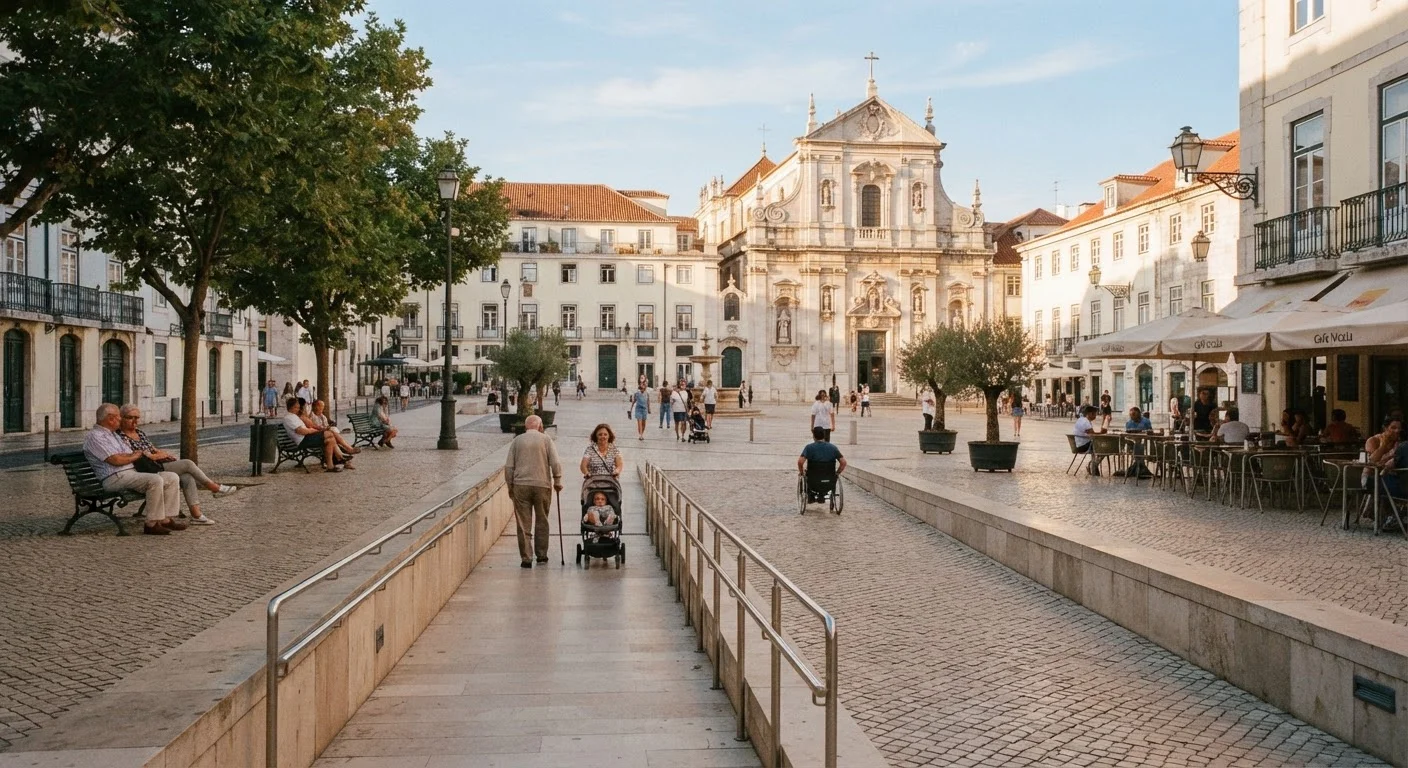
Senior-friendly countries tend to share certain physical characteristics: flat or gently graded urban cores, well-maintained sidewalks, reliable elevators in transit stations, and accessible public restrooms at reasonable intervals. Public transportation quality matters enormously — a country with clean, punctual, step-free rail and bus systems effectively doubles the range a senior traveler can cover comfortably.
For travelers with mobility limitations specifically, warm-weather destinations that prioritize accessibility offer the added benefit of flat terrain combined with mild climate — a particularly well-suited combination.
Climate, Pace of Life, and Cultural Hospitality
Climate affects senior travel in ways that often go underestimated. Extreme heat strains cardiovascular systems; high humidity complicates breathing; icy pavements create fall risks. Stable, mild climates — particularly those avoiding temperature extremes — reduce physical stress and extend the window of comfortable outdoor activity. Why warm climates suit senior travelers explores this dynamic in greater depth.
Pace of life is subtler but equally real. Countries and cultures where meals are unhurried, where itineraries don't demand constant rushing, and where rest is built into the daily rhythm tend to produce better experiences for older visitors. A destination that rewards slowness is, functionally, a more senior-friendly one.
Cultural hospitality toward older adults also shapes the experience. In many East Asian countries, for instance, social norms emphasize respect for elders in ways that translate into practical courtesies — priority seating, assistance offered proactively, a general patience with slower movement. These aren't guarantees, but they are real patterns worth factoring into destination research.
Research Specific Neighborhoods, Not Just Countries
A country's general reputation for accessibility can mask wide variation between regions and cities. Before booking, look at the specific neighborhood or district where you plan to stay — terrain, transit access, and proximity to medical facilities can differ dramatically even within the same metropolitan area. Online traveler forums and destination accessibility guides are useful supplements to official tourism information.
Entry Requirements and Pre-Trip Verification
International travel adds a layer of complexity that domestic trips don't carry: visas, vaccination requirements, health declarations, and border protocols. These factors shift frequently and can vary based on nationality, age, and health status.
Understanding entry requirements, visas, and health declarations provides a practical framework, but the essential rule is simple: always verify current requirements directly with the destination country's official embassy or consulate website and the U.S. Department of State before booking or traveling. Official sources are the only reliable reference for time-sensitive regulatory information.
For a fuller picture of the safety and accessibility evaluation process, assessing accessible destinations and safe environments before booking covers the key considerations in practical detail.