

Key Takeaways
- Mild climates reduce the physical strain of cold weather, which many seniors find taxing on joints and circulation.
- Warm destinations often feature flat, walkable terrain and strong tourism infrastructure suited to older visitors.
- Year-round warmth allows seniors to travel outside peak summer crowds, often at a more relaxed pace.
- Heat can pose its own health risks — hydration, shade, and pacing remain important considerations.
- Senior-friendly warm destinations exist across the US, the Caribbean, Southern Europe, and beyond.
Warm-Weather Destination
A warm-weather destination is a location that maintains mild to warm temperatures for most or all of the year, typically avoiding harsh winters, heavy snowfall, or extreme seasonal cold. For senior travelers, these destinations are valued for their physical comfort, reduced exposure to weather-related hazards, and the generally relaxed, outdoor-oriented pace of life they support.
Climatologists often define warm climates using the Köppen climate classification system, with categories such as tropical, subtropical, and Mediterranean broadly corresponding to what travelers call 'warm-weather' destinations.
The Physical Case for Warm Climates
For many seniors, cold and wet weather is more than an inconvenience — it can be a genuine physical challenge. Low temperatures tend to aggravate joint stiffness, increase the risk of slips on icy surfaces, and place added strain on the cardiovascular system. Mild, stable climates sidestep many of these concerns simply by maintaining consistent warmth throughout the day.
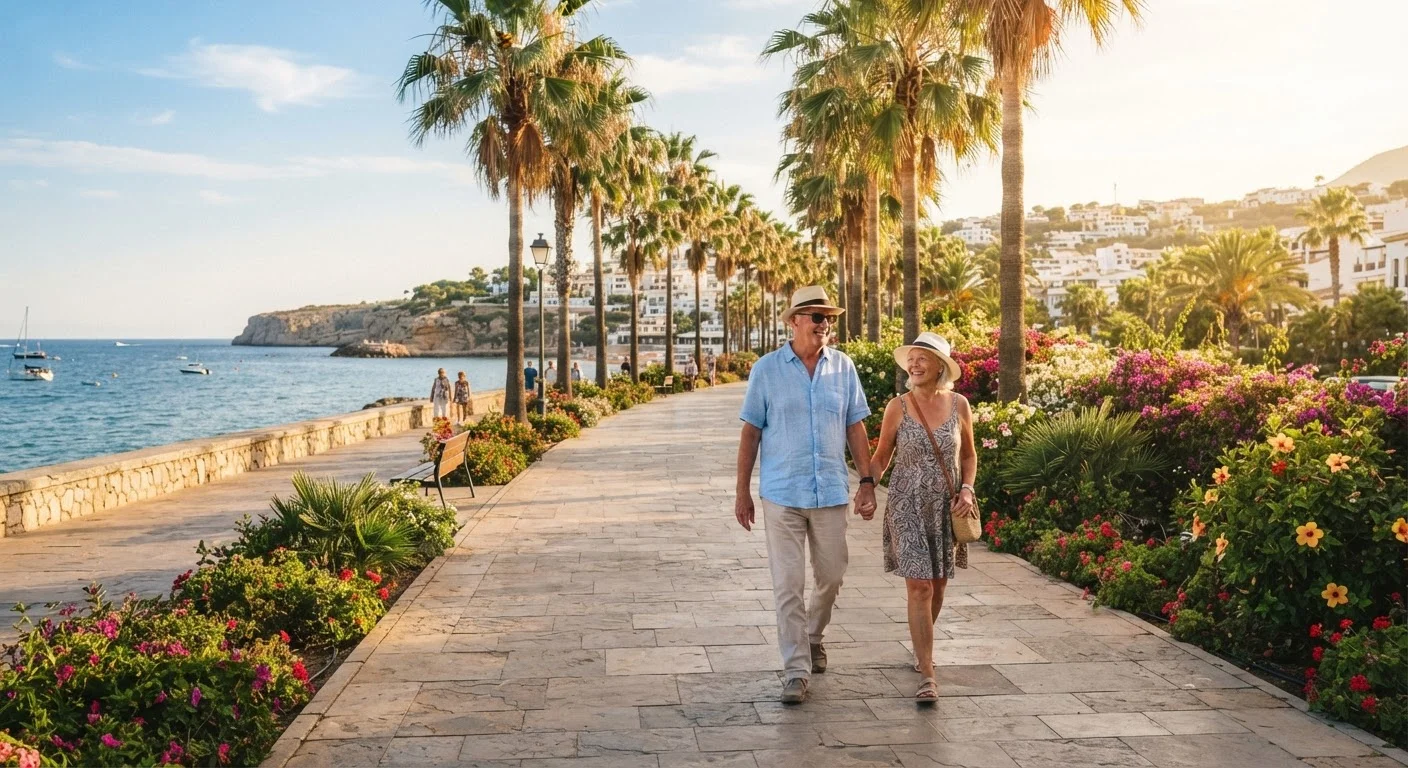
Warm destinations also encourage outdoor activity at a natural pace. Gentle morning walks along flat coastal paths, afternoons exploring shaded historic squares, or simply sitting on a terrace with a view — these are the kinds of low-intensity pleasures that warm weather supports almost effortlessly. The physical environment and the climate tend to work together rather than against you.
It's worth noting that warmth alone isn't the goal. Destinations that combine moderate temperatures — think the Mediterranean in spring, the Florida Gulf Coast in winter, or the Hawaiian Islands year-round — tend to be more comfortable than those with intense tropical heat. Understanding the difference between pleasant warmth and exhausting heat is central to planning well. Our year-round temperature reference guide is a useful starting point for comparing specific destinations.
Choose Moderate Warmth Over Extreme Heat
When comparing destinations, look beyond simply 'warm' and consider average high temperatures, humidity levels, and the availability of shade and air conditioning. Destinations in the 65–80°F range during your travel window will generally be more comfortable and safer for seniors than those regularly exceeding 95°F. Our guide to staying safe in warm climates covers heat awareness in more detail.
Infrastructure and Accessibility Advantages
Popular warm-weather destinations have, over decades, developed tourism infrastructure that tends to benefit senior travelers directly. Cruise ports in the Caribbean and the Mediterranean are designed for easy disembarkation and short walking distances. Resort towns in Florida, Arizona, and Southern California frequently feature wide, paved sidewalks, accessible public transit, and a high density of medical facilities. These aren't accidental features — they reflect years of investment in serving an older visitor demographic.
Accessibility at the destination level matters enormously. Flat coastal towns and purpose-built resort areas generally present fewer mobility challenges than, say, a medieval hilltop village. Seniors who use mobility aids or who prefer to avoid steep terrain will find the built environment in many warm destinations accommodating in ways that colder, more rugged destinations are not.
Warm Weather Doesn't Mean Risk-Free
While mild climates offer real comfort advantages, senior travelers should still plan carefully for heat-related risks, sun exposure, hydration, and access to medical care. Conditions vary widely between destinations. Always consult your healthcare provider before traveling, particularly if you manage chronic conditions or take medications that may be affected by heat. For a broader look at health and safety considerations, see our general guide to staying safe in warm climates.
For a curated look at destinations specifically recognized for accessibility, see our guide to warm-weather destinations that prioritise accessibility. It covers flat terrain, infrastructure quality, and facilities that matter most to older travelers.
Pace, Flexibility, and Year-Round Options
One underappreciated advantage of warm climates is that they tend to operate at a slower, more deliberate pace — especially outside peak tourist seasons. Seniors who prefer unhurried itineraries and the freedom to rest during the hottest part of the day will find that warm-weather destinations naturally accommodate this rhythm. Many cultures in warmer regions have built midday rest into daily life, which aligns well with how many older travelers prefer to structure their days.
Year-round warmth also expands the travel calendar considerably. Rather than being confined to summer windows, seniors can visit in autumn, winter, or spring — often when destinations are less crowded, accommodations are more available, and the overall experience is more relaxed. This flexibility is a significant practical benefit for travelers on fixed schedules or those who want to avoid busy airports and packed attractions.
For those new to warm-weather travel later in life, our article on your first warm-weather holiday as a senior traveler covers destination choices, health planning, and what to realistically expect. When you're ready to move from research to planning, planning a warm-weather trip after 65 walks through the practical steps from start to finish.
This article provides general travel information for educational purposes only. For personal health, medical, or insurance decisions related to travel, please consult a qualified healthcare provider or licensed professional.