

| Location | Northern Arizona, Yavapai County |
| Elevation | Approximately 4,350 feet (1,326 m) above sea level |
| Nearest major airport | Phoenix Sky Harbor International (~115 miles south) |
| Recommended travel seasons | Spring (March–May) and fall (September–October) |
| Typical summer high temperatures | Often 100°F (38°C) or above |
| Nearest hospital | Verde Valley Medical Center, Cottonwood (~18–20 miles west) |
| Trailhead parking | Red Rock Pass required at most sites; available at on-site kiosks |
| Community transportation | Shuttle routes connect Uptown Sedona to major viewpoints and trailheads |
What Makes Sedona Worth the Trip
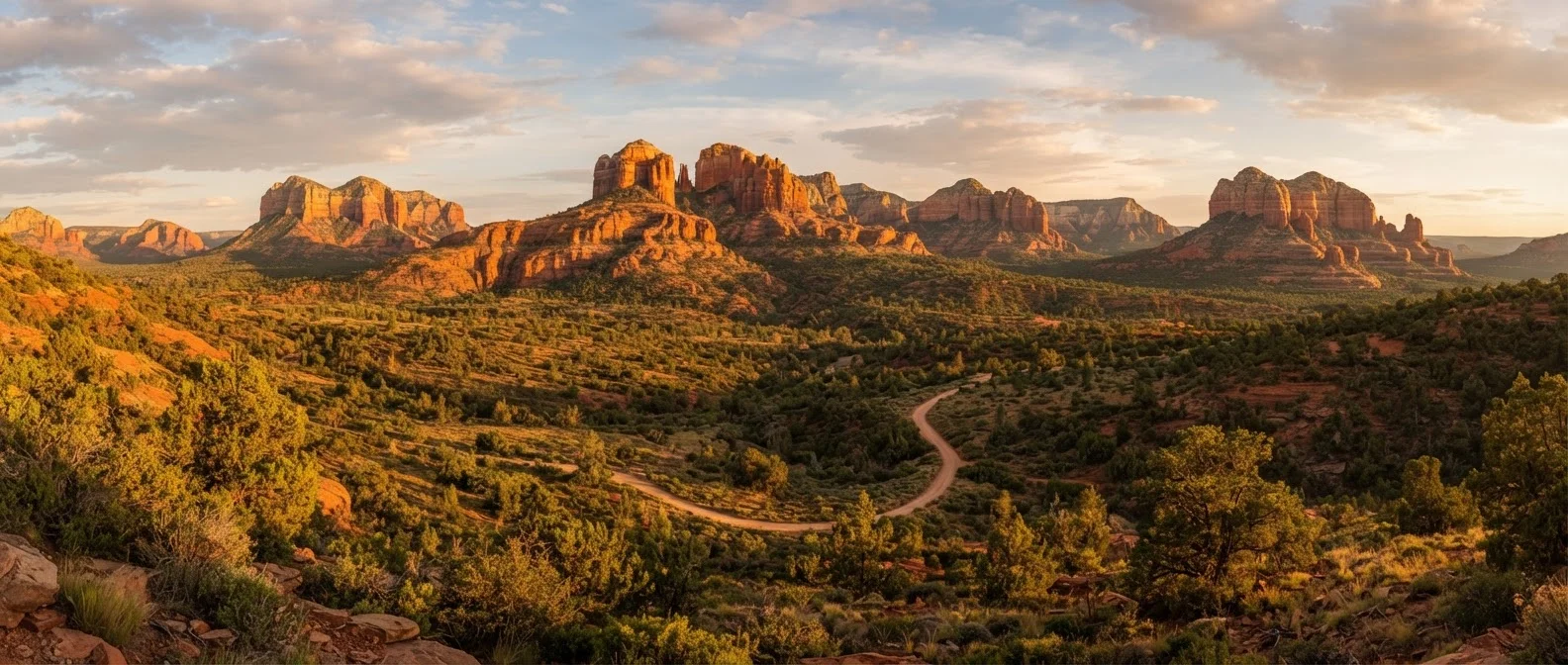
Sedona draws visitors with its striking red rock landscape, a robust arts scene, and a wellness culture that includes numerous spas and resorts. For older adults, much of what makes Sedona worthwhile requires minimal physical effort: scenic viewpoints are reachable by car, the Uptown area hosts galleries and restaurants within a walkable stretch, and jeep tour operators can take guests deep into the landscape without a single steep step. Sedona rewards a range of mobility levels — the key is knowing what to expect before you arrive.
| Location | Northern Arizona, Yavapai County |
| Elevation | Approximately 4,350 feet (1,326 m) above sea level |
| Nearest major airport | Phoenix Sky Harbor International (~115 miles south) |
| Recommended travel seasons | Spring (March–May) and fall (September–October) |
| Typical summer high temperatures | Often 100°F (38°C) or above |
| Nearest hospital | Verde Valley Medical Center, Cottonwood (~18–20 miles west) |
| Trailhead parking | Red Rock Pass required at most sites; available at on-site kiosks |
| Community transportation | Shuttle routes connect Uptown Sedona to major viewpoints and trailheads |
Altitude and Heat: Key Considerations
Sedona sits at roughly 4,350 feet above sea level — well below the elevations where altitude sickness becomes a frequent concern, but high enough to affect some travelers unaccustomed to elevated environments. Mild symptoms such as fatigue, light headaches, or slight breathlessness can occur in the first day or two. Seniors managing cardiovascular or respiratory conditions should speak with their physician before visiting, as altitude can place additional demands on the heart and lungs. The content here is general health information only; always consult a qualified healthcare professional for advice tailored to your personal health history. Our travel health tips for seniors cover broader wellness strategies to consider before and during any trip.
Heat is an equally important variable. Summer highs in Sedona regularly reach or surpass 100°F (38°C). For most older travelers, spring — roughly March through May — and fall — September through October — offer more manageable conditions. Learn how heat and altitude affect senior travelers in the American West before finalizing travel dates.
Getting Around Without a Car
Sedona is primarily a driving destination, but car-free options exist. A community shuttle system operates routes linking Uptown Sedona with several scenic trailheads and viewpoints, allowing visitors to sidestep the competitive parking common at popular sites. Most trailhead areas require a Red Rock Pass, a parking permit available at automated kiosks on-site. Travelers who prefer not to navigate trailhead parking can build itineraries around shuttle schedules instead.
For the journey to Sedona, Phoenix Sky Harbor Airport is approximately 115 miles south — roughly two hours by road. Sedona has no commercial airport. Private shuttle transfers and guided tour vehicles connect from both Phoenix and nearby Flagstaff, about 30 miles to the north. Arranging door-to-door transfers in advance is advisable for travelers who prefer not to drive winding mountain roads. Trip prep essentials for seniors outlines what to arrange before any journey, including transportation logistics.
Accessible Trails and Senior-Friendly Activities
Not every Sedona trail suits every visitor. Many popular routes involve uneven rock surfaces, loose gravel, and notable elevation gain — conditions that may pose risks for travelers managing balance or joint concerns. A number of routes, however, offer paved or compacted surfaces with gentler grades. The Bell Rock Pathway is widely cited as one of Sedona's more accessible options, providing firm footing and dramatic scenery without technical terrain. Always verify current conditions through Coconino National Forest resources before your visit, as seasonal changes affect surfaces and access points.
Off-trail, Sedona offers experiences that require minimal exertion. Jeep tour operators — some offering accessible vehicle boarding — can bring guests to remote red rock terrain. Many resorts offer spa services with no physical demands. The Tlaquepaque Arts & Shopping Village, a popular open-air arts complex, features cobblestone surfaces that can challenge certain mobility aids; contacting the venue in advance to ask about access is a practical step. What seniors should evaluate before booking any destination covers the accessibility and terrain factors directly relevant to planning a Sedona visit.
Red Rock Pass
A day-use parking permit required at the majority of Sedona's trailhead parking areas. Passes are available for purchase at automated kiosks located on-site at participating trailheads.
Acclimatization
The gradual process by which the body adjusts to lower oxygen availability at higher elevations. Symptoms of incomplete acclimatization — such as mild headache or fatigue — typically ease within one to two days for most people.
High desert
An arid environment found at elevations above roughly 3,000 feet, characterized by low humidity, wide day-to-night temperature swings, hot summers, and cool winters.
ADA-accessible trail
A trail designed or maintained to meet accessibility standards intended to accommodate visitors with mobility limitations, generally featuring firm, stable surfaces, limited grades, and adequate width for mobility devices.
Vortex site
Locations in Sedona considered by local tradition to be centers of concentrated natural or spiritual energy. Many are also popular scenic overlooks; terrain and accessibility vary widely by site.