

| Minimum doorway width (wheelchair access) | 32 inches clear; 36 inches preferred (ADA Standards for Accessible Design) |
| Recommended turning radius inside cabin | 60 inches (wheelchair) (ADA Standards for Accessible Design) |
| Accessible cabin availability | Limited per ship; book as early as possible (General cruise industry guidance) |
| Best deck for motion stability | Lower decks, midship (General cruise navigation guidance) |
| Bathroom door clearance minimum | 32 inches; outward or sliding preferred (ADA Standards for Accessible Design) |
Why Cabin Selection Is a Safety and Comfort Decision
For senior travelers and those with mobility challenges, the cabin you choose aboard a cruise ship is far more than a place to sleep. Its layout, fixtures, and location on the ship directly affect how easily you move through your day, manage medications, and recover after excursions. A standard cabin that suits most passengers may present real obstacles for someone using a cane, walker, or wheelchair.
Accessible cabins — sometimes labeled ADA-compliant (meeting U.S. Americans with Disabilities Act standards) or mobility-accessible in cruise terminology — are specifically designed with wider clearances, adaptive fixtures, and repositioned controls. Understanding what those features mean in practice is the first step toward booking a cabin that genuinely works for you. See our full pre-booking accessibility checklist for the questions to put to any cruise line before you commit.
| Minimum doorway width (wheelchair access) | 32 inches clear; 36 inches preferred (ADA Standards for Accessible Design) |
| Recommended turning radius inside cabin | 60 inches (wheelchair) (ADA Standards for Accessible Design) |
| Accessible cabin availability | Limited per ship; book as early as possible (General cruise industry guidance) |
| Best deck for motion stability | Lower decks, midship (General cruise navigation guidance) |
| Bathroom door clearance minimum | 32 inches; outward or sliding preferred (ADA Standards for Accessible Design) |
Key Accessibility Features to Look For
Not every feature listed on a ship's deck plan is equally important. The following are the elements that make the most meaningful difference for mobility-limited or older travelers.
Bathroom and Shower Configuration
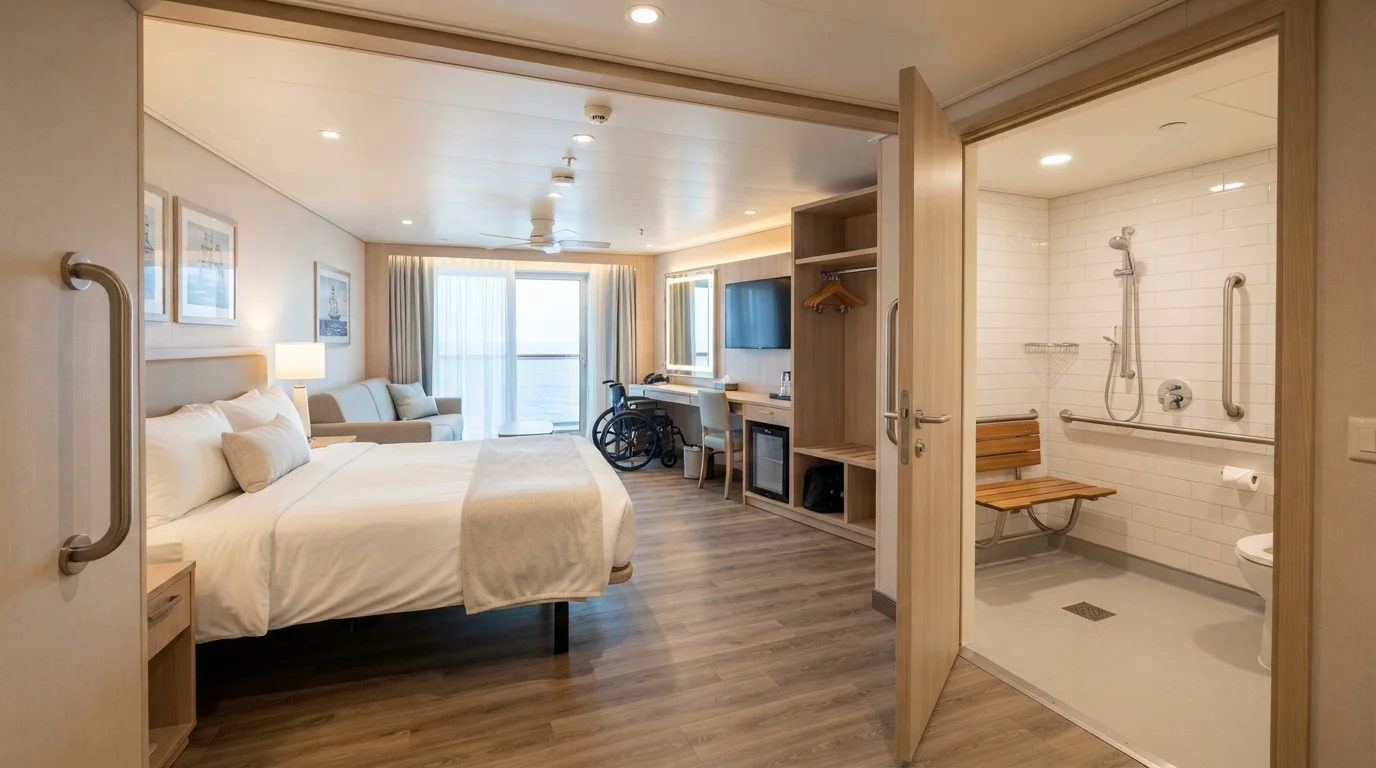
A roll-in shower — one with no raised threshold and enough floor space for a shower chair — is one of the most sought-after accessible features. Standard cabin showers often have a raised lip that poses a fall risk. Confirm the shower opening width (typically 32–36 inches for accessible models) and whether a fold-down bench or shower chair is available on request. Grab bars placed at transfer height beside the toilet and inside the shower are essential; ask for their exact placement, not just confirmation that they exist.
Doorway and Aisle Clearances
Wheelchair users typically need a minimum 32-inch clear doorway width to pass through comfortably, with 36 inches preferred. Accessible cabins should also offer adequate turning radius (often 60 inches) within the room. Verify that the bathroom door swings outward or is a sliding panel — inward-swinging doors can block access if a person falls.
Bed Height and Transfer Space
Beds in accessible cabins are usually set at a fixed height that allows easier transfers from a wheelchair. Confirm whether beds can be configured as two singles (for a travel companion who assists) and whether there is open floor space on both sides for safe transfers.
In-Cabin Controls and Reachability
Light switches, thermostat controls, phone handsets, and television remotes should all be positioned within seated reach. Some ships offer visual or vibrating alert systems for travelers with hearing impairments — worth requesting if relevant.
ADA-Compliant Cabin
A cabin designed to meet U.S. Americans with Disabilities Act standards for accessible travel. On cruise ships, this typically means wider doorways, roll-in showers, grab bars, and accessible fixture placement — though exact specifications vary by ship and cruise line.
Roll-In Shower
A shower with a flush or zero-threshold entry, allowing wheelchair or shower chair access without stepping over a raised lip. The absence of a threshold significantly reduces fall risk.
Transfer Space
Clear floor area beside a bed, toilet, or shower that allows a person to move safely from a wheelchair or mobility aid to the fixture. Adequate transfer space is a critical but often overlooked accessibility factor.
Grab Bar
A fixed, weight-bearing bar mounted to a wall near a toilet, shower, or bed to provide stability and support during transfers or movement. Placement height and angle determine how useful a grab bar actually is in practice.
Midship Cabin
A cabin located near the center of the ship lengthwise. Midship cabins on lower decks are generally considered the most stable in terms of motion and are convenient for elevator and dining access.
Mobility-Accessible
A designation cruise lines use to categorize cabins designed for travelers using wheelchairs, walkers, or other mobility aids. The specific features included vary, so always request a detailed description from the cruise line.
Location on the Ship: Proximity and Motion Considerations
Where your cabin sits on the ship matters nearly as much as what's inside it. Consider these placement factors carefully.
Elevator Access
Request a cabin close to a centrally located elevator bank. Long corridor walks to distant elevators add up across a multi-day voyage and can be exhausting or difficult for travelers with limited stamina. Avoid booking at the very end of long corridors.
Deck Level and Motion Sensitivity
Cabins on lower, midship decks experience the least motion in rough seas — an important consideration if you are prone to motion sickness or take medications that can heighten dizziness. Higher or bow/stern cabins amplify the ship's movement noticeably.
Proximity to Dining and Medical Facilities
If you need frequent access to the ship's medical center or have dietary management needs that require regular visits to the dining room, a midship cabin on a lower deck minimizes the daily distances you cover. This is especially relevant for travelers managing chronic conditions who want to conserve energy for port days.
For a broader look at how physical environment and healthcare proximity affect travel comfort, our guide on accessible destinations and safe environments offers useful complementary perspective. Travelers who split time between cruise and land-based stays may also find value in accessibility features that actually matter in a hotel room.
Accessible Cabins Are Limited — Book Early
Each ship carries only a small number of fully accessible cabins, and they are in high demand among travelers with mobility needs. If you require specific features such as a roll-in shower or two-bed configuration, contact the cruise line directly — not just the booking platform — to confirm exact cabin specifications. Request written confirmation of the features promised. Accessible cabin inventory can be exhausted many months before sailing.