

Key Takeaways
- Medications should always travel in your carry-on with copies of prescriptions and a doctor's letter.
- Mobility aids require advance notice to your cruise line — confirm accommodations before departure.
- Layering is essential; ship interiors and port climates can vary dramatically in temperature.
- A compact health kit with basic first-aid and comfort supplies reduces reliance on the ship's medical center.
- Travel documents, emergency contacts, and insurance details should be accessible at all times.
Summary
24 items · 30–60 minutes
Why Senior Cruisers Need a Different Packing Strategy
Packing for a cruise as an older traveler isn't simply about fitting everything into a bag — it's about anticipating your comfort, health needs, and mobility requirements across multiple environments. A single voyage can move through tropical heat, air-conditioned dining rooms, and breezy open decks within the same afternoon. Shore excursions may involve cobblestone streets, uneven docks, or long walks between sights.
The checklist below is designed to help you pack thoughtfully so that every essential has its place — and nothing critical is left on your kitchen counter. For broader preparation guidance beyond packing, see our complete guide to cruising comfortably as a senior.
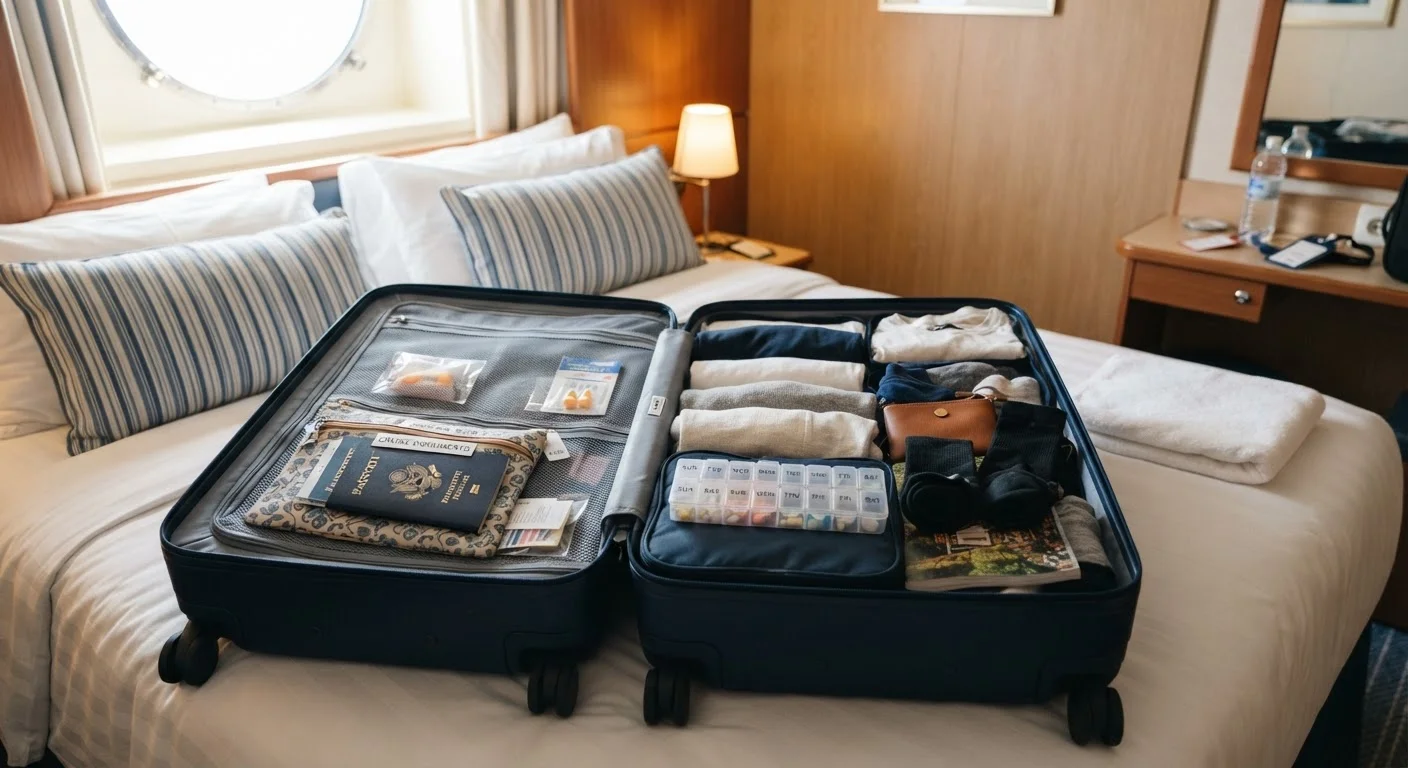
Waterproof Document Pouch
Keeps passport, insurance paperwork, and boarding documents protected and organized in one accessible location.
Weekly Pill Organizer
Helps manage multiple medications reliably across changing time zones and port schedules.
Portable Blood Pressure Monitor
Allows seniors managing hypertension to track readings independently during the voyage without relying on the ship's medical center.
Compression Socks
Supports healthy circulation during long sea days and flights to the embarkation port — consult your doctor before use.
CPAP Machine with Travel Adapter
Essential for travelers with sleep apnea; verify your cabin's outlet voltage and availability of distilled water with the cruise line before sailing.
Non-Slip Deck Shoes
Provides safe footing on wet pool decks, gangways, and uneven port surfaces — a practical safety essential for any cruise.
The Senior Cruiser Packing Checklist
Work through each category below before your departure. Items marked must are non-negotiable — they protect your health, safety, and ability to enjoy the trip. Items marked should are strongly recommended based on common senior traveler needs. Nice-to-have items add comfort without being critical.
Medications and Health Management
Mobility Aids and Accessibility Gear
Clothing and Comfort Layers
Health Supplies and Personal Care
Documents and Emergency Essentials
Seasickness Medication: Plan Ahead
Motion sickness can affect even experienced cruisers, particularly in rougher seas or on smaller vessels. Over-the-counter remedies such as antihistamine-based tablets and acupressure wristbands are widely used, but some medications can cause drowsiness or interact with other drugs. Speak with your physician before the trip to identify the safest option for your health profile — and pack it where you can access it quickly at the first sign of discomfort.
If you're also weighing how to divide items between carry-on and checked bags, our article on carry-on vs. checked luggage for senior travelers covers that trade-off in detail. For a deep dive into what belongs in a dedicated medical pouch, see packing a senior travel health kit.
Documents, Insurance, and Emergency Contacts
Health and mobility supplies get most of the attention, but paperwork gaps can derail a cruise just as quickly. Keep all critical documents in a dedicated pouch in your carry-on or day bag — never in checked luggage. For strategies on securing your valuables and documents throughout the journey, see protecting personal belongings and documents while traveling as a senior.
Never Check Your Medications
Checked luggage can be delayed, misdirected, or temporarily inaccessible during embarkation. All prescription medications — particularly those for heart conditions, diabetes, respiratory issues, or other chronic conditions — must travel with you in your carry-on or personal bag. Carry enough supply to cover unexpected delays, and keep your medication list on your person in case of a medical event onboard.
This article provides general travel planning information for educational purposes. It is not medical advice. Always consult your physician before travel, particularly regarding medications, mobility devices, or any health conditions that may affect your safety at sea or in port. Travel insurance details vary by provider — read your policy carefully and consult a licensed agent with questions about coverage.