

Key Takeaways
- Carry all prescription medications in your carry-on, never in checked luggage.
- A laminated medical summary card can be critical in an emergency when you can't speak for yourself.
- Over-the-counter supplies should be chosen based on your specific health conditions and destinations.
- Your health kit should be reviewed and updated before every trip, not just once.
Summary
22 items · 30–60 minutes
Why a Dedicated Health Kit Makes a Real Difference
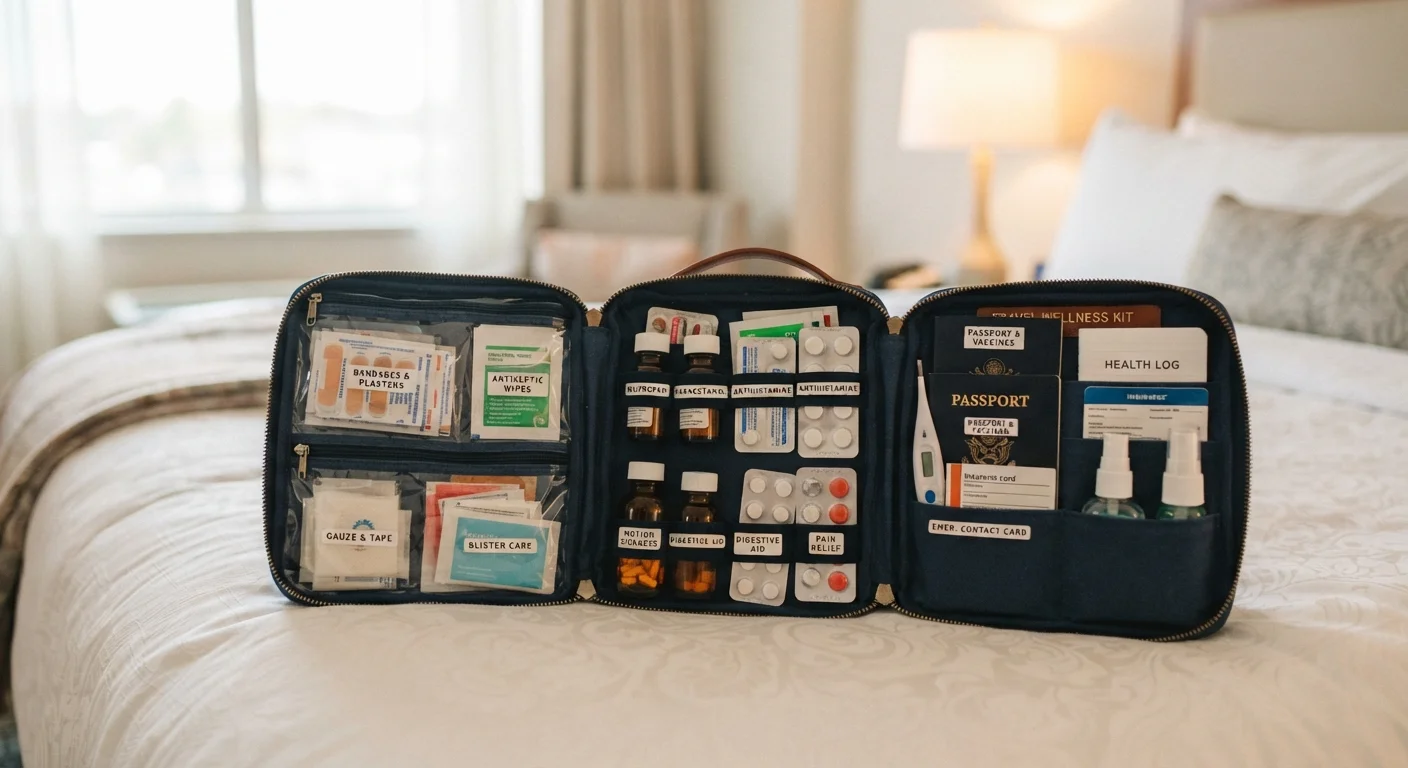
A travel health kit is not just a bag of bandages. For older adults managing chronic conditions, multiple medications, or mobility concerns, it is a structured safety net designed to handle the unexpected — a delayed flight, a minor injury, or a flare-up far from home.
The goal is a compact, purposeful kit that covers medications, emergency documentation, and a handful of well-chosen supplies. Nothing more, nothing less. If you haven't yet had a pre-travel conversation with your doctor, our guide on what to discuss at a pre-travel medical appointment is a helpful starting point before you start assembling anything.
Use the checklist below to audit what you already have, identify gaps, and pack with confidence.
Labeled Zipper Pouch or Pill Organizer
Keeps medications and small supplies neatly separated and easy to access during security checks.
Insulated Medication Case
Maintains a stable temperature for medications that require cool storage during transit.
Digital Thermometer
Allows you to take your temperature quickly to help decide when professional care is needed.
Laminated Medical Summary Card
Provides emergency responders with your medical history, allergies, and contacts when you may not be able to speak.
The Complete Senior Travel Health Kit Checklist
Work through each group below before you zip up your bag. Items marked must are non-negotiable — missing them creates real risk. Items marked should are strongly recommended for most travelers. Nice-to-have items add comfort and convenience without being essential.
Prescription Medications
Medical Documents
First Aid Essentials
Over-the-Counter Medications
Mobility and Comfort Aids
Eye, Ear, and Skin Care
Don't Rely on Destination Pharmacies for Essentials
While pharmacies exist in most destinations, brand names, formulations, and availability can vary significantly abroad and even in remote domestic locations. Some prescription medications may not be available or may require a local prescription to obtain. Always carry a sufficient supply from home rather than planning to purchase critical medications at your destination.
For a broader look at how this kit fits into your overall trip safety strategy, see our complete senior travel safety planning framework. If you're flying, our article on carry-on versus checked luggage for senior travelers explains exactly why your health kit belongs in the cabin with you.
Storing and Maintaining Your Kit
Packing the right items is only half the task. Where and how you store your kit matters just as much.
- Keep it in your carry-on. Never place prescription medications or critical documents in checked baggage. Luggage can be delayed, lost, or stored in temperature extremes.
- Use a dedicated pouch. A single labeled zipper pouch keeps everything together and speeds up security screening.
- Check expiration dates before every trip. Medications, ointments, and even adhesive bandages have shelf lives. Replace anything expired well before departure.
- Restock after each trip. If you used anything — even a single bandage — replace it before your next journey.
Traveling on a cruise? Many of these same principles apply, and you can find cruise-specific packing advice in our guide on packing comfort essentials for senior cruisers. For travelers trying to manage weight and space, packing light without leaving essentials behind offers practical strategies that don't require sacrificing health supplies.
Review Your Kit With Your Doctor Before Every Trip
Your health needs can change between trips, and so can your medications. Before each journey, confirm with your physician that your current kit contents are still appropriate, that vaccinations are up to date for your destination, and that no new health developments affect what you should carry. A 15-minute pre-trip check-in can prevent a serious problem later. See our full guide on senior travel health before, during, and after your trip for a comprehensive wellness reference.
This article provides general travel preparation information for educational purposes only. It is not medical advice. Always consult a qualified healthcare professional about your specific health needs before traveling, particularly regarding medications, medical devices, and health conditions.