
Traveling With Prescription Medications: Rules, Storage, and Documentation

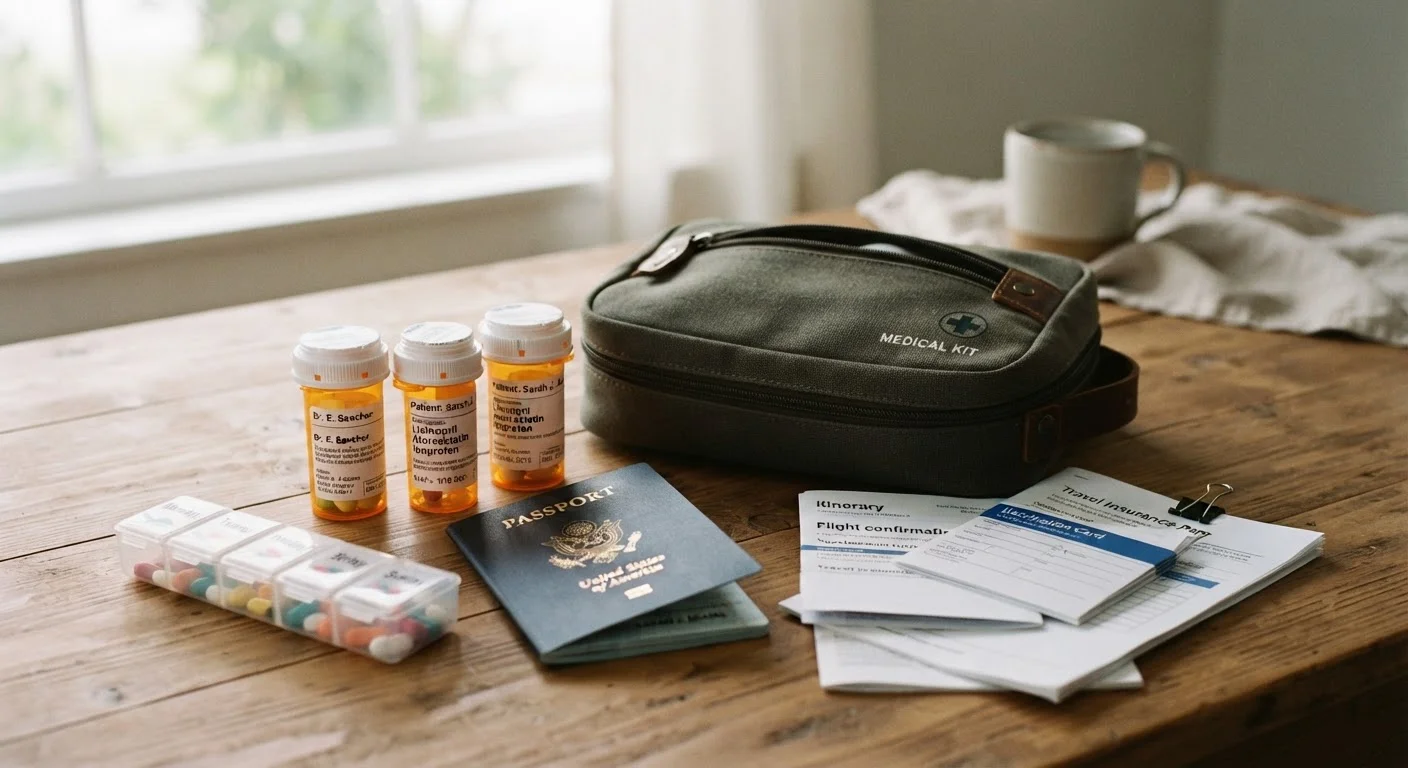
Key Takeaways
- Always carry medications in their original, labeled pharmacy bottles when crossing borders.
- Get a signed letter from your doctor listing all prescriptions before international travel.
- Research your destination country's rules — some common US medications are restricted abroad.
- Store temperature-sensitive medications in an insulated pouch, never in checked luggage.
- Carry at least a seven-day supply beyond your planned return date to cover delays.
- Adjust dosing schedules carefully when crossing multiple time zones — consult your doctor first.
What you will need
Why Medication Preparation Matters Before You Leave Home
For many senior travelers, prescription medications are non-negotiable daily necessities. Getting this preparation right — before you pack a single bag — prevents unnecessary stress at airport security, border crossings, and foreign pharmacies. The rules around carrying medications vary significantly by country and by type of medication, so a small amount of advance planning protects you from serious complications.
This guide walks you through exactly what to gather, how to store your medications safely, and which documents to carry. For a broader look at staying healthy throughout your trip, see the Travel Health Tips hub and our Travel Safety Tips hub.
What you will need
Understanding Rules and Restrictions
The United States has relatively straightforward rules for domestic travel — the TSA permits prescription medications in carry-on bags and does not require them to be in original containers, though it is strongly recommended. For detailed guidance specific to air travel, see our article on medications and air travel packing and security rules.
International travel is more complex. Some medications that are legal and common in the US — certain pain relievers, anxiety medications, or stimulants — are classified as controlled substances or even prohibited in other countries. Always verify restrictions directly with the embassy or consulate of your destination country well before departure. The US State Department's travel information pages are a reliable starting point.
Controlled Substances Require Extra Steps
If your prescriptions include opioids, benzodiazepines, stimulants, or other controlled substances, many countries require advance permits that can take weeks to process. Carrying these medications without authorization — even with a valid US prescription — can have serious legal consequences. Contact the destination country's embassy as early as possible, and consult your doctor about whether your travel itinerary is medically advisable given your medication needs.
If you are traveling with controlled substances (such as opioids or certain sedatives), many countries require a permit obtained in advance. Processing times can be several weeks, so begin this research at least two months before your trip.
Documentation to Gather Before Your Trip
Proper paperwork is your best protection at any border. At minimum, assemble the following documents and keep them in your carry-on bag alongside your medications.
Obtain a signed physician's letter
Ask your doctor to write a letter on official letterhead listing each medication by generic and brand name, the condition it treats, the prescribed dosage, and confirmation that it is medically necessary. If you take controlled substances, request this letter well in advance — some destinations require a notarized or officially translated version.
Keep medications in original pharmacy bottles
Original labeled bottles confirm the medication is prescribed to you personally. The label should show your full name, the pharmacy name and phone number, the prescribing physician, and the drug name and strength. Ask your pharmacist for duplicate labeled bottles if you need to split your supply between bags.
Pack an adequate supply — plus a buffer
Count the number of days you will be away, then add at least seven extra days' worth of each medication to cover flight delays, lost luggage, or unexpected trip extensions. Split your supply between your carry-on and a secondary bag when possible, retaining the primary supply on your person at all times.
Research destination-specific rules
Contact the embassy of every country on your itinerary — not just your final destination — to confirm which medications are permitted, whether quantities are limited, and whether any permits are required. Regulations differ widely and can change, so verify directly rather than relying on general travel forums.
Arrange proper storage for the journey
Use an insulated medication pouch for any drugs that must remain below room temperature (generally below 77°F / 25°C). Insulin and certain biologics typically require refrigeration — a TSA-approved cooling case or medical-grade ice pack is appropriate for short trips; confirm hotel refrigerator availability in advance for longer stays.
For a thorough checklist of health records and insurance documents to bring on international trips, see our guide on packing your medical documentation for international travel.
Storage, Temperature, and Time Zones
Medications stored incorrectly can lose their effectiveness — or become unsafe. Heat and humidity are the most common culprits during travel. Never leave medications in a hot car, checked baggage hold, or an unventilated bag in direct sunlight.
Keep Medications in Your Carry-On Bag
Checked luggage can be lost, delayed, or exposed to extreme temperatures in the cargo hold. Always keep your full medication supply — or at minimum your primary supply — in your carry-on bag where it remains with you throughout the journey. This also gives you immediate access if you need a dose during a long flight.
Crossing multiple time zones raises a different concern: when do you take a medication that is normally tied to a fixed clock time? For most once-daily medications, shifting your dose gradually over two or three days is a common approach — but you should discuss a specific plan with your prescribing physician before departure. Do not adjust dosing schedules based on general advice alone.
Seniors traveling by RV face additional storage challenges. Our dedicated articles on managing medications on a long RV journey and maintaining medication routines while living in an RV offer practical solutions for those extended road trips.
For a concise reference that applies to most types of travel, our article on keeping prescriptions safe and organised while travelling covers the essentials in one place.