

Key Takeaways
- Medical documentation is the most critical category of paperwork for senior international travelers.
- Your insurance policy's emergency contact number should be stored in your wallet, phone, and luggage.
- Carry both physical and digital copies of all health records and insurance documents.
- A physician's letter summarizing your conditions and medications is essential for foreign medical staff.
- Always verify document requirements with your insurer before departure — not after an emergency.
Summary
22 items · 30–60 minutes
Why Medical Documents Matter More Than Your Itinerary
When a health issue arises abroad, the quality of care you receive often depends on how quickly medical staff can understand your history — and how quickly your insurer can authorize treatment. A missed medication list or a misplaced policy number can turn a manageable situation into a costly, frightening one.
For senior travelers, this risk is amplified. Many manage ongoing conditions, take multiple prescriptions, or travel with medical devices. Foreign hospitals need clear, translated information to act quickly and safely. Your travel insurer needs specific documentation to approve emergency coverage without delay.
This checklist covers every document worth carrying, organized by category, so you can prepare methodically and travel with genuine confidence. For a broader framework on managing a health condition while abroad, see our guide on managing a chronic condition abroad.
Pre-Authorization Can Be Non-Negotiable
Many travel insurance policies require you to contact the insurer's emergency assistance line before receiving non-emergency hospital treatment abroad. Failing to do so — even in good faith — can result in reduced or denied reimbursement. Read your policy's pre-authorization requirements before you leave, and keep that phone number immediately accessible at all times.
What to Gather and How to Organize It
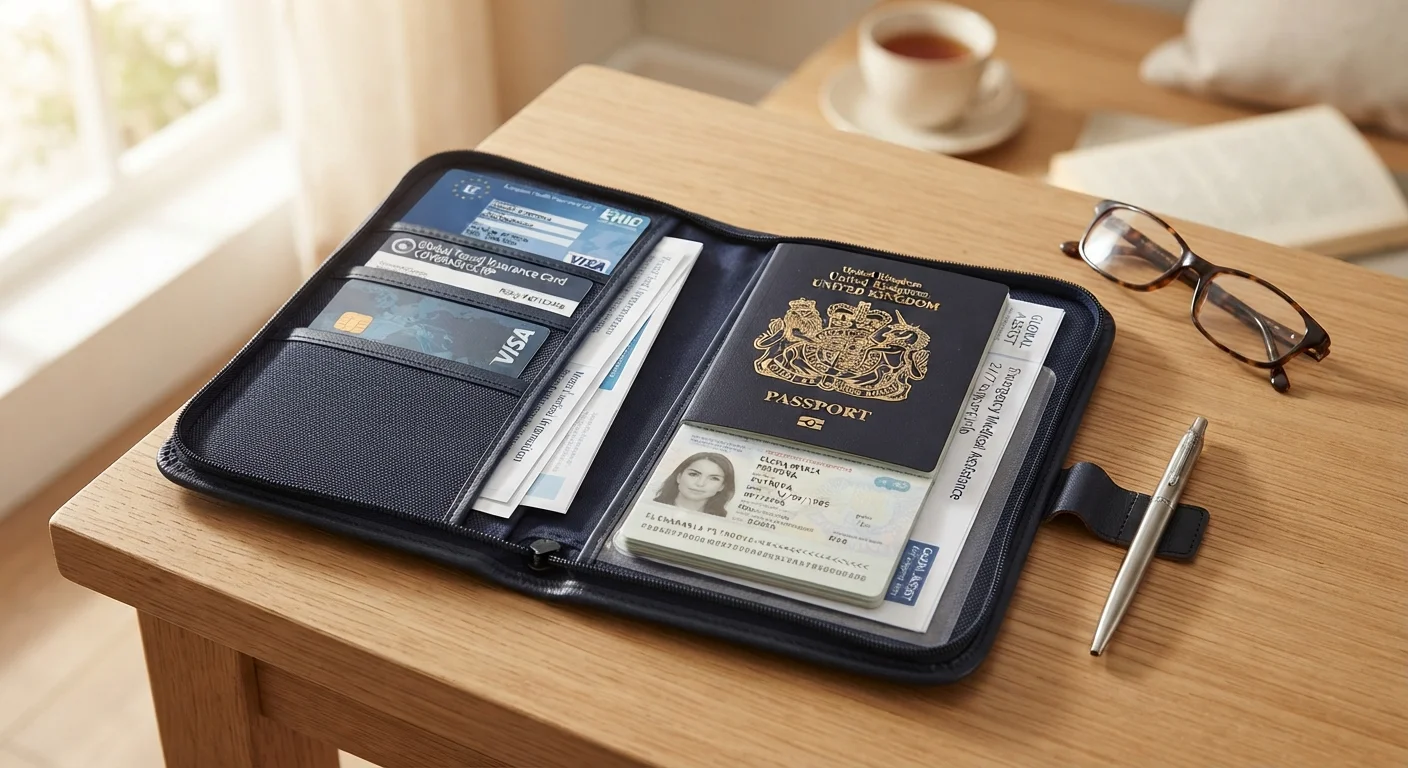
Start assembling your medical document packet at least two to three weeks before departure. This gives your physician time to prepare letters, and gives you time to verify insurance details and make copies. Use a dedicated waterproof folder or pouch — separate from your general travel documents — so everything is in one predictable place.
Consider the storage format carefully. Physical copies are essential; digital backups add a critical safety layer. For a detailed comparison of both approaches, our article on digital copies versus physical document backups walks through the practical trade-offs.
Insurance Documents
Physician's Letter and Medical Summary
Prescription and Medication Records
Recent Test Results and Specialist Records
Copies and Backup Strategy
Pre-Departure Verification
If you travel with a CPAP machine, portable oxygen concentrator, or other medical device, additional airline and customs documentation will be needed. See our guidance on flying with a medical device for what to prepare.
Medications and Prescriptions: A Parallel Priority
Prescription documentation deserves its own section of your travel packet. Customs officers and foreign pharmacies may require proof that medications are legitimately prescribed — generic drug names (not just brand names) are essential because names vary by country.
Our companion article on traveling with prescription medications covers border rules, storage requirements, and how to handle time zone changes. For practical day-to-day guidance once you're traveling, managing prescription medications safely while traveling abroad is a useful reference.
Customs Rules for Medications Vary Widely
What is a routine prescription in the United States may be a controlled or prohibited substance in another country. Before you travel, verify the legal status of each of your medications with the destination country's embassy or official government health authority. Never rely solely on information from informal sources or fellow travelers for this check.
Once your documents are in order, knowing what to do with them in a crisis is the next step. Our guide on communicating a medical emergency in a foreign country explains how to reach local emergency services and help foreign medical staff understand your needs quickly. And if a claim becomes necessary, filing a medical claim abroad takes you through each step of the process.
This article is for general informational purposes only and does not constitute medical, legal, or insurance advice. Coverage terms, exclusions, and requirements vary by provider and policy. Always read your policy documents carefully and consult a licensed insurance professional for guidance specific to your situation. Consult your physician before travel regarding your individual health needs.