

Key Takeaways
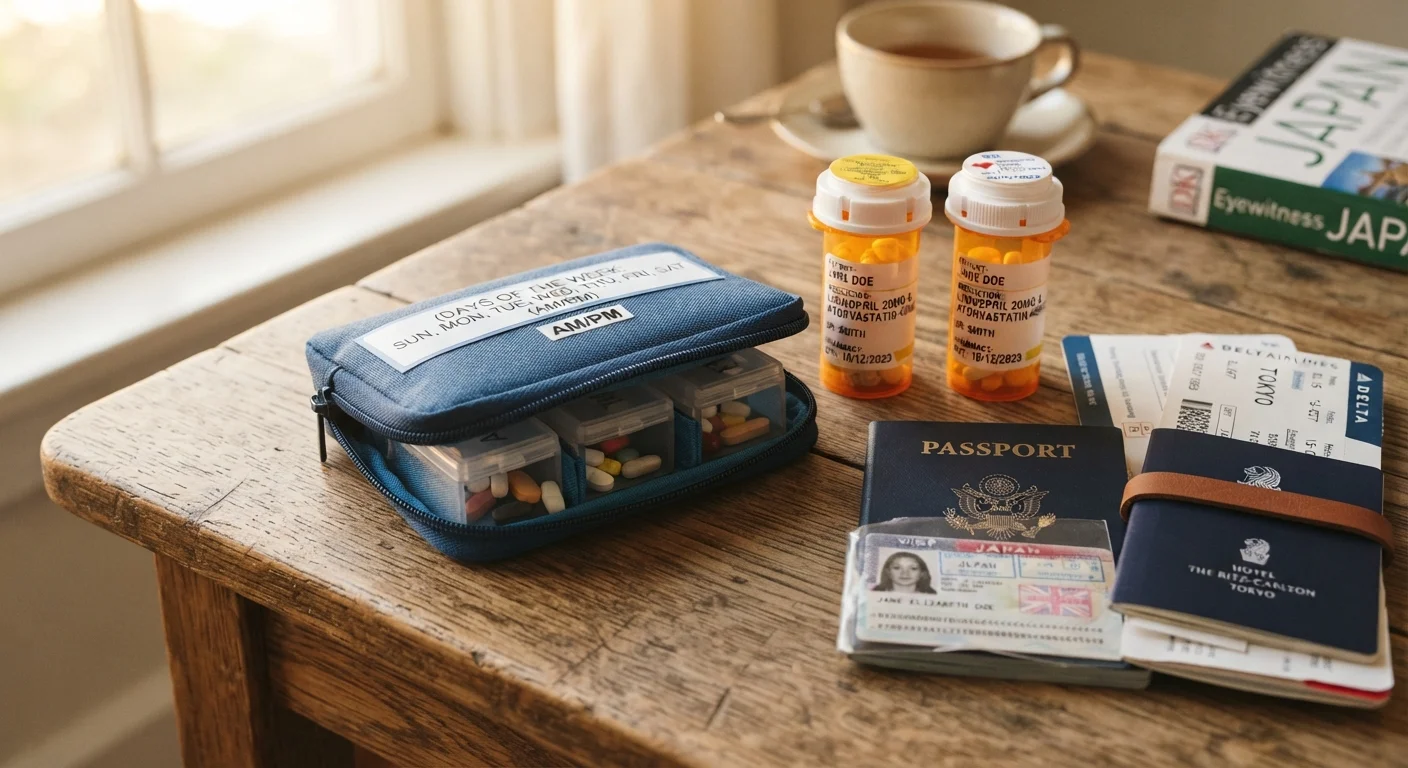
- Always carry medications in their original labeled containers to ease border crossings.
- Bring a signed letter from your doctor listing all prescriptions, dosages, and medical conditions.
- Research the destination country's import rules for each medication before you depart.
- Store a complete set of medication documents separately from the physical medications.
- Pack enough supply for your entire trip plus several extra days as a buffer.
Why International Medication Management Requires Extra Planning
Traveling abroad with prescription medications involves more than simply packing your pill bottles. Border regulations, language barriers, unfamiliar healthcare systems, and the risk of lost luggage can all turn a manageable situation into a stressful one — especially for older travelers who depend on daily medications to stay well.
The good news is that careful preparation before you leave home resolves the vast majority of these concerns. Our trip prep basics hub covers the full spectrum of pre-departure steps, and medication planning sits near the top of that list. For a deeper look at the legal and storage dimensions specifically, see our companion article on traveling with prescription medications: rules, storage, and documentation.
This Is General Information, Not Medical Advice
The guidance in this article is intended for general educational purposes only. Every traveler's medical situation is unique. Always consult your personal physician or pharmacist before making any changes to how you manage, store, or carry your prescription medications while traveling abroad.
Country Rules Vary Widely
Some medications that are legally prescribed in the United States are controlled or outright prohibited in other countries. This includes certain pain relievers, sleep aids, and anxiety medications. Always verify current entry rules for your specific destination through that country's official embassy or consulate website before traveling.
Core Best Practices for Carrying Medications Safely
The practices below reflect widely recommended guidance from public health authorities and experienced travel health advisors. They are designed to help you move through customs smoothly, protect your medication supply throughout the trip, and respond effectively if something goes wrong.
Carry medications in their original, pharmacy-labeled containers at all times.
Original containers show the prescribing doctor's name, dosage instructions, and dispensing pharmacy — all details that customs officers and border agents may request. Loose pills in unlabeled containers can raise serious questions and cause delays.
Obtain a signed physician's letter listing every prescription medication before you depart.
A doctor's letter provides formal evidence that your medications are legitimately prescribed for a medical condition. It should include the generic drug name, brand name, dosage, and a brief explanation of the condition being treated. This document can also help local healthcare providers if you need medical assistance abroad.
Research destination-specific import rules for each medication well before your travel date.
Drug regulations differ significantly by country. A controlled substance permitted in the US may require special import permits or be prohibited entirely elsewhere. Learning this ahead of time allows you to consult your doctor about alternatives or obtain the appropriate permits.
Pack a minimum of a seven-day extra supply beyond your expected travel duration.
Flights are delayed, itineraries change, and pharmacies abroad may not stock your specific medication or brand. A buffer supply protects you from running out in a situation where resupply is difficult or impossible.
Store copies of all medication documentation separately from the physical medications.
If your bag is lost or stolen, having documentation stored separately — in a second bag, a travel companion's luggage, or digitally — means you can still prove what medications you need and obtain emergency assistance. See our guidance on digital versus physical document backups for practical options.
Use a consistent daily medication schedule that accounts for time zone changes.
Crossing multiple time zones can disrupt dosing intervals, particularly for time-sensitive medications like insulin or heart rhythm drugs. Work with your doctor in advance to create a clear schedule adjustment plan rather than guessing on the road.
Ask About a Vacation Override at Your Pharmacy
Most US insurance plans allow a one-time early refill — sometimes called a vacation override — when you need extra medication supply before an international trip. Call your pharmacy or insurance provider at least a few weeks before departure to request this, as approval can take time. Your pharmacist can often help initiate the request on your behalf.
Documentation, Storage, and What to Do If Problems Arise
Proper documentation is your first line of defense at any international checkpoint. Pair your physician's letter with copies of your actual prescription labels. For advice on organizing these records effectively, our article on packing your medical documentation for international travel outlines exactly what to include.
Storage matters just as much as paperwork. If any of your medications require refrigeration or must stay below a certain temperature, verify this with your pharmacist and invest in an appropriate insulated travel case. Airlines generally permit medically necessary items in carry-on luggage — for a full overview of what to expect at airport security, see our guide on medications and air travel: packing, storage, and security rules.
40%+
Seniors managing multiple daily prescriptions
According to data from the National Council on Aging, more than 40% of adults over 65 take five or more prescription medications regularly.
1 in 3
International travelers who experience travel disruptions
The US Travel Insurance Association has noted that trip interruptions — including medical events — affect a significant share of international travelers each year.
If a medication is lost or stolen abroad, contact your travel insurance provider immediately, then reach out to the nearest US Embassy or Consulate for assistance locating a local physician who can issue an emergency prescription. Always carry your insurer's 24-hour emergency number in printed form as well as saved on your phone.
“When traveling internationally, the most common medication problems we see involve travelers who didn't know a drug was restricted at their destination, or who couldn't prove a legitimate prescription when asked. A little paperwork before departure prevents most of these situations.”
— Centers for Disease Control and Prevention (CDC), US Federal Public Health Agency — Travelers' Health Division
For additional wellness strategies tailored to senior travelers, our travel health tips hub covers a wide range of topics from managing jet lag to staying hydrated on long flights.
Quick Actions You Can Take Before Your Next Trip
You don't need to tackle every preparation step at once. Start with the highest-impact actions below and work through them systematically in the weeks before departure.
This article provides general information for educational purposes only and is not a substitute for personalized medical, legal, or pharmaceutical advice. Always consult your physician, pharmacist, and relevant official government sources before traveling abroad with prescription medications.