

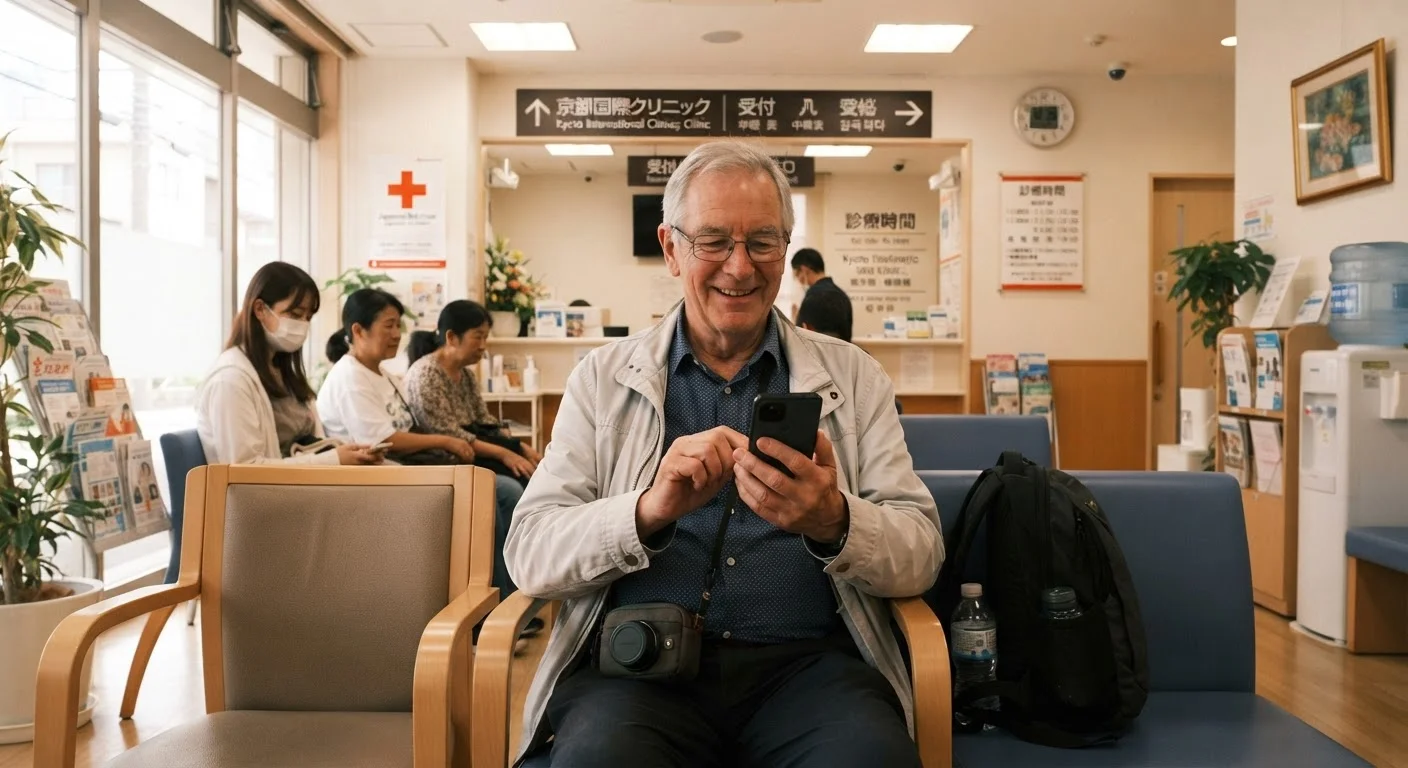
Key Takeaways
- Save the local emergency number for every country you visit before you arrive.
- A printed medical summary card in the local language can communicate critical health details instantly.
- Translation apps work offline — download languages in advance so you aren't dependent on data.
- Travel insurance with a 24-hour emergency assistance line is one of your most valuable resources abroad.
- Hotel staff and tour guides can act as interpreters in a pinch — don't hesitate to ask.
What you will need
Why Communication Preparation Matters for Senior Travelers
A medical emergency is stressful in any setting. Facing one in a foreign country — where you may not speak the language, recognize the healthcare system, or know the emergency number — adds a layer of anxiety that can delay critical care. For older travelers, who are more likely to manage ongoing health conditions, being prepared to communicate clearly across a language barrier is not optional. It is a core part of safe travel planning.
The good news is that effective preparation requires only a few straightforward steps before departure. Understanding how foreign healthcare systems work can also reduce fear. Our Senior Traveler's Reference Guide to International Healthcare Access explains how popular destinations handle foreign patients, which can help you know what to expect. For those managing ongoing health conditions, Managing a Chronic Condition Abroad offers a practical framework for pre-departure planning.
Ask Your Doctor Before You Leave
Request a brief written summary of your medical conditions, current medications (including generic names), and known allergies. Ask your doctor to keep the language simple and, if possible, have it translated professionally before departure. This document is often the single most useful item you can carry abroad.
For broader strategies on navigating language differences beyond medical situations, see our article on communicating across language barriers as an older traveler.
What to Do — Step by Step
What you will need
Offline Translation App
Converts spoken or typed words into the local language when you cannot communicate verbally with medical staff.
Printed Bilingual Medical Summary Card
Communicates your health conditions, medications, allergies, and blood type to emergency responders without needing a device or internet connection.
Travel Insurance Emergency Assistance Card
Provides your policy number and a 24-hour multilingual helpline that can coordinate care and act as a live interpreter.
Destination Emergency Number Reference
Ensures you can dial the correct local emergency number immediately — numbers vary widely by country.
Call the Correct Local Emergency Number
Emergency numbers differ by country. The US number 911 does not work everywhere. In most of Europe, 112 is the standard. Japan uses 119 for ambulance services. Research and save the correct number for each country on your itinerary before you leave home. Store it in your phone's contacts and write it on your printed emergency card.
Use a Simple, Clear Phrase to Signal an Emergency
When calling or speaking to a bystander, use the word for help or emergency in the local language. Even a heavily accented attempt signals urgency. Before your trip, memorize — or write on your card — phrases such as "I need an ambulance" and "I have chest pain" in the destination language. Keep the sentences short and direct.
Hand Over Your Printed Medical Summary Card
Once emergency responders or hospital staff arrive, immediately present your bilingual medical summary card. This card should list your diagnosed conditions, current medications with generic names and dosages, known allergies, blood type, and your doctor's contact information. See our guide to building an emergency contact card for exactly what to include. Keep the card in an easy-to-find location — a front pocket, lanyard pouch, or the first slot in your wallet.
Open Your Translation App or Use Your Phone's Voice Feature
If you need to communicate beyond what your card covers, open your offline translation app. Type or speak your symptoms in English and show the screen to the medical provider. Apps that offer a two-way conversation mode allow the doctor to respond in their language and have it translated back to you. Make sure the offline language pack is downloaded before you travel, so the app functions without mobile data.
Contact Your Travel Insurance Emergency Assistance Line
As soon as the immediate emergency is stabilized, or if a companion can do so right away, call your travel insurance provider's 24-hour emergency assistance number. Many insurers offer live multilingual interpretation, can coordinate direct payment to the hospital, and can arrange medical evacuation if needed. Your policy card should have this number printed on it. For broader context on what travel medical coverage typically involves, visit our Medical & Health Coverage hub.
Ask Hotel or Tour Staff to Assist With Interpretation
Hotel concierge staff and licensed tour guides frequently speak multiple languages and are trained to respond to guest emergencies. Do not hesitate to ask them to accompany you to the hospital or to speak with medical staff by phone. Their help can bridge language gaps quickly while you focus on your care.
Never Rely Solely on One Communication Method
Translation apps can fail when your battery is dead or data is unavailable. Always carry a printed backup — a bilingual medical card — so critical information can be shared even without technology. Relying on a single tool in an emergency is a preventable risk.
This Article Is General Information Only
The guidance here is educational and does not constitute medical or legal advice. In any medical emergency, call the local emergency number immediately. Always consult a qualified healthcare professional for personal medical decisions, and verify entry, insurance, and safety information with official sources before you travel.
Once the immediate emergency has passed and you have received care, your next priority is documenting what happened — receipts, medical reports, and any costs incurred. Our guide on filing a medical claim abroad walks you through the process of working with your insurer after a health event overseas. For ongoing wellness strategies throughout your trip, explore the Travel Health Tips hub.
This article is intended for general informational purposes only and does not constitute medical, legal, or insurance advice. Always consult a qualified healthcare professional for personal medical guidance. Verify emergency numbers, entry requirements, and insurance coverage with official sources before you travel.