

| Recommended card size | Wallet-sized (credit card or 3×5 index card) |
| Minimum emergency contacts listed | 2 people with international phone numbers |
| Copies recommended | At least 3 (wallet, health kit, digital backup) |
| When to update | Before every trip or after any medication change |
| Languages | Include a translated version for international travel |
Why Every Senior Traveler Needs an Emergency Contact Card
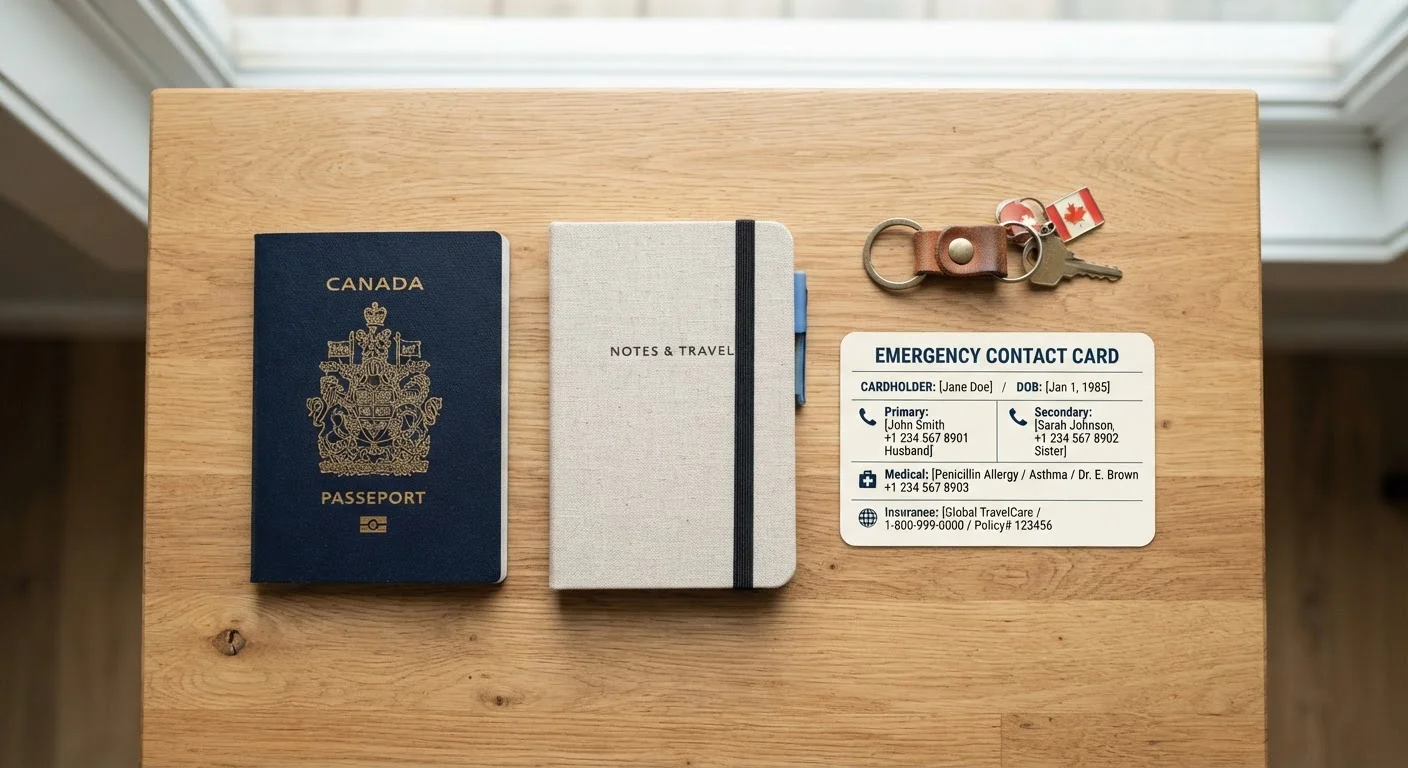
An emergency contact card is a small, portable document that gives first responders, medical staff, and bystanders the critical information they need to help you — fast. For senior travelers managing chronic conditions, multiple medications, or mobility considerations, having this information immediately accessible can make a meaningful difference in an urgent situation.
Unlike a full medical record, a contact card is designed to be scannable in seconds. It does not replace carrying complete documentation, but it bridges the gap during those first critical moments when you may not be able to speak for yourself.
This reference guide is part of a broader framework covered in our senior travel safety planning guide. If you are still gathering your travel documents, also see our passport and identification documents reference guide for what else to carry and keep safe.
| Recommended card size | Wallet-sized (credit card or 3×5 index card) |
| Minimum emergency contacts listed | 2 people with international phone numbers |
| Copies recommended | At least 3 (wallet, health kit, digital backup) |
| When to update | Before every trip or after any medication change |
| Languages | Include a translated version for international travel |
What to Include on Your Emergency Contact Card
Keep the card concise — legible type, no smaller than 10-point font, printed or written clearly. Include the following categories:
Personal Identification
- Full legal name
- Date of birth
- Home address
- Primary language spoken
Emergency Contacts
- At least two people (name, relationship, phone number with country code)
- A neighbor or local contact who can act quickly if family is unreachable
Medical Information
- Known diagnoses (e.g., type 2 diabetes, atrial fibrillation)
- Current medications — name, dosage, and frequency
- Known allergies, especially drug allergies
- Blood type, if known
- Primary care physician name and phone number
Insurance Details
- Health insurance provider and policy number
- Travel insurance provider and 24-hour emergency assistance number
- Medicare or supplemental plan information if applicable
If you travel internationally, consider adding a translated version of your medical conditions and allergy list. Our article on communicating a medical emergency abroad offers practical steps for that situation.
Keep Insurance Numbers Separate from Policy Documents
Your emergency contact card should include the direct emergency assistance phone number for your travel insurance — not just the policy number. Policy documents are often stored in luggage and may not be reachable in a crisis. Writing the 24-hour assistance line on the card itself means help is one call away regardless of where your bag is.
A medical alert ID can complement your contact card by conveying critical details — like severe allergies or pacemaker use — even if the card is not immediately found.
Where to Keep Your Emergency Contact Card
The card is only useful if someone can find it quickly. Store copies in multiple locations:
- Wallet or purse — your most reliable everyday carry location
- Travel health kit — see our guide on what belongs in a senior travel health kit for how to organize this
- Hotel room safe or bedside table — accessible if you need help in your room
- Shared digitally — email or text a photo of the card to your emergency contacts before you depart
- Phone lock screen or health app — many smartphones allow you to store emergency medical information accessible without unlocking the device
Emergency contact card
A compact, portable document listing your personal, medical, and insurance information for use by first responders or bystanders in an urgent situation. It is intended to be quickly readable, not comprehensive.
Travel insurance emergency line
A 24-hour telephone number provided by your travel insurance policy that connects you or responders to assistance services — including medical referrals, evacuation coordination, and claims guidance — while you are away from home.
Medical alert ID
A wearable tag or card that communicates life-critical health information — such as severe allergies or a pacemaker — to emergency personnel who find you before they can locate your contact card.
Supplemental plan
An additional insurance policy that works alongside primary coverage, such as a Medicare supplement (Medigap) plan, to cover costs like copayments, deductibles, or services in locations not served by the primary plan.
Review and update your card before every trip. Medications and insurance details change, and an outdated card can mislead responders. This is a simple but important part of the trip prep basics every traveler should complete.
This article provides general informational guidance only and is not a substitute for personalized medical or legal advice. Always consult your healthcare provider about your specific medical needs before traveling.