

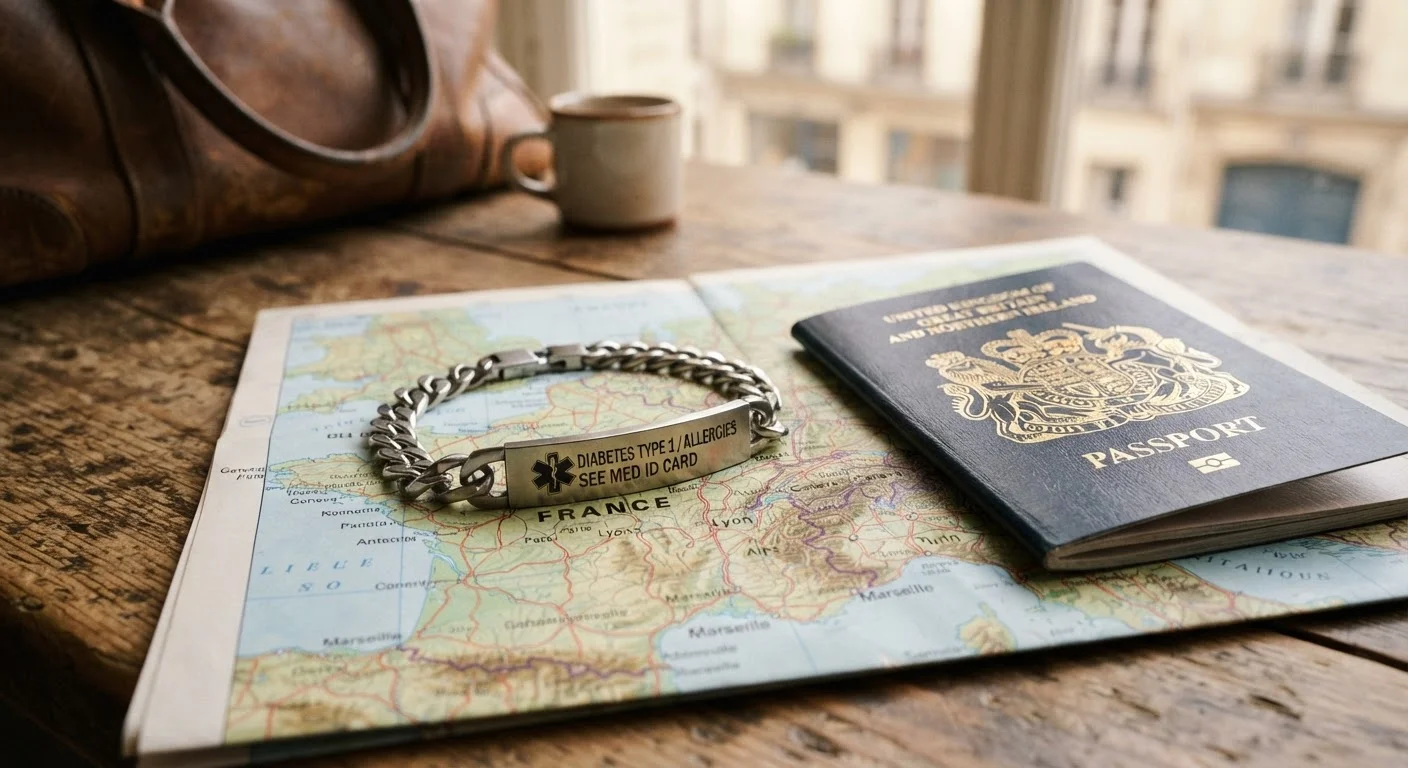
Key Takeaways
- Medical alert IDs communicate critical health details to responders when you cannot speak.
- They should list conditions, drug allergies, current medications, and an emergency contact.
- Both wearable tags and wallet cards are valid formats; many travelers use both.
- Keeping information current is just as important as carrying the ID in the first place.
- A medical alert ID works alongside — not instead of — travel insurance and emergency contact cards.
Medical Alert ID
A medical alert ID is a wearable tag, bracelet, or card that displays critical health information about the person carrying it. It tells emergency responders about serious conditions, allergies, or medications before the person can speak for themselves. These identifiers are designed to be found quickly during a medical emergency.
Medical alert IDs may be physical (engraved metal tags, wallet cards) or digital (QR-code pendants linking to an online health profile). Both types serve the same core function: bridging the communication gap in a crisis.
What a Medical Alert ID Actually Is
A medical alert ID is any item — bracelet, pendant, wallet card, or digital tag — that carries essential health data about its owner. The sole purpose is to inform emergency medical personnel of facts they need to treat you safely, even if you are unconscious, confused, or otherwise unable to communicate.
Engraved metal bracelets and wallet-sized cards are the most common formats in the United States. Both are widely recognized by paramedics, emergency room staff, and first responders who are trained to look for them. Some newer options use a small QR code that links to a secure online health profile, though a simple engraved tag requires no technology to read and works in any setting, including remote areas or international destinations where smartphone connectivity is uncertain.
For broader context on building a complete safety kit, see our guide on packing a senior travel health kit.
Medical Alert IDs Are Not a Substitute for Professional Care
Carrying a medical alert ID is a practical safety step, but it does not replace working with your healthcare provider before travel. Your doctor can advise which conditions and medications are most critical to document, and whether your planned destination poses any specific health considerations. Always consult a qualified healthcare professional for personal medical decisions.
What Information Belongs on One
Space on a wearable tag is limited, so every word must earn its place. Emergency responders are trained to look for four categories of information:
- Medical conditions: Any diagnosis that could affect treatment — for example, a heart condition, diabetes, epilepsy, or a blood-clotting disorder.
- Drug allergies: Especially those that could cause anaphylaxis or dangerous reactions to common emergency medications.
- Current medications: Particularly blood thinners, insulin, or heart medications that interact with common treatments.
- Emergency contact: A name and phone number for someone who knows your full medical history.
A wallet card can carry more detail: your physician's name and number, insurance policy information, and a brief medication list with dosages. Think of the wearable as the alert and the card as the backup file. Our related article on emergency contact cards walks through exactly what to include in that fuller document.
Keep a Wallet Card Alongside Your Wearable
An engraved bracelet can only hold a few lines of text. A laminated wallet card behind your insurance card can carry your full medication list, dosages, physician contacts, and allergy details. Together, the two formats cover both speed and depth when responders need information fast.
Why It Matters More When You're Traveling
At home, your neighbors, family, or regular doctor may know your health history. On the road, you are often surrounded by strangers — on a cruise ship, at an airport gate, or in an unfamiliar city — who have no way of knowing you take a blood thinner or carry an epinephrine auto-injector.
Language barriers add another layer of risk on international trips. An engraved medical alert ID in a universally recognized format — the medical caduceus symbol is understood in most countries — can communicate across language gaps faster than any translation app.
70%
Adults 65+ with at least one chronic condition
According to U.S. Centers for Disease Control and Prevention data, the majority of older adults manage at least one ongoing health condition that can affect emergency treatment decisions.
~4 minutes
Average time for first responders to assess a patient
Emergency medicine guidelines emphasize that the first few minutes of care are critical, making immediately available health information especially valuable during that window.
A medical alert ID is also a practical partner to your travel insurance. Insurance handles the financial side of a medical emergency; the ID handles the clinical side. Both are part of a complete safety plan. You can learn more about how insurance fits in through our overview of medical travel insurance for seniors and what emergency medical coverage in travel insurance actually pays for.
For a broader look at wellness strategies while on the road, the Travel Health Tips hub is a useful starting point.
This article provides general informational guidance and is not a substitute for personal medical advice. Consult your healthcare provider about which health details are most important to document, and always verify emergency procedures with relevant local authorities when traveling abroad.