

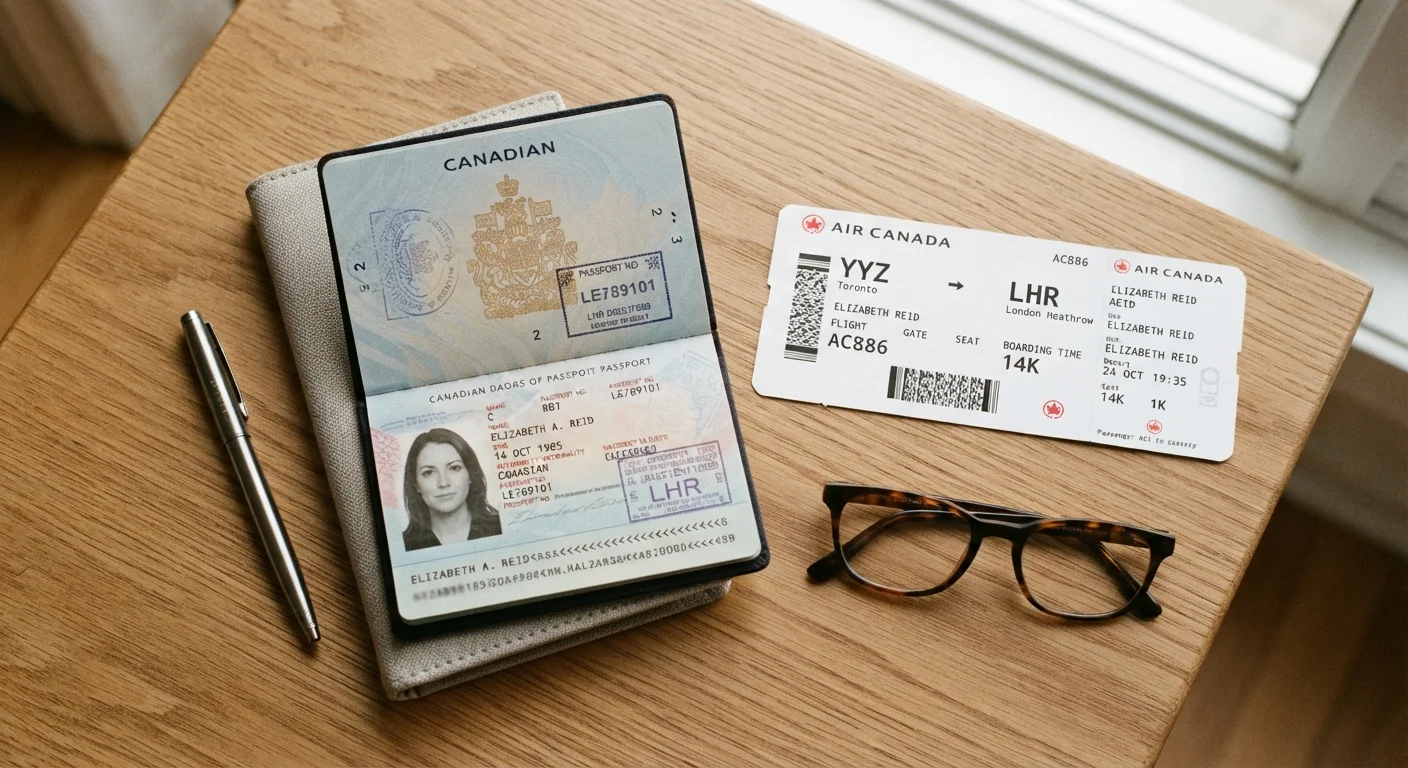
Which Documents You Actually Need
The right documents depend on where you're going and how you're getting there. Here's a straightforward breakdown:
Domestic Travel (within the U.S.)
For flights within the United States, you'll need a REAL ID-compliant driver's license or state ID, a U.S. passport, or a passport card. Standard driver's licenses that are not REAL ID-compliant are no longer accepted at TSA checkpoints for domestic air travel. Check with your state's motor vehicle office if you're unsure whether your license qualifies.
International Travel
A valid U.S. passport book is required for international flights. A passport card is accepted for land and sea border crossings between the U.S., Canada, Mexico, and some Caribbean destinations — but it is not valid for international air travel. For cruises that begin and end at a U.S. port, a birth certificate plus government-issued photo ID may be accepted, though carrying your passport is still strongly recommended.
Some countries also require a separate visa. Always verify entry requirements directly with the destination country's official embassy or consulate, and check the U.S. Department of State travel website before booking. See our article on what seniors often overlook when flying internationally for additional detail on entry requirements.
Passport Validity and Renewal Timelines
REAL ID
A federal standard for state-issued driver's licenses and IDs introduced under the REAL ID Act of 2005. A REAL ID-compliant card is required for domestic air travel in the U.S. and is typically marked with a star symbol.
Passport Book
The standard U.S. travel document accepted for all international and domestic travel. It is required for international air travel and is the most widely accepted form of U.S. identification abroad.
Passport Card
A wallet-sized U.S. travel document valid only for land and sea travel between the U.S., Canada, Mexico, and some Caribbean destinations. It cannot be used for international air travel.
Visa
An official authorization issued by a foreign government allowing entry into that country. Some destinations require U.S. citizens to obtain a visa in advance; others issue one on arrival or require none. Requirements vary by destination.
Six-Month Validity Rule
A requirement enforced by many countries that a traveler's passport must remain valid for at least six months past the intended departure date. Failing to meet this rule can result in denied boarding or entry.
Many countries require that your passport remain valid for at least six months beyond your travel dates. Even if your passport hasn't technically expired, it may be refused at the border if it falls within that window. Check your passport's expiration date the moment you start planning any international trip.
When to Renew
- Routine renewal: The U.S. Department of State recommends beginning the renewal process at least six months before your travel date, as processing times can vary significantly.
- Expedited renewal: Faster processing is available for an additional fee. Even then, allow several weeks — not days — for delivery.
- First-time applicants: Must apply in person at a passport acceptance facility. Bring proof of citizenship, a government-issued photo ID, and two passport photos.
Passport photos have specific size and background requirements. Many pharmacies offer this service for a modest fee. Once renewed, sign your new passport immediately and store it safely. See our guide on the senior traveler's pre-trip checklist to make sure document renewal is built into your overall preparation timeline.
What to Carry vs. What to Store Safely
Carrying all your original documents everywhere is unnecessary — and increases your risk of loss or theft. A simple carry-versus-store system keeps you protected.
Never Travel With Only One Copy
If your passport is lost or stolen abroad, having a photocopy stored separately — in your luggage or emailed to yourself — can significantly speed up the replacement process at a U.S. embassy or consulate. Make copies of both the photo page and any visa pages before you leave home. This is general guidance; the U.S. embassy in your destination country can advise on the specific steps required in an emergency.
What to Carry on Your Person
- Your passport (or REAL ID) when passing through checkpoints, borders, or checking in
- A single credit card and limited cash for daily use
- Your travel insurance card or policy summary — see our resource on emergency contact cards for what else to keep on hand
- A printed or saved list of emergency contacts and key medical information
What to Store in a Secure Location
- Original passport when not actively required — use a hotel safe if available
- Extra credit or debit cards not needed daily
- Physical document backups (photocopies of passport, insurance, prescriptions)
Digital backups stored in a secure cloud account or emailed to yourself add an extra layer of protection. For a full discussion on this topic, see our article on digital copies vs. physical document backups while traveling. For broader strategies on keeping belongings secure, our guide on protecting personal belongings and documents while traveling as a senior covers practical habits that work well for older travelers.