

Key Takeaways
- A small RV kitchen can support balanced nutrition with smart planning and simple preparation techniques.
- Seniors benefit from meals that are high in fiber, protein, and hydration while being easy to prepare.
- Batch cooking and shelf-stable staples reduce daily effort and minimize food waste during longer trips.
- Consulting a healthcare provider about dietary needs before extended RV travel is always recommended.
Why Nutrition Deserves Special Attention in an RV
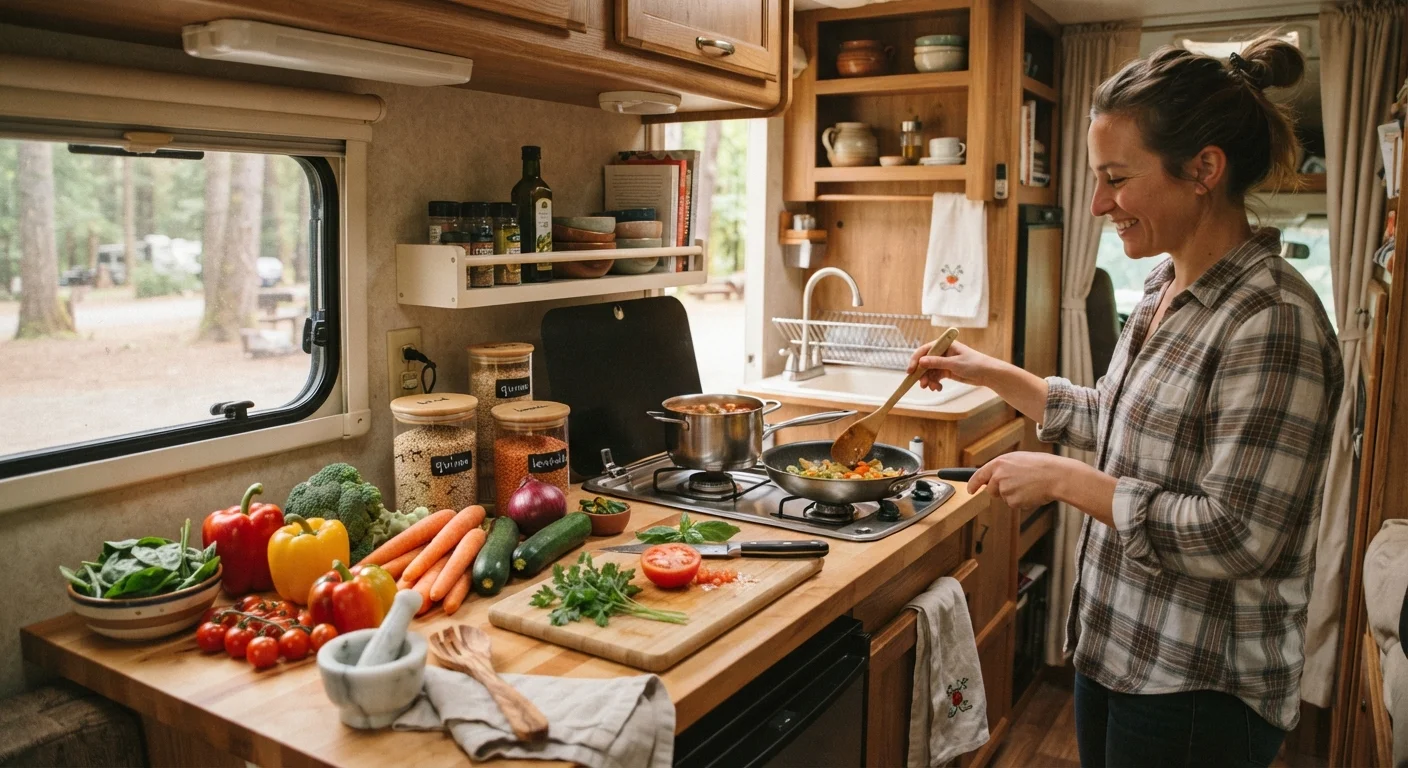
Eating well doesn't automatically get easier when you're traveling — and for older adults, it becomes even more important to plan deliberately. As we age, caloric needs often decrease while requirements for key nutrients like calcium, vitamin D, fiber, and protein tend to stay the same or increase. The compact galley kitchen found in most RVs can feel limiting at first, but with a clear approach, it becomes a surprisingly capable space.
Many senior RVers find that cooking for themselves on the road actually gives them more control over ingredients, portions, and preparation than dining out repeatedly. The goal is to build habits and a pantry system that make nutritious cooking feel routine rather than burdensome. For a broader look at what day-to-day RV living involves, see what life on the road really looks like after 60.
This article provides general nutritional information for educational purposes only. Please consult a qualified healthcare professional or registered dietitian for personal dietary guidance, particularly if you manage a chronic condition or take medications that affect nutrition.
Best Practices for Meal Planning in a Small Galley
These recommended practices are designed to work within the real constraints of an RV kitchen — limited counter space, a compact refrigerator, one or two burners, and a small oven or convection unit.
Build your pantry around shelf-stable, nutrient-dense staples
Shelf-stable ingredients reduce how often you need to restock, which is especially helpful when camping in remote areas far from grocery stores. Choosing items that are also nutrient-rich — like canned beans, oats, nut butters, and whole-grain crackers — ensures baseline nutrition is always available without relying on refrigeration.
Batch cook once and repurpose ingredients across multiple meals
Cooking from scratch at every meal is tiring in a small space, especially after a day of driving. Preparing a larger quantity of one base ingredient — like brown rice, roasted vegetables, or a pot of soup — and using it across two or three meals reduces both effort and cleanup.
Plan meals around one primary cooking method per day
Using a single burner, a slow cooker, or an electric pressure cooker — rather than juggling multiple appliances — keeps prep manageable and reduces safety risks in a confined cooking area. It also limits cleanup, which matters when water supply is limited at a dry campsite.
Keep easy no-cook options available for low-energy days
Travel is tiring, and some days the priority is rest rather than cooking. Having ready-to-eat nutritious options on hand prevents defaulting to high-sodium processed snacks or skipping meals entirely.
Adjust portion sizes and meal frequency to match your activity level
Energy expenditure varies considerably on the road — driving days are largely sedentary, while hiking or sightseeing days require more fuel. Matching portion sizes and meal timing to actual activity helps manage weight and energy more effectively than following a fixed routine.
For guidance on organizing your RV efficiently before you hit the road, the Senior RV Packing Guide covers smart storage strategies alongside medical and comfort essentials.
Quick Wins to Improve Your RV Nutrition Today
You don't need to overhaul everything at once. These actions can improve how you eat on the road immediately, with minimal effort or additional equipment.
Make the Most of Campground Farmers' Markets
Many RV parks and campgrounds near agricultural regions host weekly farmers' markets or farm stands within easy driving distance. Picking up local, seasonal produce mid-trip adds variety to your meals and reduces reliance on shelf-stable items alone. Even one or two fresh items — a bunch of kale, a bag of local apples — can meaningfully diversify your nutrition during longer journeys.
Seniors who also travel by sea may find it useful to compare approaches — the Eating Well Onboard guide covers how to communicate dietary restrictions to cruise staff and navigate buffet layouts with intention.
Hydration, Safety, and Storing Food Properly on the Road
Dehydration is a common concern for older adults and can become more pronounced during travel when routines are disrupted. Keep water bottles accessible and within easy reach, especially during driving days when it's tempting to reduce fluid intake to limit restroom stops. Herbal teas, broths, and water-rich produce such as cucumber and melon also contribute meaningfully to daily fluid intake.
Medications and Nutrition Interactions
Several common medications taken by older adults can affect nutrient absorption or interact with certain foods. Blood thinners, for example, may be affected by sudden changes in vitamin K intake from leafy greens, while some blood pressure medications interact with grapefruit. This is a general educational note — please speak with your prescribing physician or pharmacist before making significant changes to your diet on the road.
Food safety in a small refrigerator requires attention. RV refrigerators — especially absorption-style units — may take longer to cool down after restocking and can struggle in very hot weather. Keep a small refrigerator thermometer inside to confirm the temperature stays at or below 40°F (4°C). Use shallow containers so food cools evenly, and rotate older items to the front.
For a comprehensive overview of health and comfort strategies that support seniors on extended trips, the Travel Health Tips hub is a practical ongoing reference. And if you're still configuring your rig for comfortable daily living, RV layouts that work best for older adults explains which floor plan features reduce strain in everyday tasks including kitchen work.