

Key Takeaways
- RV living after 60 offers genuine flexibility but requires honest preparation around comfort and health.
- Daily life on the road involves routine maintenance tasks alongside leisure — it is not a perpetual vacation.
- Part-time RVing is a lower-risk entry point that lets seniors test the lifestyle before committing fully.
- Staying connected to healthcare providers and family requires intentional planning while traveling.
- Physical adaptations to your RV — grab bars, non-slip surfaces — meaningfully improve safety and comfort.
- Understanding real costs upfront helps seniors make financially sound decisions about RV living.
Start here
Why More Seniors Are Choosing RV Life
Get grounded
What a Typical Day Actually Looks Like
Weigh the trade-offs
Comfort Trade-Offs You Should Expect
Plan for wellbeing
Health, Safety, and Staying Connected
Choose your style
Full-Time vs. Part-Time: Which Fits Your Life?
Take action
Taking the First Step
Why More Seniors Are Choosing RV Life
Retirement removes the two biggest anchors of adult life — a fixed job and a fixed schedule. For a growing number of Americans over 60, that freedom opens a door to a different kind of home: a motorhome or travel trailer that moves with them. The appeal is real. You wake up in the mountains one week and near a Gulf Coast beach the next, without booking hotels or packing bags each time.
But the choice is rarely just about adventure. Many seniors find that downsizing to an RV reduces property taxes, maintenance costs, and the emotional weight of a large home. Others are drawn by community — established RV parks often have lively social scenes, and many travelers form lasting friendships on the road. The lifestyle also invites a slower, more intentional pace of daily life that aligns naturally with what many retirees say they actually want.
For a broader orientation on routes and destinations well-suited to this lifestyle, the Top RV Destinations hub is a solid starting point.
Class A motorhome
The largest category of self-propelled RV, built on a commercial bus or truck chassis. Class A rigs offer the most living space and amenities but require more driving experience to handle.
Class C motorhome
A mid-size motorhome built on a van or truck cab chassis, recognizable by the sleeping area that extends over the cab. Many seniors find Class C rigs easier to drive than Class A models.
Travel trailer
A non-motorized RV that is towed behind a pickup truck or SUV. Travel trailers offer flexibility because the tow vehicle can be unhitched and used for local errands while the trailer stays at the campsite.
Full hookup site
A campsite that provides direct connections to electricity, water, and sewer lines. Full hookup sites eliminate the need to manage onboard tanks daily and are generally the most comfortable option for extended stays.
Domicile
The state a full-time RVer legally declares as their home base for purposes of vehicle registration, driver's license, and tax residency, even when living on the road year-round.
Seasonal routing
The practice of planning RV travel around the calendar to follow comfortable weather — typically moving to warmer southern regions in winter and cooler northern or higher-elevation areas in summer.
What a Typical Day Actually Looks Like
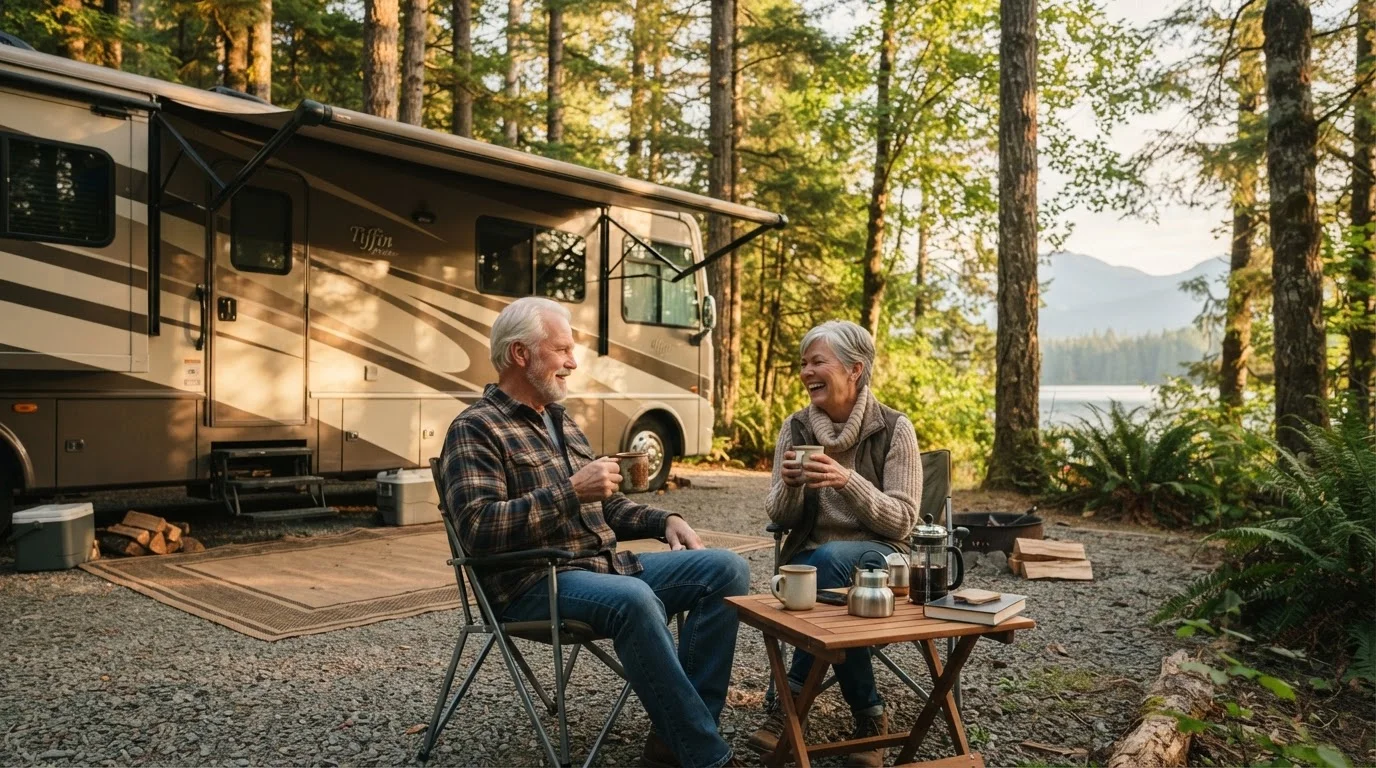
Romanticized images of RV life focus on sunsets and open highways. The reality is warmer and more ordinary — in a good way. A typical morning might involve making coffee in a compact but functional kitchen, taking a short walk around the campground, and checking the day's driving plan. Afternoons often mix sightseeing or hiking with logistical tasks: refilling the fresh water tank, emptying the waste tank, or troubleshooting a minor electrical issue.
Driving days are typically kept short — many experienced senior RVers recommend limiting drives to three or four hours to reduce fatigue. The rhythm becomes familiar quickly: set up camp, explore the area for a few days, then move on when ready. This pace suits older travelers far better than rushing between destinations.
Limit Daily Driving to Reduce Fatigue
Most experienced senior RVers cap driving days at three to four hours and avoid driving after dark whenever possible. Building rest days into your itinerary — staying at one campsite for two or three nights before moving — keeps travel enjoyable rather than exhausting. It also gives you genuine time to explore each area you visit.
Evenings tend to be genuinely relaxing — cooking a meal, reading, watching something on a small TV, or visiting with neighboring campers. The lifestyle rewards people who enjoy a mix of activity and stillness rather than constant stimulation.
Comfort Trade-Offs You Should Expect
Living in an RV means accepting a smaller footprint. Storage is limited, kitchens are compact, and bathrooms require more creativity to navigate comfortably — particularly for anyone with reduced mobility. These are real constraints, not minor inconveniences, and they matter more as time passes.
The good news is that most trade-offs are manageable with the right rig and modest modifications. Grab bars near the toilet and shower, non-slip flooring, a wider entry step with a handrail, and good interior lighting make a meaningful difference for seniors. Choosing a floor plan with a walk-in shower rather than a tub is often the single most important comfort decision older buyers make.
Assess Mobility Needs Before Choosing a Rig
RV entry steps, narrow bathroom doorways, and low sleeping platforms can pose real challenges for seniors with arthritis, balance issues, or limited knee flexibility. Test any rig's physical layout — actually stepping in and out, using the bathroom, and navigating the sleeping area — before committing to a purchase or rental. Modifications made after purchase are possible but can be costly.
Climate control is another honest consideration. While RVs have heating and air conditioning, they are more vulnerable to extreme temperatures than a well-insulated house. Many senior RVers practice seasonal routing — spending winters in warmer southern states and summers in cooler northern or mountain regions — to avoid pushing their systems to the limit. The America's Most Scenic RV Routes for Slower-Paced Exploration covers options well-suited to this approach.
Health, Safety, and Staying Connected
Healthcare access is one of the most important logistical challenges in senior RV life, and it deserves honest attention. Medicare coverage works across all states, which helps, but finding in-network specialists or managing ongoing prescriptions while moving frequently requires planning. Many full-time senior RVers maintain a legal domicile — a fixed home-base address, often with a family member or a mail-forwarding service — to anchor their insurance and primary care relationships.
Telehealth services have made routine consultations far more accessible on the road. Keeping a well-organized medical summary — including medications, allergies, and provider contacts — in an easily accessible place in the RV is a straightforward habit that can matter greatly in an emergency. Always consult your own healthcare providers before making major changes to your travel or living arrangements based on health considerations; the guidance here is general and informational only.
Staying connected with family is equally important for emotional wellbeing and practical safety. Reliable cell service varies considerably by region, so many RVers invest in signal boosters or carry a backup communication device. For deeper guidance on maintaining those ties, see Staying Connected With Family While Living the RV Lifestyle. Solo travelers will find Solo Senior RV Travel: Realistic Preparations and Safety Considerations a particularly useful companion resource.
Full-Time vs. Part-Time: Which Fits Your Life?
Not every senior who loves RV travel needs to go all-in. Part-time RVing — spending three to six months on the road each year while maintaining a home base — is a lower-risk way to experience the lifestyle without fully surrendering familiar surroundings, local medical relationships, or proximity to family. For many seniors, this hybrid approach turns out to be the most satisfying long-term arrangement.
Full-time living offers deeper immersion and potentially lower housing costs, but it demands greater self-sufficiency and a higher tolerance for the unexpected. The decision is deeply personal and depends on health, finances, relationship dynamics, and how much of home life you're genuinely willing to leave behind. The article Full-Time RV Living vs. Seasonal RV Travel for Seniors explores this comparison in detail to help you think it through carefully.
Taking the First Step
The most common regret among seniors who tried and loved RV living? Waiting too long to start. The second most common? Not doing enough research before buying a rig. Both are avoidable with a measured approach.
Before purchasing anything, consider renting a Class C motorhome or travel trailer for a week-long trip. That single experience will teach you more about what size and layout works for your body and habits than any floor plan diagram. From there, a realistic budget — one that accounts for fuel, site fees, maintenance, insurance, and healthcare — is essential groundwork. Our guide on the financial picture of senior RV living walks through those numbers clearly.
For a comprehensive next step covering everything from choosing a rig to route planning, the Senior RVer's Complete Guide to Planning, Budgeting, and Traveling Comfortably is the natural follow-on to this introduction. The open road is genuinely within reach — the key is approaching it with clear eyes and a well-made plan.
RV Trip Planning Hub
A structured starting point covering essential planning steps for senior RV road trips, from route selection to campsite booking considerations.
Senior RV Living: An End-to-End Resource
A comprehensive reference covering every stage of senior RV life — rig selection, health management, financial planning, and long-term lifestyle decisions — in one place.
When RV Living Stops Working
A candid look at the health changes, mobility shifts, and life circumstances that may signal it is time to reconsider or transition away from full-time RV living.