

Key Takeaways
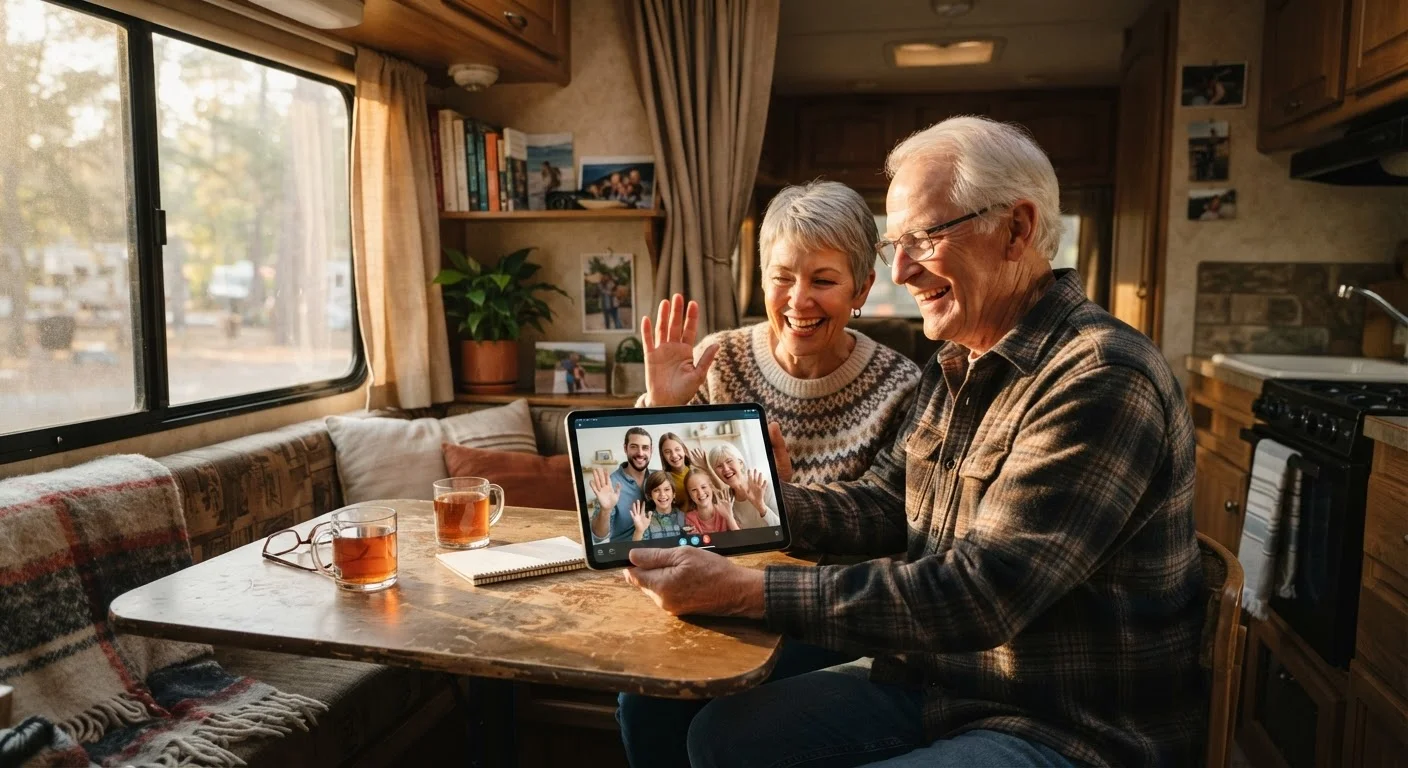
- Reliable cellular and Wi-Fi solutions make video calls and messaging possible from most campgrounds.
- Consistent communication routines help family feel included in your travels without constant interruption.
- Simple apps designed for ease of use remove the tech barrier for many senior RVers.
- Sharing your itinerary in advance gives family peace of mind and reduces check-in anxiety.
- Safety check-in tools provide an added layer of reassurance for both you and loved ones.
What you will need
Why Staying Connected Matters on the Road
One of the most common concerns seniors raise before embracing full-time or part-time RV life is the worry that distance will strain family relationships. The good news is that modern communication tools have largely closed that gap — but only if you build the right habits and infrastructure before you pull out of the driveway.
Senior RV living involves genuine trade-offs between freedom and proximity to loved ones, and acknowledging that honestly makes it easier to plan around. A grandchild's birthday, a parent's health update, or simply sharing a sunset photo — these small moments of connection are what make long-term travel feel rich rather than lonely. See also why many senior RVers feel less isolated than expected for a broader look at community on the road.
What you will need
Tools and Habits That Keep You Close
Before walking through the steps below, gather the tools and services listed in the equipment section. Having everything in place ahead of your first trip removes frustration and lets communication feel natural rather than forced.
Smartphone or tablet
Primary device for video calls, messaging, photo sharing, and app-based check-ins.
Mobile hotspot device or cellular data plan with hotspot capability
Provides reliable internet in campgrounds with weak or no Wi-Fi infrastructure.
Satellite communicator (e.g., a two-way satellite messaging device)
Enables basic check-in messages and emergency SOS alerts in areas with no cellular coverage.
Video calling app (FaceTime, Zoom, or Google Meet)
Enables face-to-face conversations with family from anywhere with a data connection.
Shared photo or journal app
Lets you share travel photos and short updates with family in one organized place between calls.
Choose One Primary Video Calling Platform
Pick a single app — FaceTime if your family uses Apple devices, or Zoom or Google Meet for cross-device households — and make sure every family member has it installed and tested before you leave. Consistency prevents confusion and makes spontaneous calls effortless.
Set Up a Reliable Data Connection
Do not rely solely on campground Wi-Fi, which can be slow or unreliable. Enable hotspot on your cellular plan or carry a dedicated mobile hotspot device. Check your carrier's coverage maps for your planned route and identify stretches where you'll need a backup plan.
Share Your Itinerary With Family
Email or print a copy of your planned route — including campground names, approximate dates, and any known low-signal stretches — and send it to your primary family contact before you depart. This allows family to anticipate when you'll be reachable and prevents unnecessary worry during communication gaps.
Establish a Regular Check-In Schedule
Agree on a standing call time — for example, every Sunday evening at 6 p.m. local time — and protect that window in your schedule. Regular, predictable contact removes the anxiety of wondering when you'll next hear from each other and makes the connection feel like a ritual rather than a chore.
Use a Shared Photo or Journal App Between Calls
Apps that allow you to post photos, captions, and short notes to a private family group keep loved ones engaged with your journey between scheduled calls. This asynchronous communication style lets family follow along at their own pace without requiring everyone to be available at the same moment.
Consider a Safety Check-In Tool for Remote Segments
For travel through areas with limited or no cellular coverage, a satellite communicator with two-way messaging capability allows you to send brief location-confirmed check-ins to a designated family contact. Many devices also include an SOS function that connects to emergency services. Review options with your mobile carrier or an outdoor equipment specialist before your trip.
Planning Your Communication Around Your Route
Connectivity is not uniform across the US. Rural stretches, mountain passes, and national forest roads can drop cellular signal entirely. Building communication windows into your itinerary — rather than assuming you can call anytime — prevents missed check-ins and family worry.
Route planning for senior RVers naturally dovetails with communication planning: the rest days and shorter drive legs you schedule for physical comfort are also ideal windows for longer family video calls. For stretches through remote terrain, review the guidance in staying connected and safe on remote RV routes — especially around satellite communicators and offline tools.
Build Communication Into Your Campsite Routine
The best time to call family is when you're parked, connected, and relaxed — not mid-drive or during setup. Treat your evening check-in like any other part of your campsite arrival routine. When family knows roughly when to expect you, calls feel easier and less rushed for everyone.
Signal Gaps Are Normal — Plan Ahead
Some of the most scenic RV destinations — desert Southwest, deep forest routes, high mountain passes — also have the least reliable cellular coverage. Let family know in advance that you may be unreachable for a day or two, and confirm a 'no contact' window so no one panics. Pair this with a satellite check-in device on particularly remote segments.
Making It Sustainable Over Months of Travel
Consistency matters more than frequency. A weekly video call your family can count on is worth more than sporadic calls that happen whenever signal allows. As your travel rhythm matures, communication habits become part of your routine — as natural as morning coffee or an evening walk around the campground.
For a complete picture of building a healthy, fulfilling lifestyle on the road, the senior RV living end-to-end resource covers everything from rig selection to managing wellbeing over time. And if general wellness on the road is a concern, the travel health tips hub offers practical strategies worth bookmarking.