

Key Takeaways
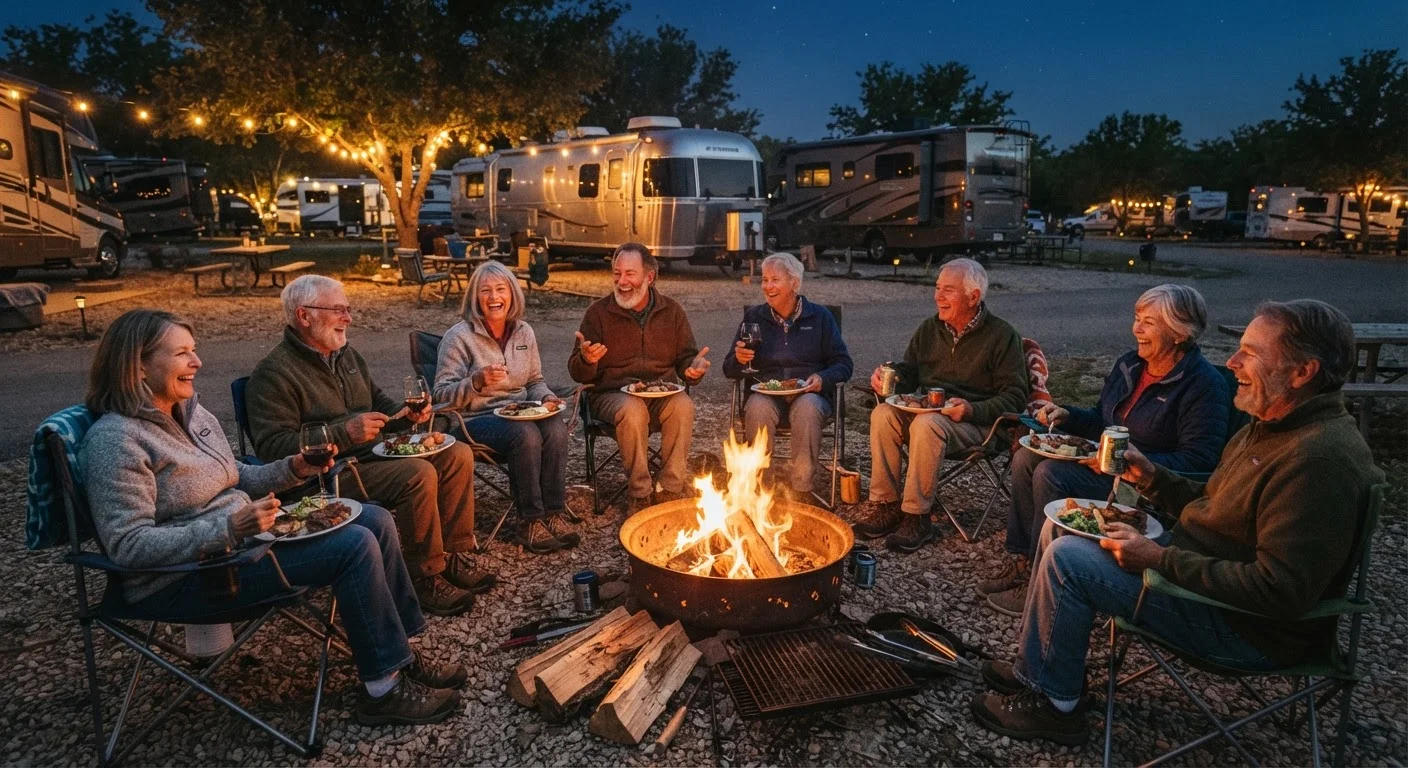
- RV campgrounds naturally foster social interaction through shared spaces and organized activities.
- Senior-specific RV clubs and rallies create consistent, meaningful connections on the road.
- Modern technology helps senior RVers stay close to family regardless of their location.
- Loneliness concerns are common but frequently don't match the lived experience of RV life.
- Choosing the right mix of destinations and community can shape a highly social lifestyle.
The Loneliness Fear That Keeps Seniors Off the Road
When seniors consider RV travel or full-time RV living, one concern surfaces more than almost any other: "Won't I get lonely?" It's a reasonable worry. Leaving a familiar neighborhood, a regular social circle, and family nearby can sound like a recipe for isolation. But the reality of life in RV communities — from bustling campgrounds to organized senior caravans — often surprises people who finally take the leap.
Understanding what RV social life actually looks like helps separate genuine concern from unfounded fear. The myths below are among the most commonly held by seniors weighing up life on the road, and each deserves a closer look. For a broader picture of what RV living involves day to day, see what life on the road really looks like after 60.
Myth
RV life means spending most of your time alone, with no real sense of community.
Fact
Most RV campgrounds and parks have active social cultures, and dedicated senior RV clubs provide structured community wherever travelers go.
The idea of an RVer parked in isolation is a common image, but it rarely reflects what actually happens at established campgrounds and RV resorts. Shared fire rings, laundry rooms, recreation halls, and community boards all create natural meeting points. Many campgrounds also schedule organized events — group dinners, morning walks, or holiday gatherings — that make it easy for newcomers to connect without making any special effort. Senior-specific clubs and caravans extend this further, giving members a traveling social group that crosses the entire country.
Myth
If you're not near family, RV travel will leave you feeling cut off from the people who matter most.
Fact
Modern communication tools make it genuinely easy to maintain close family ties regardless of physical distance.
Video calling, location-sharing apps, and messaging platforms have transformed what it means to be "away" from family. Many senior RVers report that scheduled weekly video calls and real-time photo sharing actually deepen family engagement — relatives follow along on the journey and feel more connected than when a family member simply lived a few towns away. Some families even plan visits to interesting campground locations, turning the RV lifestyle into a shared adventure rather than a separation.
Myth
Solo senior RVers have it the hardest socially — traveling alone simply leads to loneliness.
Fact
Solo RV travelers often find that traveling alone makes it easier, not harder, to meet new people and engage with campground communities.
Traveling without a companion can feel daunting, but many solo senior RVers report that it removes a social buffer and encourages them to reach out more readily. Without a travel partner to default to, they attend more organized events, initiate more campsite conversations, and join more group activities. Over time, many build a loose network of familiar faces encountered repeatedly at the same parks across different seasons. That said, thoughtful preparation matters — realistic preparations and safety considerations for solo senior RV travel covers the planning steps that make independent travel both socially and practically manageable.
Myth
Once you leave your home community, you lose your social identity and sense of belonging.
Fact
Many seniors find that RV life offers multiple overlapping communities rather than the single community they left behind.
Home neighborhoods typically offer one community rooted in geography. RV life, by contrast, often provides several: the campground community, an RV club network, online groups of fellow travelers, and the ongoing connection with family back home. Some senior RVers describe this as a richer social life than they had before retiring. The key is intentionality — actively choosing destinations and organizations that match personal interests, whether those are hiking, crafts, history, or simply good conversation around an evening fire. Common myths about RV travel that put seniors off examines this and other misconceptions in more depth.
How RV Culture Actively Builds Community
Campground life has a built-in social architecture that is easy to underestimate from the outside. Shared amenity buildings, communal fire rings, potluck evenings, and casual site-to-site conversations mean that the social fabric forms naturally — without anyone having to organize it deliberately.
1M+
Full-time RVers estimated in the US
Industry estimates have long suggested that over one million Americans live in RVs full-time, with a significant and growing share being retirees.
~400
Chapters in a major national senior RV organization
Groups such as the Family Motor Coach Association and similar senior-focused RV clubs maintain hundreds of regional chapters, giving members local community wherever they travel.
Beyond campground culture, national and regional senior RV organizations host rallies, caravans, and meetups specifically designed for older travelers. These gatherings draw hundreds of participants at a time, offering everything from group hikes calibrated to gentle terrain to craft sessions and shared cooking evenings. Membership in such groups gives traveling seniors a ready-made social network that moves with them across the country.
Technology has also shifted the equation. Video calls, group chats, and location-sharing apps mean that family members can remain closely involved in a senior RVer's daily life without being physically present. For practical strategies on staying close to loved ones while on the road, staying connected with family while living the RV lifestyle offers detailed, actionable guidance.
Choosing the right destinations also shapes social opportunity. Some RV parks are primarily stopover points; others function as genuine communities with weekly schedules of events. Senior-friendly RV destinations vary considerably in how socially active they are — something worth researching as part of trip planning. State parks, often overlooked, can offer surprisingly accessible settings as well; see why full-time RVers often overlook state parks for a closer look.
Not All RV Parks Offer the Same Social Environment
The social atmosphere varies enormously between RV destinations. Large resort-style parks often have daily activity schedules and communal spaces, while remote or primitive sites may offer solitude rather than community. If social connection is a priority, research a park's amenities and community culture before booking. RV trip planning resources can help you identify destinations that match your social preferences.
Seniors considering solo RV travel will find additional reassurance in solo senior RV travel: practical realities and reasonable precautions, which addresses both the social dynamics and the safety considerations of traveling alone. And for those unsure whether full-time or seasonal travel better fits their lifestyle, full-time RV living vs. seasonal RV travel for seniors explores how each approach supports different social and personal needs.