

Key Takeaways
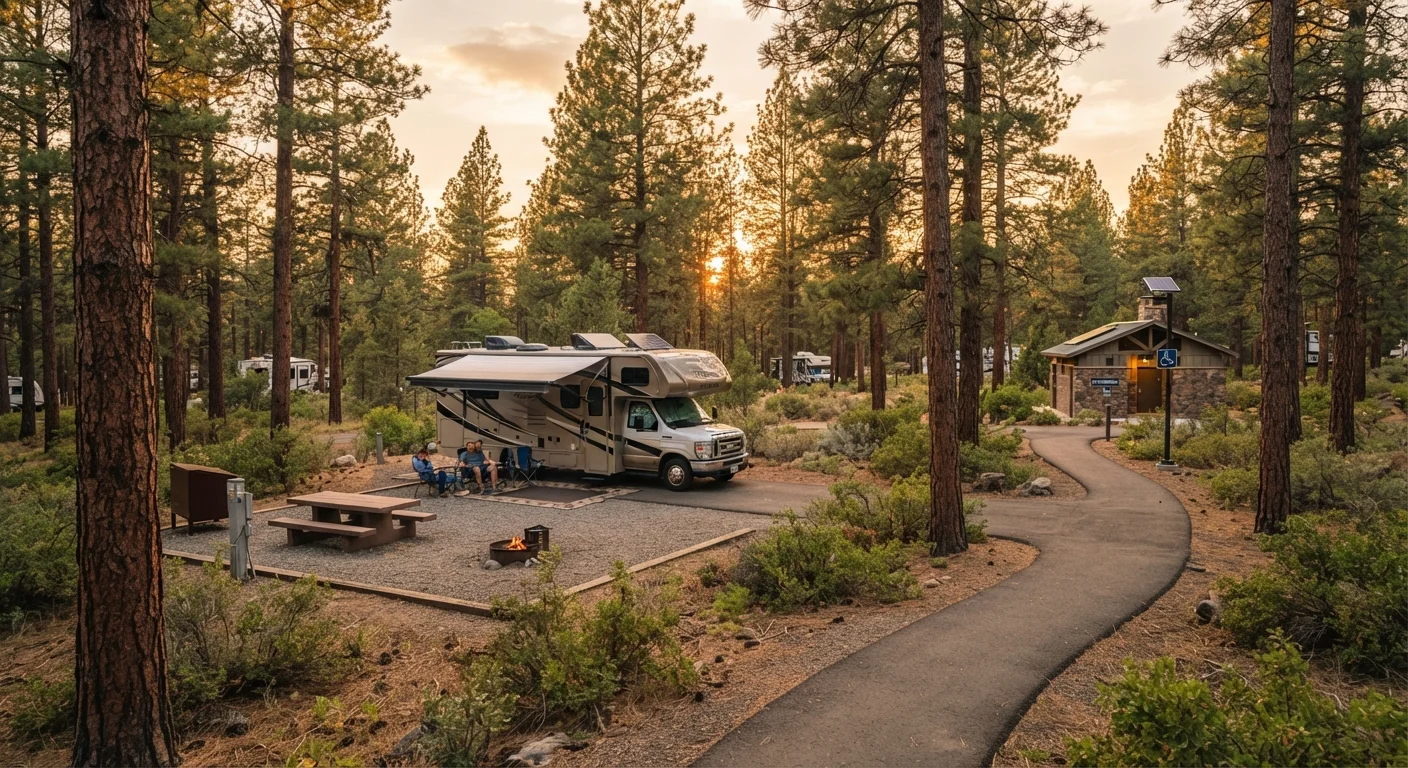
- Many state parks offer electric and water hookups, accessible restrooms, and paved sites suited for senior RVers.
- State park campground fees are typically lower than private RV parks, especially with senior discount programs.
- Reservation systems have modernized — most state parks now allow online booking weeks or months in advance.
- Quieter, less crowded settings in state parks can make for a more relaxed and restorative overnight experience.
- Accessible trails, ranger programs, and visitor centers add meaningful value beyond just a place to park.
The Case for Giving State Parks a Closer Look
Full-time RVers tend to gravitate toward familiar choices: national parks for scenery, private RV resorts for amenities, or free public land for budget stretching. State parks, sitting somewhere in between, are frequently skipped over — often based on assumptions that haven't been tested in years. That's worth reconsidering.
State park systems collectively manage thousands of campgrounds across every region of the country. Many have undergone significant upgrades in recent years, with improved site infrastructure, better accessibility features, and modernized booking systems. For senior travelers especially, the combination of natural beauty, manageable crowd levels, and cost-effective stays makes state parks a genuinely compelling option.
Understanding what state parks actually offer — rather than what they're imagined to offer — is the first step. The myths below address the most common reasons experienced RVers pass them by.
Myth
State parks only have primitive campsites with no hookups — they're not suitable for full RV rigs.
Fact
Hundreds of state parks across the US offer electric, water, and even full-hookup sites capable of accommodating large Class A and Class C motorhomes.
This is perhaps the most widespread misconception among full-time RVers. While it's true that some state parks feature backcountry or tent-only sites, the majority of state park systems maintain developed campground loops specifically designed for RVs. Many include 30- and 50-amp electric service, water connections, and dump stations. States like Florida, Texas, and California operate extensive campgrounds with long pull-through sites and paved pads. Before dismissing a state park, it's worth checking its individual campground map — the level of development often surprises first-time visitors.
Myth
State park reservations are impossible to get — they fill up months ahead and the booking systems are outdated.
Fact
Most state park systems now use modern online reservation platforms, and mid-week availability is generally much more accessible than weekends.
Reservation windows for popular state parks have widened in recent years, with many systems opening bookings four to six months in advance. For senior travelers with flexible schedules — a real advantage of full-time RV life — mid-week stays are often straightforward to secure, even during peak seasons. Many states also maintain first-come, first-served loops that reward travelers willing to arrive early. Learning a state's reservation calendar and off-peak patterns takes only a small amount of planning and pays off considerably in availability. See our RV trip planning hub for strategies on timing campground reservations effectively.
Myth
State parks aren't accessible enough for seniors with mobility limitations.
Fact
Accessibility improvements at state parks have expanded significantly, with many campgrounds now featuring ADA-compliant sites, accessible restrooms, and paved pathways.
Accessibility is a genuine and important consideration for senior travelers, but state parks are not the inaccessible environments some assume. Federal and state funding has driven meaningful improvements to campground infrastructure, including level, paved RV pads, lowered utility pedestals, roll-in shower facilities, and firm walking surfaces near restrooms and common areas. That said, quality varies by park and state — always verify accessibility features directly on the park's official website or by calling the ranger station before booking. Our guide on what seniors should prioritize in campground selection offers a helpful checklist for evaluating any campground, including state parks.
Myth
State parks are boring compared to private RV resorts — there's nothing to do.
Fact
State parks frequently offer ranger-led programs, accessible nature trails, scenic overlooks, water activities, and visitor centers that make them rich destinations in their own right.
Private RV resorts often excel at social amenities like pools and clubs, but state parks offer something different: genuine connection to natural and cultural landscapes. Ranger interpretive programs, birding walks, historical exhibits, and accessible fishing piers are common features at developed state parks. For seniors who prefer a slower, scenery-driven pace, these settings can be deeply satisfying. They also tend to be quieter, which many older travelers actively value. If you're drawn to unhurried routes through beautiful landscapes, state parks pair naturally with the kinds of journeys described in America's most scenic RV routes for slower-paced exploration.
Myth
State parks are always more expensive than dispersed camping and offer no real savings over private parks.
Fact
State park fees are generally lower than comparable private RV parks, and most states offer senior discount programs that reduce nightly rates further.
While prices vary by state and park, developed state park sites with hookups typically cost considerably less per night than private campgrounds offering equivalent amenities. Many states offer annual senior passes or age-based discount programs — often 50% off nightly rates for residents over a certain age. Even for non-residents, state park fees tend to be competitive. Seniors who already hold the America the Beautiful Senior Pass for federal sites may find state passes a natural complement. Our article on how senior RVers get the most from the America the Beautiful Pass explains how federal and state pass programs can work together to reduce overall travel costs.
How State Parks Fit Into a Senior RV Travel Strategy
State parks work best when treated as a deliberate part of your routing rather than a fallback. Because they're geographically distributed across every state — often in locations that private parks don't cover — they can fill gaps in your route, provide a night's rest near a scenic area, or serve as a multi-day base for exploring a region at a gentle pace.
6,600+
State park campgrounds across the US
The National Association of State Park Directors reports that state park systems collectively manage over 6,600 campgrounds, many with RV hookup sites.
50%
Senior discount on nightly rates
Many state park systems offer resident senior passes that reduce nightly campground fees by up to 50%, though eligibility and discount amounts vary by state.
For senior RVers, the quieter atmosphere common to state parks is itself a meaningful benefit. Nights with less generator noise, fewer high-traffic loops, and more natural surroundings often contribute to better rest and a more restorative travel experience. That kind of environment pairs well with the community-focused aspects of RV life described in our article on why seniors find RV life less isolating than expected.
State parks won't replace every other campground type — there will be nights when a full-service private park is the right call, and our guide on what makes an RV park truly senior-friendly explains what to look for in those settings. But adding state parks to your regular rotation broadens your options, reduces costs, and often puts you in exactly the kind of setting that drew you to RV travel in the first place. For a deeper look at living comfortably on the road as a senior, the Senior RV Living hub is a practical starting point.