
Eating Well Onboard: Nutrition, Dietary Restrictions, and Meal Planning for Seniors

Key Takeaways
- Notify cruise lines of dietary restrictions before departure — ideally at the time of booking.
- Dedicated dining room staff can accommodate low-sodium, diabetic-friendly, and texture-modified meals with advance notice.
- Visiting buffets during off-peak hours improves accessibility and reduces decision fatigue for seniors.
- Staying well hydrated at sea requires conscious effort, particularly for travelers on certain medications.
- Port-day eating patterns differ from sea days — plan ahead to maintain consistent, balanced nutrition.
What you will need
Why Onboard Nutrition Deserves Advance Planning
Cruise ships are often praised for abundant food, but abundance is not the same as suitability. For senior travelers managing conditions such as diabetes, heart disease, kidney disease, or digestive sensitivities, the sheer volume of options can obscure how to eat well consistently throughout a voyage. Unplanned meals, missed dietary signals from kitchen staff, and the temptation of rich buffet fare can quietly disrupt the eating patterns that keep many older adults feeling their best.
This guide walks you through practical steps — from before you board to the final sea day — to communicate your needs clearly, navigate dining venues confidently, and maintain nutritional balance without feeling restricted. For broader health preparation, see our guide to medical preparedness before sailing, which covers how to coordinate dietary and medication needs with your physician before departure.
What you will need
Step-by-Step: Managing Dietary Needs From Booking to Final Day
Follow these steps in order. Each builds on the last, and skipping early steps makes later ones harder to execute effectively.
Submit dietary requirements at the time of booking
Most cruise lines have a formal process for recording dietary needs — ask your travel agent or the cruise line's reservations team to attach your requirements to your booking profile. Common accommodations include low-sodium, low-fat, diabetic-friendly, gluten-free, lactose-free, and texture-modified (soft or pureed) meals. Be specific: rather than noting "heart healthy," specify "low-sodium, low-saturated-fat, no added sugar." Vague labels are harder for galley staff to interpret consistently across a 7- to 14-day voyage.
Introduce yourself to the dining room maître d' on the first evening
Once aboard, visit the main dining room before or just after the first dinner service and speak directly with the maître d' or head waiter assigned to your section. Restate your dietary requirements in person and ask whether the kitchen can preview the following day's menu with you each evening. Many cruise dining teams offer this service routinely — it allows you to pre-select appropriate dishes and request modifications before service, rather than improvising at the table.
Identify the safest options at the buffet
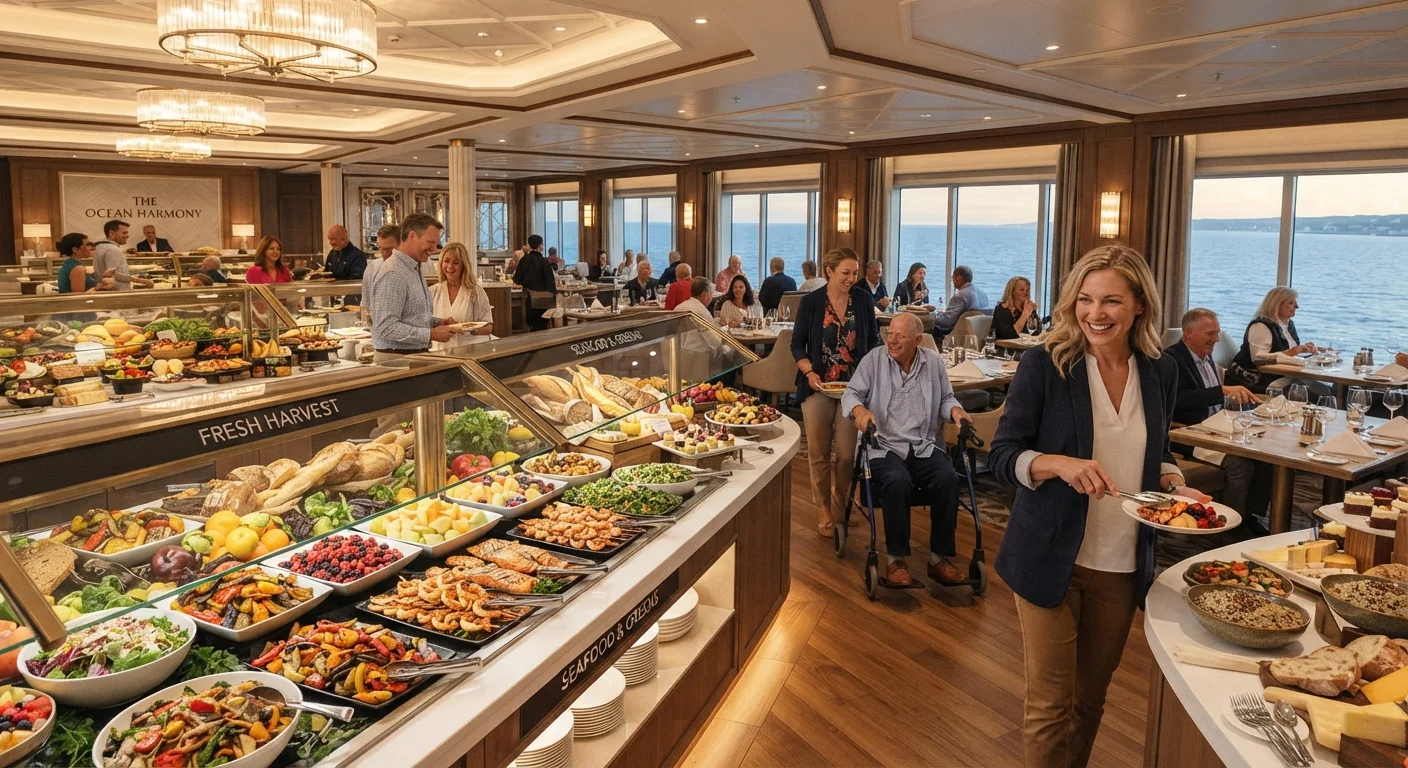
Buffets are high-stimulation environments that can make it difficult to evaluate food carefully. Before filling your plate, walk the entire buffet to identify what is available, then make deliberate selections. Focus on plainly prepared proteins (grilled fish, roasted chicken without heavy sauces), steamed or roasted vegetables, fresh fruit, and whole-grain options where available. Ask a staff member about sodium or allergen content if labeling is unclear — buffet attendants are trained to help and can check with the kitchen.
Stay ahead of hydration throughout the day
Sea air and increased walking can accelerate fluid loss, and older adults are generally more susceptible to dehydration than younger travelers. Carry a refillable water bottle and aim to drink consistently between meals rather than relying solely on beverages served at mealtimes. If you take diuretics or other medications that affect fluid balance, discuss a sensible hydration strategy with your doctor before sailing. Herbal teas and diluted juices can supplement plain water if preferred.
Plan your eating pattern around port days
On days when the ship is in port, meal timing can shift significantly. Breakfast may need to be earlier than usual if your excursion departs at 8 a.m. Lunch may be eaten ashore in an unfamiliar setting. Plan for this by eating a more substantial, nutritious breakfast on port days, packing permissible snacks for the excursion, and identifying whether any accessible, dietary-appropriate dining options are available at your destination. For guidance on food safety when eating ashore, see our article on food safety abroad for older travelers.
Review and adjust midway through the voyage
Around the midpoint of your cruise, assess how your eating has been going. Are you feeling energized, or have you been relying heavily on convenience options? Are any symptoms — such as bloating, fatigue, or unusual thirst — suggesting that your dietary pattern needs adjustment? Speak with the ship's medical team if you have concerns; they can offer general guidance and, where needed, refer you to onboard resources. For a complete picture of health management at sea, our senior traveler's complete guide to cruising comfortably covers additional wellness strategies throughout a voyage.
Preview Tomorrow's Menu Tonight
Requesting the next day's menu the evening before is one of the most effective strategies available to seniors with dietary restrictions. It gives the kitchen time to prepare suitable modifications, reduces mealtime uncertainty, and lets you start each day knowing exactly where and what you'll eat. Make this a nightly habit from day one.
Navigating Buffets, Specialty Restaurants, and Port Days
The main dining room is typically the easiest venue for seniors with dietary restrictions — staff know repeat guests, menus are structured, and modifications are well-practiced. Buffets require more self-direction. Visit during off-peak hours (typically before 8 a.m. for breakfast or after 1:30 p.m. for lunch) when lines are shorter and mobility aids have more room to maneuver. Identify the salad, protein carving, and plain vegetable stations first — these are usually the most nutritionally consistent options.
Specialty restaurants often have richer menus, but most will adapt dishes when contacted in advance through the ship's guest services desk. Ask whether a lighter preparation — grilled rather than sauced, steamed rather than fried — is possible when you make your reservation.
Port days present a different challenge. Excursions can run long, meal timing becomes unpredictable, and local food options may not align with your dietary requirements. Pack a small supply of familiar, safe snacks — such as individually wrapped whole-grain crackers, nut butter sachets, or fruit — before heading ashore. If you travel with a companion, coordinate meal timing together. Our article on travelling with a caregiver on a cruise includes practical notes on sharing logistical planning during port visits.
Food–Drug Interactions Vary by Individual
Certain foods commonly found on cruise menus — including grapefruit, high-potassium items, and foods rich in vitamin K — can interact with medications frequently prescribed to older adults, such as blood thinners, statins, and blood pressure drugs. This is general information only, not personal medical advice. Consult your prescribing physician or a registered pharmacist before your voyage to understand which foods, if any, you should limit or avoid based on your specific medications.
This article is for general informational purposes only and does not constitute medical or dietary advice. Seniors managing specific health conditions should consult a qualified healthcare professional or registered dietitian before making changes to their eating habits, particularly while traveling.