

Key Takeaways
- Seat and cabin upgrades tend to deliver the most measurable comfort benefits on long-haul journeys.
- Many accessory-based upgrades — like neck pillows and sleep masks — offer high value at low cost.
- Room upgrades and premium add-ons do not always translate to better accessibility or sleep quality.
- Pacing strategies and rest planning often outperform any single purchase in reducing travel fatigue.
- Seniors should evaluate upgrades based on their specific mobility, sleep, and health needs.
Aisle seats ease mobility on long flights
Being able to stand and move without climbing over fellow passengers reduces joint stiffness and supports circulation on flights over three hours.
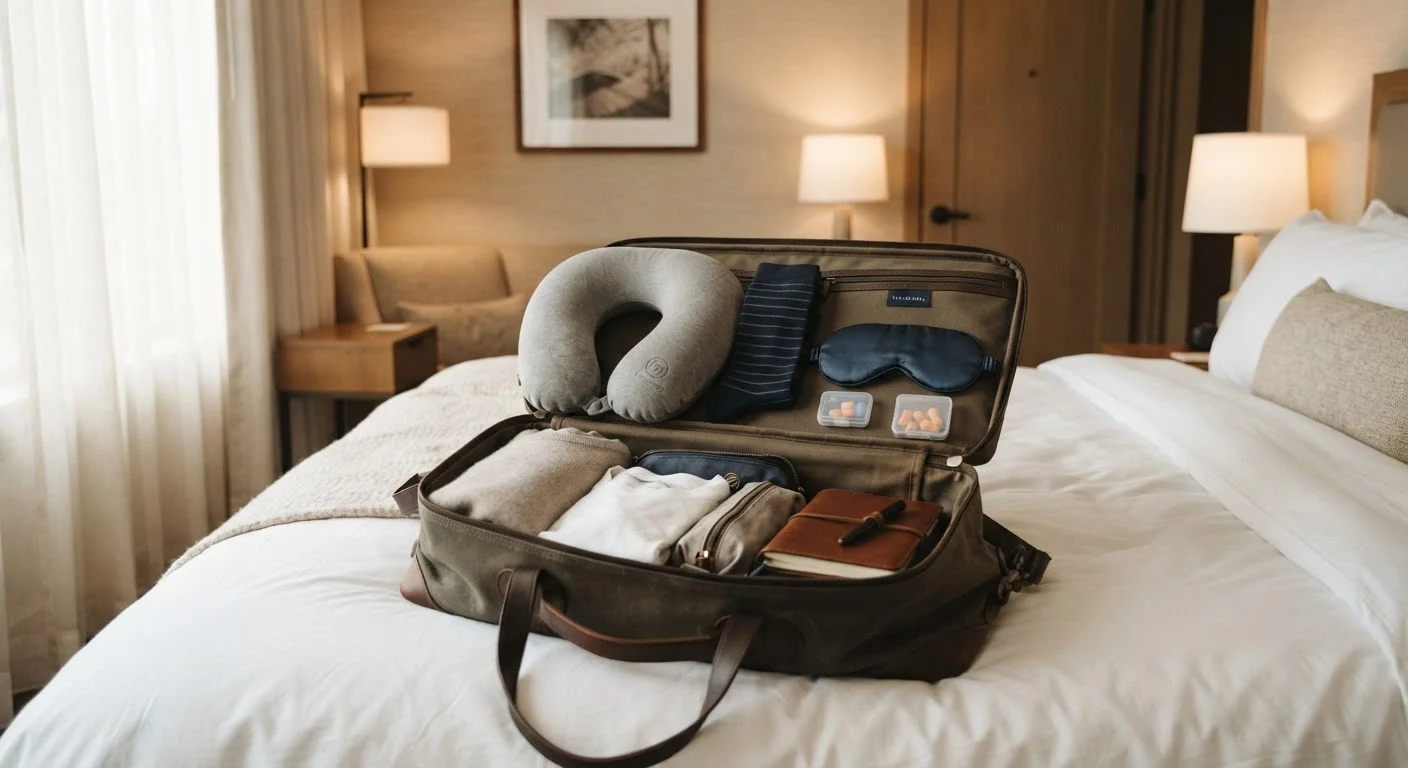
Sleep masks and earplugs improve rest quality
These inexpensive items block light and sound disturbances, helping seniors maintain sleep cycles disrupted by unfamiliar environments or overnight travel.
Compression socks reduce lower-limb swelling
Prolonged sitting during flights or long drives can cause fluid to pool in the legs; graduated compression socks are a widely recognized general measure to help manage this.
Strategic room placement cuts physical effort
Requesting a low-floor room near the elevator is often free and can meaningfully reduce the walking load, particularly for those with limited stamina or joint pain.
Neck pillows support posture during transit
A well-fitted neck pillow helps maintain head and neck alignment during sleep, reducing the stiffness that commonly follows napping in an upright seat.
Suite upgrades rarely improve accessibility
Larger rooms do not always include better grab bars, roll-in showers, or firmer mattresses — the features seniors most benefit from. Accessibility must be verified separately.
Premium cabin costs escalate sharply
Business or first-class fares can be several times the economy price; on shorter routes, the comfort difference is often modest relative to the significant cost increase.
Bulky travel accessories add luggage weight
Large neck pillows, inflatable footrests, and multi-part cushion systems can exceed carry-on limits or add physical strain when navigating airports and transfers.
Upgrade value is inconsistent across providers
What qualifies as a 'comfort upgrade' varies significantly between airlines, hotels, and cruise lines — a premium label does not guarantee a standardized experience.
Accessories cannot compensate for a poor itinerary
Even the best travel pillow will not offset an overpacked schedule with insufficient rest days; pacing and planning remain the foundation of comfortable travel.
Our Verdict
Comfort upgrades are not universally worth the cost — their value depends heavily on the length of your journey, your personal health needs, and whether the upgrade actually addresses your specific discomforts. Targeted, low-cost accessories combined with thoughtful pacing often deliver more relief than expensive cabin or room tier jumps. The wisest approach is to match each upgrade to a real need rather than assume a premium price signals a better experience.
Seniors planning long-haul flights, multi-night train journeys, or extended hotel stays where fatigue, mobility, or sleep disruption are genuine concerns.
Why Comfort Upgrades Deserve a Closer Look
Travel marketing is skilled at making every premium option sound essential. For senior travelers, the stakes feel higher — fatigue, joint discomfort, and disrupted sleep can genuinely affect how much you enjoy a trip. But spending more does not automatically mean feeling better. Some upgrades address real, recurring problems; others are largely cosmetic or situational.
This article takes a balanced look at which comfort investments tend to deliver genuine relief — and which ones are frequently oversold. It draws on the kinds of concerns that come up most often among older travelers: sleep quality, physical fatigue, mobility ease, and recovery between activities. For a broader picture of rest-focused planning, see our complete planning guide for senior travelers.
Upgrades That Tend to Be Worth It
Certain upgrades have a consistent track record of improving the travel experience for seniors, particularly on longer journeys.
Aisle seats ease mobility on long flights
Being able to stand and move without climbing over fellow passengers reduces joint stiffness and supports circulation on flights over three hours.
Sleep masks and earplugs improve rest quality
These inexpensive items block light and sound disturbances, helping seniors maintain sleep cycles disrupted by unfamiliar environments or overnight travel.
Compression socks reduce lower-limb swelling
Prolonged sitting during flights or long drives can cause fluid to pool in the legs; graduated compression socks are a widely recognized general measure to help manage this.
Strategic room placement cuts physical effort
Requesting a low-floor room near the elevator is often free and can meaningfully reduce the walking load, particularly for those with limited stamina or joint pain.
Neck pillows support posture during transit
A well-fitted neck pillow helps maintain head and neck alignment during sleep, reducing the stiffness that commonly follows napping in an upright seat.
Aisle or bulkhead seats on flights are among the highest-value, lowest-cost adjustments available. They make it easier to stand, stretch, and use the restroom without disturbing others — a practical priority for anyone managing circulation or joint stiffness. Our guide on cabin comfort on long-haul flights covers seat selection in detail.
Compression socks and a quality sleep mask are inexpensive accessories that address two of the most common complaints — leg swelling and fragmented sleep. These small items can make a meaningful difference without significant outlay.
Room location within a hotel — lower floors, proximity to the elevator, or a quieter wing — is frequently a free or low-cost request that pays off in reduced physical effort and better sleep. For more on underrated hotel features, see hotel amenities that genuinely ease senior travel.
A Note on Evaluating Any Upgrade
Before paying for any comfort add-on, ask two questions: Does this address a specific discomfort I reliably experience? And is this journey long enough for the benefit to matter? A neck pillow is valuable on a six-hour flight; it adds little on a 90-minute hop. Apply the same logic to room upgrades and premium cabin tiers. Individual health needs vary — if you have specific medical considerations, discuss travel comfort strategies with your healthcare provider before your trip.
Upgrades That Rarely Deliver as Promised
Some premium options are appealing in concept but rarely justify their cost for most senior travelers.
Suite upgrades rarely improve accessibility
Larger rooms do not always include better grab bars, roll-in showers, or firmer mattresses — the features seniors most benefit from. Accessibility must be verified separately.
Premium cabin costs escalate sharply
Business or first-class fares can be several times the economy price; on shorter routes, the comfort difference is often modest relative to the significant cost increase.
Bulky travel accessories add luggage weight
Large neck pillows, inflatable footrests, and multi-part cushion systems can exceed carry-on limits or add physical strain when navigating airports and transfers.
Upgrade value is inconsistent across providers
What qualifies as a 'comfort upgrade' varies significantly between airlines, hotels, and cruise lines — a premium label does not guarantee a standardized experience.
Accessories cannot compensate for a poor itinerary
Even the best travel pillow will not offset an overpacked schedule with insufficient rest days; pacing and planning remain the foundation of comfortable travel.
Suite upgrades at hotels often add space and aesthetics without improving the features that matter most — bed firmness, bathroom grab bars, or noise insulation. As our article on suite vs. standard room comparisons notes, a well-positioned standard room can outperform an inaccessible suite.
Elaborate travel pillow systems — multi-part neck supports, inflatable full-body cushions — are frequently bulky and less effective than a single, well-fitted neck pillow paired with proper seat selection. Similarly, premium noise-canceling headphones offer genuine value on long flights but are unnecessary on shorter routes.
Before committing to any significant add-on, consider the length of the journey and whether the upgrade addresses a specific, recurring problem you experience.
The Underrated Strategy: Pacing and Rest Planning
No accessory or upgrade replaces a well-structured itinerary. Building in rest days, limiting the number of activities per day, and scheduling arrivals that allow for early sleep are strategies that consistently reduce travel fatigue — at no extra cost.
60%+
Seniors reporting fatigue as a key travel concern
Surveys of older travelers consistently identify fatigue and physical discomfort as top factors affecting trip satisfaction, underscoring the importance of rest-focused planning.
3–4 hrs
Flight duration where seat upgrades show clearest benefit
Travel health guidance generally suggests that circulation and posture benefits from premium or exit-row seating become more noticeable on journeys exceeding three hours.
Seniors who plan deliberate recovery time between long transit days often report feeling significantly more energized throughout a trip. If you are preparing for a cruise, the packing considerations are similar — see our guide on what senior cruisers should never leave behind for a practical checklist that balances accessories with smart planning.
Ultimately, the most valuable comfort investment is information — knowing your own patterns, communicating your needs to providers, and planning a pace that matches your energy rather than a brochure's optimism.
This article is for general informational purposes only and does not constitute medical or financial advice. Please consult a qualified healthcare professional before making decisions related to your personal health needs while traveling.