

Key Takeaways
- Seat selection — particularly aisle vs. window vs. bulkhead — affects circulation, mobility, and sleep quality significantly.
- Staying hydrated and limiting alcohol and caffeine helps counter the drying effects of pressurized cabin air.
- Gentle in-seat movement every one to two hours supports circulation and reduces stiffness on long flights.
- Loose, layered clothing and compression socks are among the most consistently helpful comfort choices for senior travelers.
- Light management and a consistent sleep strategy can help your body adapt more smoothly across time zones.
Why Long-Haul Flights Are Harder on Older Bodies
A long-haul flight — typically anything over six hours — places real demands on the body regardless of age. But for older travelers, factors like reduced circulation efficiency, greater sensitivity to dehydration, joint stiffness, and disrupted sleep patterns can make the experience noticeably more taxing. The good news is that most of these challenges respond well to practical preparation.
This isn't about turning economy class into a spa. It's about understanding which specific choices — seat location, clothing, movement timing, hydration habits — actually move the needle on how you feel when you step off the plane. Our complete senior air travel planning guide covers the broader journey from booking to boarding; what follows focuses specifically on what happens inside the cabin.
Cabin Conditions Vary by Aircraft and Route
Newer wide-body aircraft — such as those using more composite materials in their fuselage construction — are sometimes pressurized at slightly higher cabin altitudes and may maintain somewhat better humidity levels than older jets, though conditions still vary considerably. Airlines and routes differ, so it's worth researching the specific aircraft type on your planned route if this is a concern. Your doctor can advise whether cabin altitude is relevant to any conditions you manage.
Comfort Strategies That Actually Work
Choose Your Seat Strategically
Where you sit shapes the entire flight experience. An aisle seat gives you easy access to the restroom and space to stand and stretch without disturbing neighbors — both meaningful advantages on an eight-hour flight. Window seats offer a surface to lean against for sleep but can trap you during key movement breaks.
Bulkhead seats (the row directly behind a cabin divider) provide extra legroom and no seat-back recline in front of you, which many seniors find valuable. However, they often lack under-seat storage, and the armrests are fixed. Our detailed breakdown of aisle, window, and bulkhead seat trade-offs can help you match seat type to your specific mobility and comfort priorities.
The aisle seat gives seniors the mobility freedom long flights genuinely require.
Dress in Loose, Layered Clothing
Cabin temperatures vary — sometimes dramatically between takeoff and mid-flight. Wearing breathable, loose-fitting layers lets you adjust without discomfort. Avoid waistbands, belts, or anything that restricts the abdomen, as cabin pressure causes mild bloating in most passengers.
Natural fabrics like cotton or light merino wool tend to breathe better than synthetic materials, helping regulate body temperature. Slip-on shoes are worth considering too: feet can swell modestly on long flights, and shoes you can remove easily make a real difference in comfort.
Loose layers and slip-on shoes address two of the most predictable sources of in-flight discomfort.
Wear Compression Socks
Compression socks apply gentle pressure to the lower legs, encouraging blood flow back toward the heart and reducing the pooling that contributes to swelling and fatigue. They're among the most widely recommended comfort items for long-haul travel — particularly for older travelers whose circulation may be less efficient at rest.
Compression socks are also one of the general precautions associated with reducing discomfort on flights where deep vein thrombosis risk is a consideration. Speak with your doctor about whether compression garments are appropriate for your individual health situation before your trip.
Compression socks are one of the most consistently useful comfort tools for long-haul senior travelers.
Move Deliberately and Often
Sitting still for hours is hard on joints and circulation at any age. A simple rule: aim to stand, walk the aisle, or do gentle in-seat exercises at least once every 60 to 90 minutes during waking hours. Even ankle circles and calf raises while seated help keep blood moving.
In-seat stretches — neck rolls, shoulder shrugs, forward trunk leans — can reduce the muscular stiffness that builds up over a long flight. If your flight offers a quiet moment when the meal service has finished, a slow walk to the galley and back is a good opportunity to reset.
Standing and moving every 60–90 minutes is one of the simplest, most effective in-flight habits.
Hydrate Consistently Throughout the Flight
Cabin air is significantly drier than typical indoor environments — humidity levels on long-haul flights are often well below 20%, compared with the 40–60% range many people find comfortable at home. This accelerates moisture loss from the skin and respiratory tract, contributing to fatigue, headaches, and irritated sinuses.
Drinking water regularly — rather than waiting until you feel thirsty — helps offset this. Limiting alcohol and caffeinated beverages is also worth considering; both contribute to dehydration and can interfere with sleep quality. A small travel-sized saline nasal spray can help with nasal dryness, though check with your healthcare provider if you have any nasal or sinus conditions.
Consistent water intake throughout the flight counters the dehydrating effect of low cabin humidity.
Build a Light and Sleep Strategy
Your body uses light cues to regulate its internal clock. On overnight or cross-timezone flights, managing your light exposure can help you arrive feeling more synchronized. Using an eye mask when you want to sleep and exposing yourself to bright light when you want to stay awake are practical tools that cost nothing.
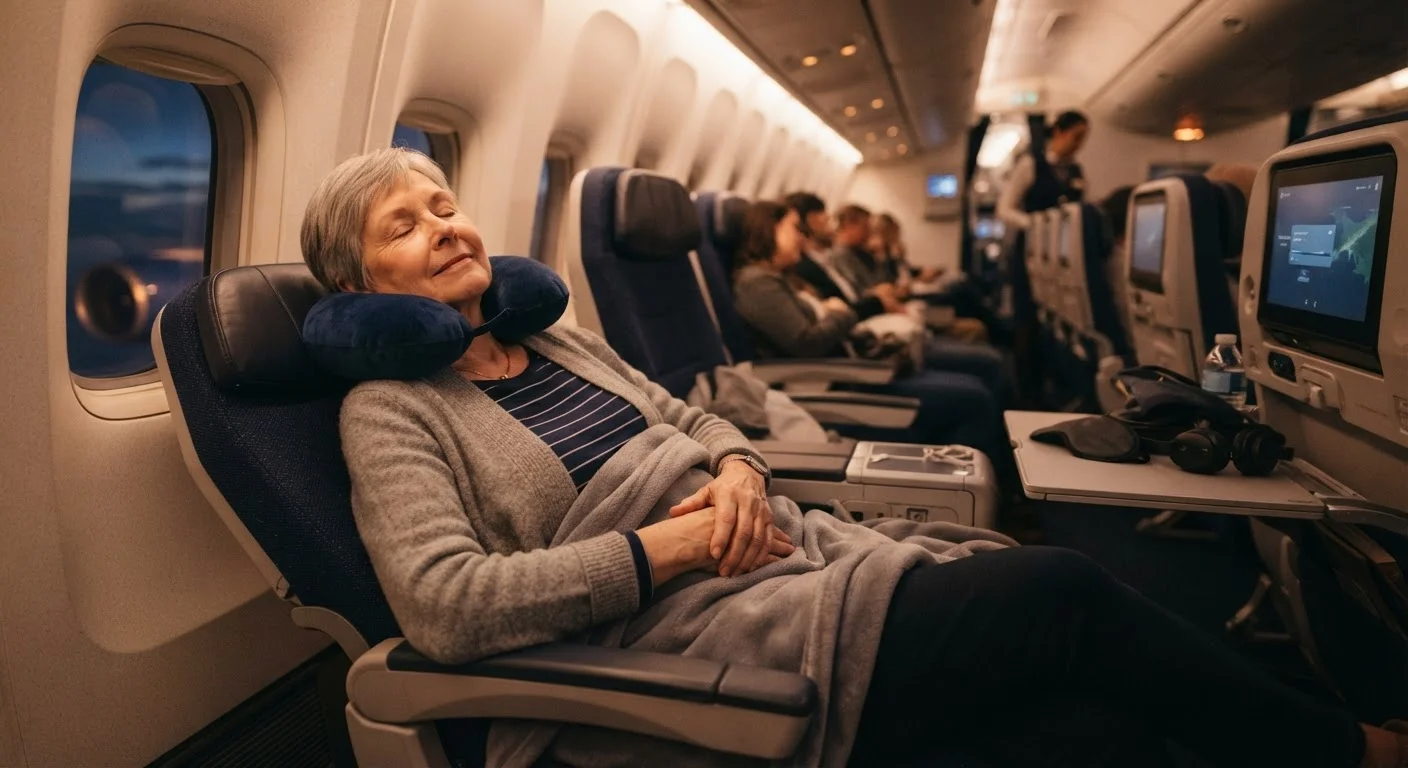
Noise-canceling earplugs or headphones can significantly improve sleep quality in a loud cabin. A supportive neck pillow matters more than most travelers expect — it prevents the head from dropping forward during sleep, reducing neck strain on waking. If you're planning a longer trip and want a broader approach to rest and recovery, our guide on comfort and rest for extended senior travel goes into pacing strategies in depth.
Eye masks, earplugs, and a neck pillow form a simple sleep kit that meaningfully improves in-flight rest.
Consider Whether Comfort Upgrades Are Worth It
Premium economy and business-class seats offer genuine benefits for long-haul travel — more recline, wider seats, and better meal options among them. Whether those benefits justify the cost depends on your budget, your health needs, and the specific flight. A longer lie-flat seat, for example, may provide meaningfully better rest on a 12-hour overnight flight than a standard recliner.
That said, not every upgrade delivers proportional value. Our balanced look at comfort upgrades worth considering helps identify which investments tend to pay off and which are often overstated. The pre-booking stage is also a good time to revisit these decisions — our senior-friendly flight booking checklist covers what to request before you confirm.
Some upgrades provide real comfort gains on long flights; others rarely justify the added cost.
Pre-Board to Set Up Comfortably
If pre-boarding is available for seniors or passengers needing extra time, take advantage of it. Arriving at your seat before the main boarding rush gives you time to stow your carry-on, arrange your neck pillow, set out your compression socks, and settle in without the stress of navigating a crowded aisle. Small setup details done calmly at the start make a noticeable difference to how relaxed you feel for the rest of the flight.
Arriving Well, Not Just Arriving
No single strategy eliminates long-haul fatigue entirely, but combining the right seat with consistent movement, smart hydration, and appropriate clothing makes a measurable difference for most travelers. Think of it as stacking small advantages rather than searching for one magic fix.
If you're weighing other long-distance travel options, our comparison of overnight train vs. overnight flight rest quality may help you decide which suits your comfort needs. And for a broader look at pacing and recovery across longer trips, see our guide on comfort and rest on extended trips.
This article is for general informational purposes only and does not constitute medical advice. If you have cardiovascular conditions, mobility limitations, or other health concerns that may be affected by air travel, please consult your healthcare provider before flying.