

Key Takeaways
- Overnight trains generally offer more space, easier movement, and gentler sleep conditions than overnight flights.
- Overnight flights can cover far greater distances but cabin pressure, noise, and seat limits often reduce sleep quality.
- Seniors with mobility concerns, circulation issues, or light sleep patterns tend to fare better on sleeper trains.
- Comfort upgrades — such as private sleeper compartments or lie-flat seats — meaningfully change the experience on either mode.
- Pacing strategies before and after overnight travel help reduce fatigue regardless of transport choice.
Our Verdict
Neither overnight trains nor overnight flights are universally superior for seniors — the right choice depends on your destination, health considerations, and how your body responds to sleep disruption. Trains typically win on physical comfort and ease of movement, while flights win on range and speed. When genuine rest is the priority and the route allows it, a sleeper train is often the gentler option.
| Best for | Recommended |
|---|---|
| Seniors prioritizing sleep quality and in-transit comfort | Overnight Train (Sleeper Cabin) |
| Travelers covering intercontinental or very long distances | Overnight Flight (with lie-flat or premium seating where available) |
| Those with significant mobility or circulation concerns | Overnight Train (Sleeper Cabin) |
| Seniors with tight schedules who need to maximize destination time | Overnight Flight |
Why Sleep on the Move Is Harder Than It Sounds
The appeal of overnight travel is straightforward: close your eyes, wake up somewhere new, and save a night's hotel cost. In practice, however, sleep on trains and planes is shaped by very different physical environments — and for seniors, those differences carry real weight.
Older adults tend to experience lighter, more fragmented sleep than younger travelers. Changes in environment, noise, light, and body position all interfere more readily with rest. Understanding what each mode of transport actually delivers — rather than what the brochure implies — helps you plan a journey that feels manageable the next morning. For a broader look at how travel-related sleep challenges compound one another, see our article on balancing daytime rest and overnight sleep during travel.
Overnight Train: What the Experience Actually Offers
Modern long-distance sleeper trains — such as those operated across Europe, parts of the US, and certain routes in Asia — typically offer a tiered system: seated carriages, couchettes (basic bunks in a shared compartment), and private sleeper rooms with a door that closes.
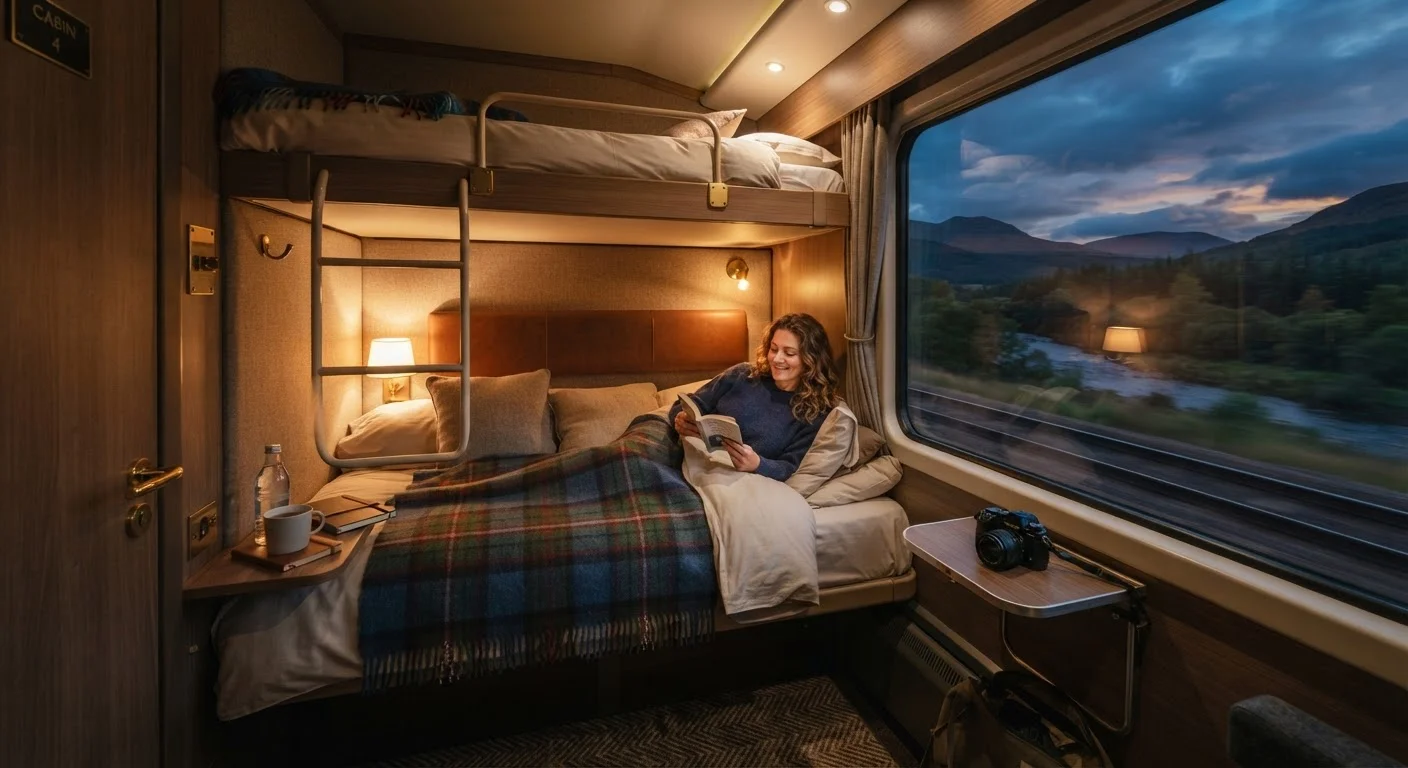
For seniors, the private sleeper is almost always the worthwhile upgrade. You gain a lockable space, a proper mattress, and the ability to control lighting. The rhythmic motion of a train is genuinely conducive to sleep for many people — it is gentler than turbulence and broadly consistent. Importantly, you can stand up and walk to a dining car or bathroom without disturbing seatmates, a significant comfort advantage over aircraft aisles.
The limitations are real too. Berths can require climbing to an upper bunk, which poses a fall risk. Train schedules may include stops that generate noise and light at odd hours. And not every route offers a genuine sleeper option — some overnight trains are seated-only.
Book the Private Sleeper Early
Private sleeper cabins on popular overnight train routes sell out well in advance, particularly on scenic or heavily traveled corridors. If privacy and a proper bed are priorities, book as early as the reservation window allows. Confirm in advance whether bedding, a washbasin, and a power outlet are included — these amenities vary considerably by operator and route.
Overnight Flight: Comfort Realities in the Cabin
Overnight flights cover distances no train can match, making them the only practical option for transoceanic journeys. But the cabin environment works against sleep in several ways that particularly affect older adults.
Cabin pressure at cruising altitude is typically equivalent to being at 6,000–8,000 feet above sea level. This mild altitude reduces blood oxygen slightly and can increase fatigue and dehydration. Dry recirculated air, sustained engine noise, irregular light from screens, and the fixed seated posture all compound the difficulty of genuine rest.
Seat class matters enormously here. Economy seats that don't recline meaningfully make it difficult to achieve any restorative sleep. Business or premium economy seats with more recline — or lie-flat options in business class on some long-haul routes — substantially improve the situation. Our article on cabin comfort on long-haul flights outlines specific strategies around seat selection, posture, and hydration that genuinely help. You may also find value in reviewing the Senior Flight Guide for broader booking and comfort considerations.
| Overnight Train (Sleeper) | Overnight Flight | |
|---|---|---|
| Sleep surface | Flat mattress in private cabin (if booked) | Reclined seat; lie-flat only in premium classes |
| Cabin environment | Ambient rhythm; stops cause noise | Pressurized, dry, noisy engine hum |
| Mobility in transit | Walk freely; dining car available | Narrow aisles; must avoid turbulence periods |
| Journey distance | Typically under 15 hours | Can exceed 14+ hours; only option for oceans |
| Accessibility options | Varies widely by operator and route | Aisle wheelchairs; pre-board boarding available |
| Arrival point | Usually central city station | Requires airport transfer to city |
| Upgrade value for seniors | Private sleeper is a meaningful upgrade | Lie-flat or premium economy noticeably helpful |
Pacing Strategies for the Day After
Regardless of which mode you choose, arriving tired is a predictable outcome — and what you do in the 24 hours following overnight travel shapes how quickly you recover.
Arriving by train often means pulling into a city-center station, which can ease the transition: no lengthy airport transfers or baggage carousels. However, that does not mean you should immediately start a packed itinerary. A quiet first morning, a light meal, and time in natural daylight help recalibrate your body clock.
After an overnight flight, circulation recovery deserves attention. Gentle walking as soon as you disembark, adequate hydration throughout, and — if your doctor has advised it for your specific situation — wearing compression garments are all commonly suggested general measures. Always speak with your own healthcare provider about what is appropriate for you personally before any long-haul journey.
For seniors comparing flight structure options more broadly, our look at direct versus connecting flights is worth reading alongside this article.
Don't Ignore Circulation on Long Journeys
Extended periods of immobility — whether seated on a plane or lying in a train berth — can affect circulation, particularly for older adults with existing cardiovascular considerations. Talk with your doctor before any overnight long-distance journey about what precautions are appropriate for your individual health situation. This is general information only and is not a substitute for personalized medical guidance.
Making Your Decision: Questions Worth Asking
Before booking, consider these practical questions rather than defaulting to habit or cost alone:
- Is a private sleeper or premium seat actually available on your specific route and date? Comfort upgrades only help if they exist.
- How far are you traveling? Trains rarely exceed 12–15 hours; flights can span 14+ hours. Longer journeys amplify every discomfort.
- How does your body handle disrupted sleep? If you already struggle with insomnia or sleep apnea, the controlled environment of a private train cabin may cause less disruption than a pressurized aircraft.
- What are your mobility needs? Train aisles and platforms vary — but aircraft lavatories and narrow aisles present their own challenges. Ask your travel provider about specific accessibility features before booking.
Whatever you choose, arriving well-rested is also influenced by where you sleep once you reach your destination. Our guide on sleep quality at hotels for seniors and our companion piece on room features that improve sleep quality can help you set up a restful base once you arrive.
This article provides general travel information for educational purposes only. It is not medical advice. Seniors with specific health conditions, mobility limitations, or sleep disorders should consult a qualified healthcare professional before undertaking long-distance overnight travel.