

Why Sleep Gets Harder in Hotel Rooms — and What Actually Helps
Sleep patterns change with age. Older adults tend to experience lighter sleep, wake more frequently during the night, and are more sensitive to environmental disruptions like noise, light, and temperature shifts. When you add an unfamiliar room to the mix, the challenge compounds. Understanding which room features genuinely affect sleep quality — rather than just sounding appealing — lets you make smarter requests before and during your stay.
For a broader look at why hotel sleep is often harder for seniors and what you can do about it, see our guide on sleep quality at hotels.
Key Room Features to Ask About Before You Book
Most hotels will accommodate reasonable room requests when contacted in advance. Knowing which features to prioritize — and how to phrase your request — significantly improves your chances of a restful night.
Light Control
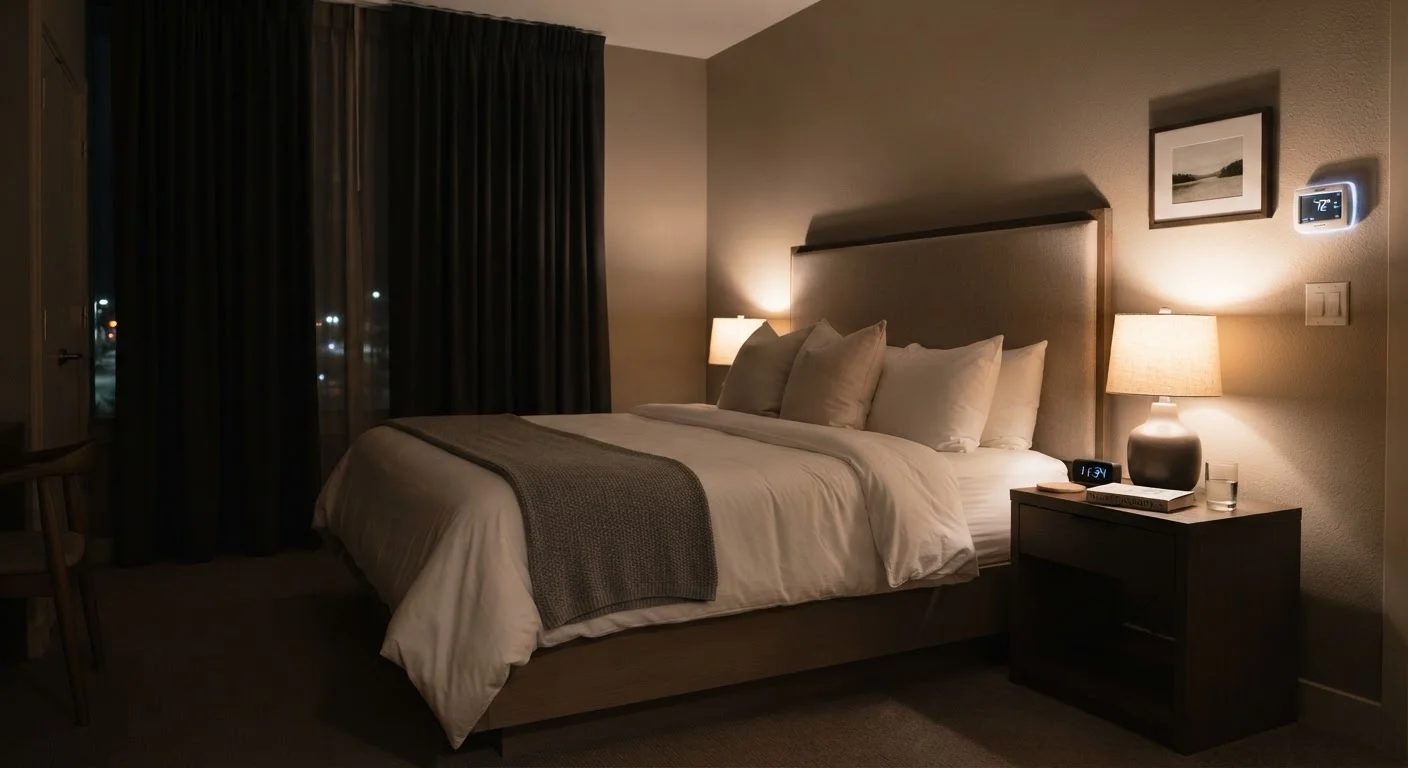
Blackout curtains are one of the most impactful sleep features a room can offer. Even moderate light exposure during sleep can suppress melatonin production, a concern that grows with age as melatonin levels naturally decline. When booking, ask specifically whether the room has blackout curtains rather than sheer or light-filtering drapes. A gap along the curtain edges can still let in significant light from parking lots or streetlamps — a small travel binder clip can close that gap if needed.
Mattress Firmness and Bed Height
Mattress feel is highly personal, but most sleep specialists suggest that medium-firm support benefits back health and pressure relief for older adults. Ask whether the hotel offers a choice of pillow-top or firmer mattresses, and confirm that the bed height allows you to sit and stand without strain. Beds that are too low can be genuinely difficult to exit safely during nighttime bathroom trips.
Temperature Control
Sleep quality is closely tied to core body temperature, which naturally drops during the night. Rooms that are too warm can fragment sleep significantly. Look for rooms with an individually controlled thermostat rather than a central system. A target sleeping temperature commonly cited in sleep research falls between 65–68°F (18–20°C), though comfort varies by individual. Arriving at your room early enough to adjust the temperature before bedtime helps.
Noise Environment
Ask for a room away from elevators, ice machines, and high-traffic corridors. Upper floors away from street-facing walls typically offer the quietest environment. Some hotels also offer white noise machines on request — worth asking about, particularly if you're a light sleeper.
Requesting Room Adjustments Is Perfectly Normal
Front desk staff are accustomed to accommodation requests and can often move you to a quieter floor, provide an extra blanket, or confirm curtain type before you arrive. Calling ahead — rather than requesting at check-in — gives the hotel more time to arrange what you need. Keep your requests specific and brief: 'a quiet room away from the elevator with blackout curtains' is easy for staff to act on.
If you'd like to pair the right room setup with a consistent wind-down practice, our pre-sleep routine for hotel stays walks through practical habits that work in unfamiliar environments.
Supplementing What the Room Provides
Even the best-equipped rooms have gaps. Bringing a small selection of portable comfort items fills in what a hotel can't control. Think ear protection for unexpected noise, a familiar pillow cover to reduce the sensory unfamiliarity of a new bed, or a sleep mask for rooms where light still intrudes.
Blackout curtains
Heavy window coverings designed to block virtually all outside light. They are among the most effective room features for protecting sleep quality in unfamiliar environments.
Melatonin
A hormone produced by the brain that signals the body it is time to sleep. Production naturally decreases with age and can be further suppressed by light exposure at night.
White noise
A consistent ambient sound that masks sudden or variable noises. Used in travel and sleep settings to reduce the disruptive effect of corridor sounds, traffic, and other intermittent disturbances.
Medium-firm mattress
A mattress that provides a balance of support and cushioning. Often recommended for older adults as it distributes body weight evenly and reduces pressure on joints without allowing the spine to sink out of alignment.
Thermostat control
An in-room device allowing guests to independently set room temperature. Individual control is preferable to centrally managed systems, which may not reflect personal comfort needs.
For a full overview of what's worth carrying, our comfort kit packing guide covers portable rest essentials by trip type. You can also explore broader travel health tips and senior hotel tips to approach your stay with full preparation.
This article is for general informational purposes only and does not constitute medical advice. If you have concerns about sleep quality, medications, or health conditions that may affect rest while traveling, please consult a qualified healthcare professional before your trip.