

Key Takeaways
- A portable comfort kit addresses sleep disruptions that are especially common for senior travelers.
- Neck support, light blocking, and sound management are the three highest-impact categories to pack.
- Most comfort items are lightweight, reusable, and take up minimal luggage space.
- Personalizing your kit to your known sleep sensitivities pays off most on longer or multi-destination trips.
- A comfort kit complements — but does not replace — a dedicated travel health kit.
Summary
18 items · 30–60 minutes to assemble
Why Sleep Quality Deserves Its Own Packing Strategy
Poor sleep doesn't just leave you tired — for older adults, it compounds throughout a trip, dulling enjoyment, affecting balance, and slowing recovery from jet lag or long travel days. Yet most travelers pack meticulously for their daytime activities while giving almost no thought to the conditions they'll sleep in.
Hotel rooms vary enormously in noise levels, light intrusion, temperature control, and pillow quality. Cruise cabins, overnight trains, and even long-haul flights introduce their own sleep challenges. A compact comfort kit gives you the means to adjust your environment regardless of where you land.
This checklist is part of the broader planning guide for senior travelers on extended trips, which covers pacing strategies and recovery habits alongside rest. Use it as a starting point, then personalize based on your own sleep sensitivities.
Neck and Body Support
Light and Eye Protection
Sound Management
Temperature and Skin Comfort
Pacing and Wind-Down Habits
Tools Worth Having on Hand
None of these items need to be expensive or bulky. The goal is a small, dedicated pouch you can move between bags and reach quickly — whether you're mid-flight or checking in at midnight.
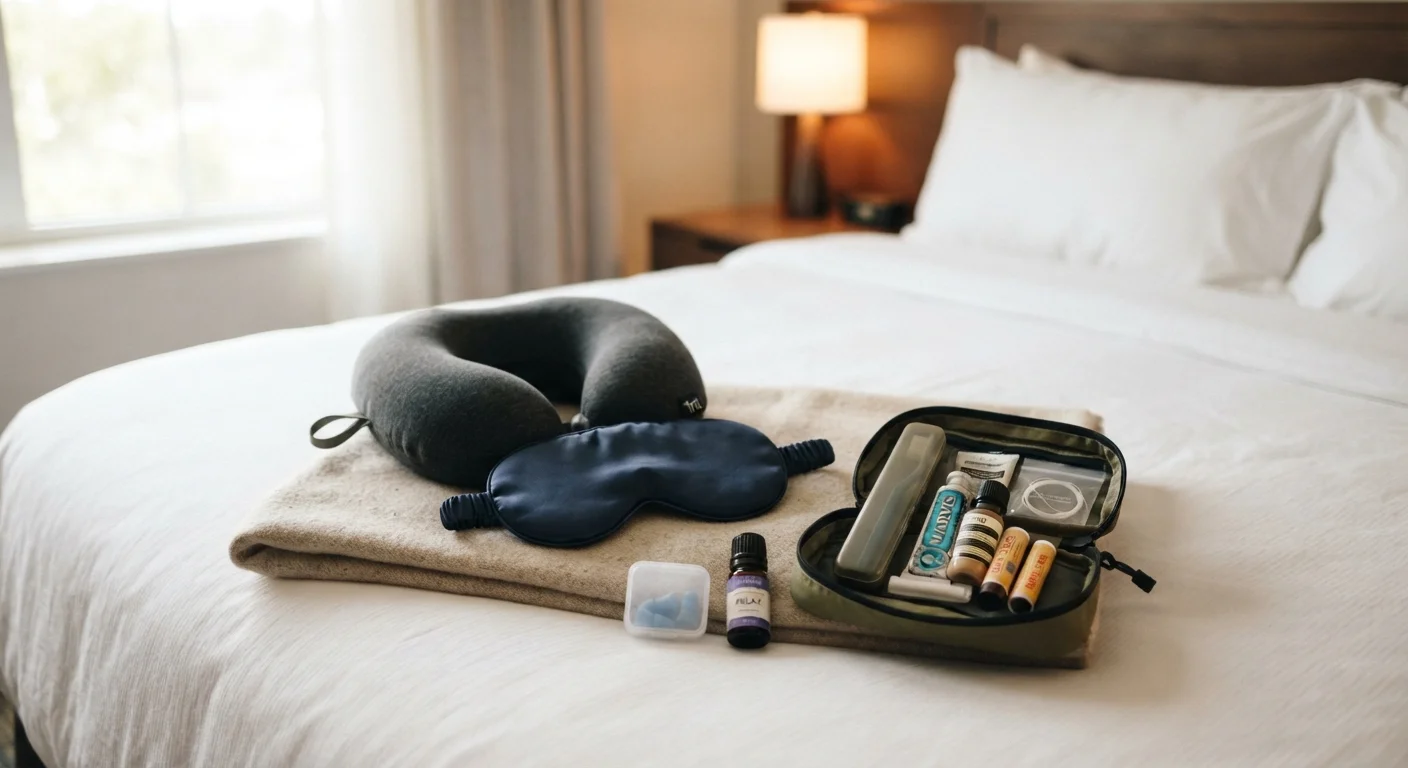
Compressible neck pillow
Provides lateral head and neck support during flights, car journeys, and in hotel beds with poor pillow options.
Contoured sleep mask
Blocks ambient light from windows, corridor gaps, or electronic standby indicators without pressing on the eyes.
Foam or silicone ear plugs
Reduces disruptive noise from hotel hallways, street traffic, and fellow travelers.
White noise app (on your phone)
Masks irregular sounds with consistent audio, making it easier to fall and stay asleep in unfamiliar rooms.
Small portable Bluetooth speaker or earbuds
Delivers white noise or sleep audio at a usable volume without relying on your phone's built-in speaker.
Universal power adapter
Ensures your devices — including CPAP machines and phone chargers — can be used in any destination's wall sockets.
Travel-sized unscented moisturizer
Counteracts skin dryness caused by low-humidity aircraft cabins and hotel air conditioning or heating systems.
Dedicated comfort kit pouch
Keeps all sleep and comfort items organized in one place so they're easy to access and move between bags.
If you're also building a medical travel kit, keep that separate from your comfort kit. Our guide on what a travel health kit should actually contain for older adults walks through the medical supplies that belong in their own dedicated pouch.
Getting the Most From Your Kit
Assembling the items is only half the work. The other half is building habits around them. Put your eye mask and ear plugs in the same spot every night so you're not hunting for them when you're already drowsy. If you're a light sleeper, use your white noise app even for short naps — consistency helps train your body to associate those cues with sleep.
Don't Rely Solely on Sleep Aids
Some travelers turn to over-the-counter sleep aids when rest is elusive on the road. These can interact with other medications and may cause next-day drowsiness that affects your balance and coordination — a significant concern for older adults. If you're considering any sleep aid, whether over-the-counter or prescription, discuss it with your healthcare provider before your trip rather than experimenting while away from home.
Room environment matters too. Your comfort kit works best alongside thoughtful accommodation choices — understanding what to look for in a hotel room can make a real difference. The article on room features that genuinely improve sleep quality for older travelers covers blackout curtains, mattress firmness, and what you can reasonably request at check-in.
Cruise travelers have a particular set of cabin-specific challenges. For a packing list tailored to shipboard travel, see what senior cruisers should never leave behind.
This article is for general informational purposes only and is not medical advice. If you have health conditions that affect your sleep or require specific accommodations when traveling, please consult your healthcare provider before your trip.