

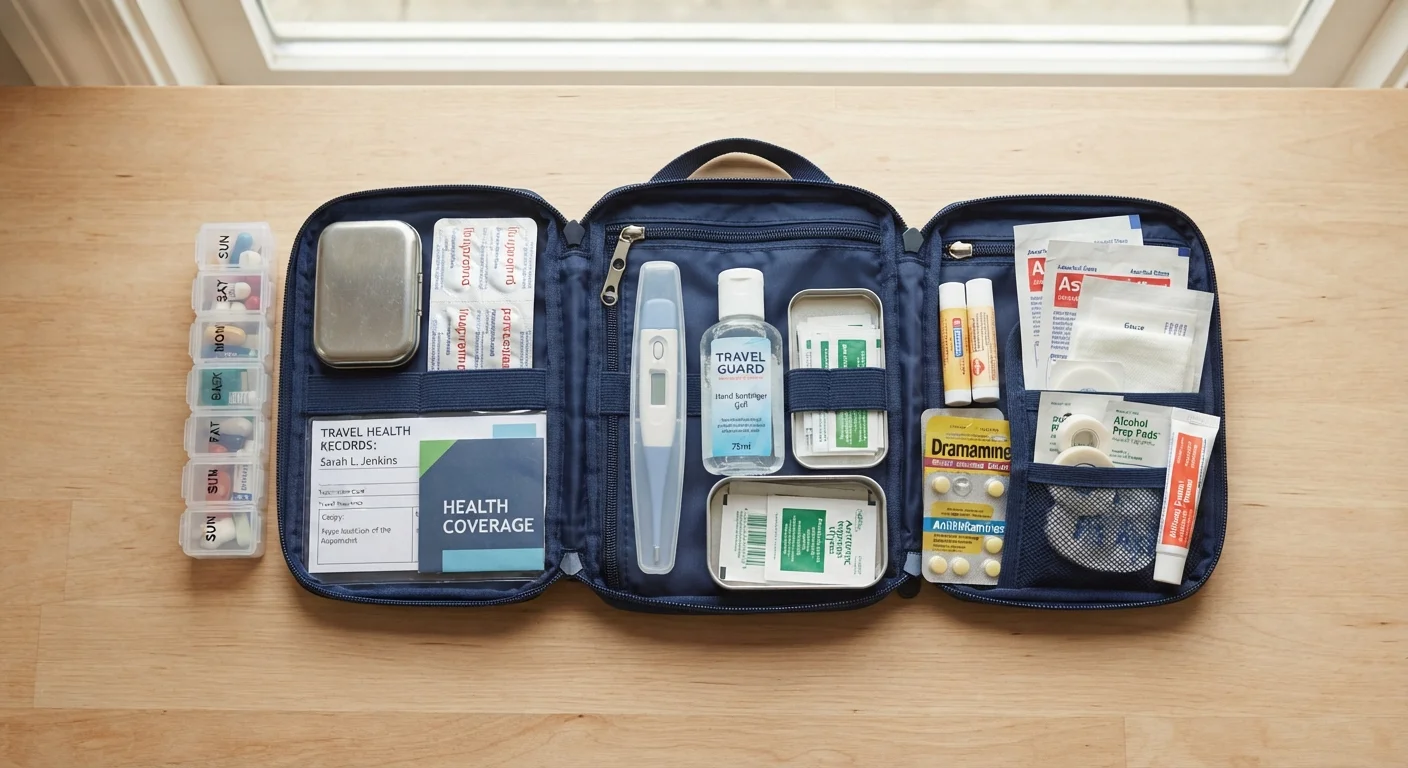
Key Takeaways
- A travel health kit for seniors goes well beyond bandages — it includes documents, medications, and comfort supplies.
- Keeping all prescriptions in their original labeled containers helps avoid complications at security and customs.
- Carrying a printed medical summary can be lifesaving if you need emergency care away from home.
- Consult your doctor before any trip to review medications, vaccinations, and fitness-to-travel considerations.
- The kit should be adapted for your specific destinations and trip length, not built as a one-size-fits-all solution.
Summary
28 items · 30–60 minutes to assemble and verify
Why a Thoughtful Health Kit Matters More as We Age
Packing a health kit isn't just about being cautious — it's about staying in control of your well-being when you're away from your usual routines, pharmacies, and healthcare providers. For older adults managing one or more chronic conditions, or simply aware that recovery from minor illness takes longer than it used to, having the right supplies within reach can mean the difference between a minor inconvenience and a trip-ending setback.
This checklist is designed to help you think through every category methodically: your prescription medications, over-the-counter essentials, first aid basics, critical health documents, and comfort items that support rest and recovery. It's a practical starting point — your own needs, destinations, and trip length will shape the final contents.
Before finalizing your kit, review our pre-travel medical checklist for seniors for a full picture of what to cover at your doctor's appointment before departure. And for a broader pre-departure overview, see The Senior Traveler's Pre-Trip Checklist.
Always Consult Your Doctor Before You Pack
Your health kit should reflect your individual medical history, current conditions, and destination-specific risks — not a generic template. Schedule a pre-travel appointment to review your medications, discuss any necessary vaccinations, and confirm that your planned activities are appropriate for your health. This article is general information only and is not a substitute for personalized medical advice.
What to Include in Your Senior Travel Health Kit
Use the checklist groups below to audit your kit before every trip. Items marked must are non-negotiable for most travelers; should items are strongly recommended; and nice-to-have additions can improve comfort significantly without adding much weight.
Prescription Medications
Health Documents
Over-the-Counter Essentials
First Aid Basics
Mobility and Comfort Aids
Hygiene and Infection Prevention
If you're preparing for a cruise specifically, the packing guide for senior cruisers covers how to adapt this kit for life aboard a ship. For rest and comfort supplies beyond the health kit itself, building a comfort kit for travel is a natural companion resource.
Don't Rely on Finding Medications Abroad
Many prescription medications available in the US are either unavailable, sold under different names, or require a local prescription in other countries. Do not assume a pharmacy abroad will be able to fill your usual prescription quickly or at all. Always bring a sufficient supply from home, and discuss contingency plans with your doctor before departing.
Once your kit is assembled, store it in a dedicated, easy-to-access pouch that stays in your carry-on — never in checked luggage. Label it clearly and let a travel companion know where it is.
This article is for general informational purposes only and does not constitute medical advice. Always consult a qualified healthcare professional regarding your personal health needs, medications, and fitness to travel.