

Key Takeaways
- Older adults naturally sleep more lightly, making hotel noise and light especially disruptive.
- Room temperature, mattress firmness, and blackout curtains are among the most impactful factors.
- Requesting specific room types and locations at booking can meaningfully reduce disturbances.
- Packing a small sleep kit with earplugs and a familiar pillow can offset unfamiliar conditions.
- A consistent pre-sleep routine helps signal to the body that it's time to rest, even away from home.
Hotel Sleep Disruption in Seniors
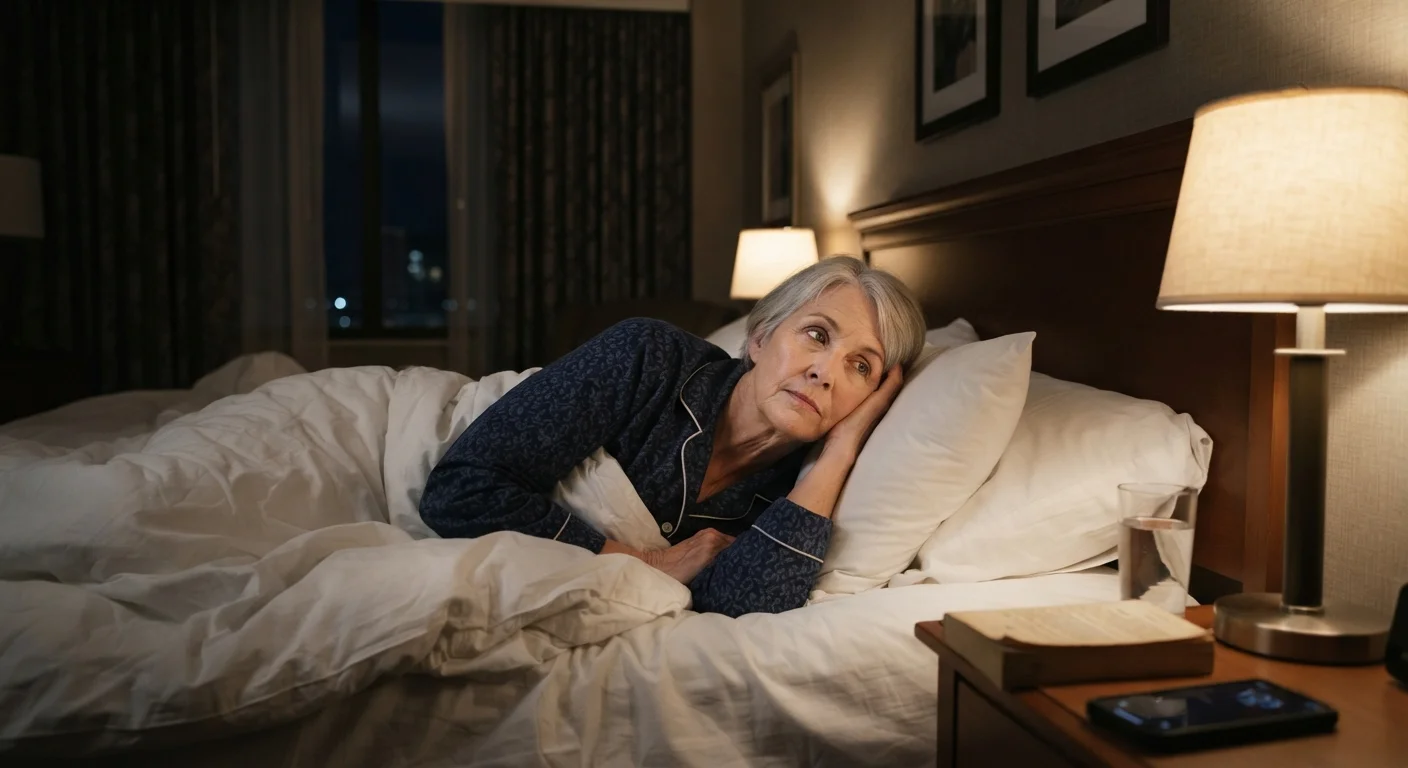
Hotel sleep disruption refers to the difficulty older adults often experience getting restful sleep in hotel environments. It stems from a combination of age-related changes in sleep architecture, unfamiliar surroundings, and controllable room factors like noise, light, and mattress firmness. Unlike younger travelers who adapt quickly, seniors tend to experience lighter, more fragmented sleep that is more easily disturbed.
As adults age, they spend less time in slow-wave (deep) sleep and become more sensitive to environmental stimuli during lighter sleep stages — a shift that makes hotel conditions particularly disruptive.
Why Hotel Sleep Is Harder as You Age
Sleep changes significantly with age — and not in ways that make hotel stays easier. Older adults naturally shift toward lighter, more fragmented sleep, spending less time in the deep restorative stages that leave you feeling genuinely rested. This means any environmental interruption — a door slamming in the hallway, an HVAC unit cycling on, or light seeping under the curtains — is more likely to pull you fully awake.
There's also a neurological factor at play. Research into what's called the "first-night effect" suggests that one hemisphere of the brain stays more vigilant in an unfamiliar environment, making it harder to settle into deeper sleep stages. For younger travelers, this typically resolves by the second night. For older adults, it may persist throughout a short stay.
For a broader look at why travel generally disrupts sleep more with age, see why sleep gets harder away from home.
~50%
Older adults reporting regular sleep difficulties
Research consistently estimates that roughly half of adults over 65 experience chronic sleep complaints, according to general findings cited by the National Institute on Aging.
65–68°F
Optimal room temperature range for sleep
Sleep researchers generally cite this temperature range as supportive of quality sleep for most adults, though individual needs vary.
The Biggest Environmental Culprits in Hotel Rooms
Hotel rooms introduce a cluster of sleep-disrupting variables that are easy to overlook when booking. Understanding which factors affect seniors most helps you ask the right questions before you arrive.
- Noise: Hallway traffic, elevator machinery, ice machines, and thin walls are common complaints. Rooms near the elevator bank or on lower street-facing floors are particularly problematic.
- Light: Inadequate blackout curtains, LED standby lights on devices, and the glow of digital clocks can all disrupt melatonin production — a hormone already produced in smaller quantities as we age.
- Temperature: Hotels often set room defaults warmer than optimal sleep conditions. Most sleep researchers suggest a room temperature between 65–68°F supports better sleep, though individual preference varies. The ability to independently control your thermostat matters.
- Mattress firmness: A mattress that's too soft or too firm affects both comfort and spinal support, which becomes more relevant for seniors managing back pain or joint issues.
For a detailed breakdown of which room features to look for — and how to request them — the article on room features that improve sleep quality for older travelers is a helpful companion read.
Book Your Room Directly for Better Results
When calling the hotel directly, you can often request specific room locations and features that aren't available through third-party booking platforms. Ask for a room away from the elevator and ice machine, confirm blackout curtain availability, and inquire about thermostat control. Staff are typically more responsive to these requests when made in advance rather than at check-in.
How to Set Yourself Up Before and After You Arrive
Good hotel sleep starts well before check-in. At the booking stage, contact the hotel directly — not just through a third-party platform — and ask specifically about room location, mattress options, and blackout curtain availability. Request a room on an upper floor, away from the elevator, ice machine, and any internal atrium that may carry noise.
Pack a small sleep kit to carry with you. Foam earplugs, a sleep mask, and even a familiar pillowcase from home can reduce the sensory strangeness of a new room. A white noise app on your phone or a compact travel sound machine can mask intermittent hallway sounds more effectively than silence.
Once you're in the room, do a quick environment check: adjust the thermostat before bed, cover any standby LED lights with a piece of dark tape or clothing, and test the curtain coverage before the lights go out. Small adjustments made early in the evening are easier than troubleshooting in the middle of the night.
Maintaining your usual wind-down habits also matters more than people expect. The pre-sleep routine for hotel stays outlines how to adapt your bedtime habits to a hotel setting in a way that signals to your body it's time to rest.
When Travel Adds Jet Lag on Top of Poor Sleep
For seniors traveling across time zones, disrupted hotel sleep compounds the challenge of jet lag. Older adults recover from circadian disruption more slowly than younger travelers, and the combination of poor-quality hotel sleep and a shifted body clock can leave you feeling depleted for days into a trip.
If your travels involve significant time zone changes, it's worth reading about jet lag after 60 and how to adapt — particularly how the timing of light exposure and meals can help reset your internal clock more quickly. If you're also managing medications with time-sensitive dosing, time zone changes and senior health addresses the intersection of sleep, medication timing, and recovery in practical terms.
For cruise travelers specifically, sleep disruption takes on a different shape. The article on staying rested on long cruises covers the unique rhythm of shipboard nights and how to manage them.
This article is for general informational purposes only and does not constitute medical advice. Seniors with sleep disorders, chronic health conditions, or concerns about medications and sleep should consult a qualified healthcare professional before making changes to their routines.