

Key Takeaways
- Jet lag affects older adults more intensely and takes longer to resolve than in younger travelers.
- Gradual schedule shifting before departure can reduce the disruption of crossing multiple time zones.
- Light exposure, meal timing, and gentle movement are evidence-supported tools for resetting the body clock.
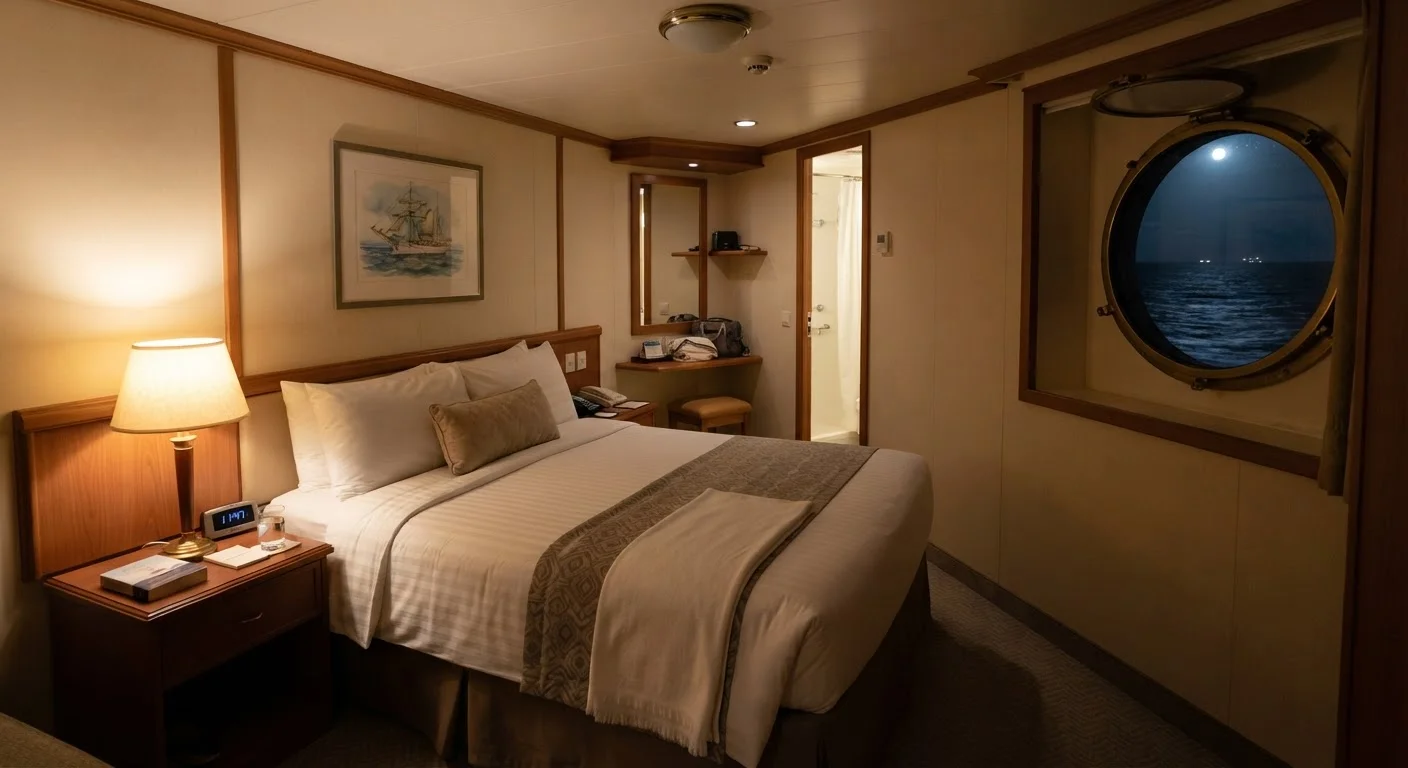
- Cabin setup choices — such as blackout curtains and cabin location — meaningfully affect sleep quality.
- Strategic napping on sea days supports recovery without undermining nighttime sleep patterns.
- Travelers managing medications should consult their doctor before departure about timing adjustments across time zones.
Why Sleep Disruption Hits Harder After 60
Sleep architecture changes with age. Older adults typically experience less deep sleep, wake more frequently during the night, and find it harder to fall back asleep after waking. These shifts are a normal part of aging, but they become amplified during long cruises when routines are disrupted, time zones are crossed, and sleeping environments change. Understanding why this happens is the first step toward managing it effectively.
When a cruise itinerary crosses two or more time zones — common on transatlantic or Pacific voyages — the body's circadian rhythm (the internal 24-hour clock regulating sleep-wake cycles) falls out of sync with the external environment. For older adults, this resynchronization process is measurably slower than in younger travelers. What might resolve in two days for a 35-year-old can take five or more days for someone in their 70s. For more on how age affects this process, see our article on jet lag after 60.
Additionally, the ship's environment itself introduces unique challenges: engine vibration, corridor noise, port arrivals in the early hours, and the subtle rolling motion of the vessel can all fragment sleep in ways that passengers don't anticipate before boarding.
Before You Board: Preparing Your Body Clock
The most effective jet lag management begins before departure. Gradually adjusting your sleep and wake times in the days leading up to a cruise can shorten the adaptation period significantly. If you are traveling eastward, try shifting bedtime and wake time 30 minutes earlier each day for three to four days prior. For westward travel, shift in the opposite direction.
Staying well-hydrated and minimizing alcohol on the day of departure also supports better sleep on your first nights aboard. Alcohol may help with falling asleep initially, but it reliably fragments sleep in the second half of the night — an effect more pronounced in older adults. For a broader look at pre-travel preparation, our complete senior cruise guide offers a thorough planning framework.
Onboard Best Practices for Restful Sleep
Once aboard, several practical strategies help maintain sleep quality across long voyages — regardless of how many time zones your itinerary crosses.
For travelers who find the ship's movement disruptive, cabin placement matters. Midship cabins on lower decks experience the least motion. If you are sensitive to this, our article on managing seasickness explains how ship design and cabin location interact with motion sensitivity.
Managing Medication Timing Across Time Zones
For older travelers managing chronic conditions, time zone changes raise an important practical question: when should medications be taken when the clock shifts by several hours? This is a topic that requires individual guidance from a physician or pharmacist before departure — general information here cannot substitute for personalized medical advice.
Always Consult Your Doctor Before Adjusting Medications
Time-sensitive medications — including those for blood pressure, diabetes, thyroid conditions, and anticoagulation — may require careful scheduling changes when crossing multiple time zones. The right approach varies significantly by drug type and individual health profile. Speak with your prescribing physician or pharmacist several weeks before departure, and ask them to provide written guidance you can refer to onboard. Do not adjust doses or timing without professional guidance.
As a general principle, medications that are time-sensitive — such as those for blood pressure, thyroid conditions, or diabetes — require careful scheduling adjustments. Your healthcare provider may recommend gradually shifting dose times over several days to match the new local time, or they may advise maintaining home-time dosing throughout the voyage. Either approach has merit depending on the specific medication and health context. Our companion article on time zone changes and senior health offers additional context for this conversation with your doctor.
Using Sea Days and Pacing to Support Recovery
Long cruises often include sea days — full days at sea between port calls. For senior travelers, these are among the most valuable recovery opportunities available. A well-timed short rest during the early afternoon (generally 20–30 minutes) can restore alertness without significantly disrupting nighttime sleep, provided it is taken before mid-afternoon.
5+ days
Typical jet lag recovery time for adults over 65
Research on circadian biology consistently shows that older adults resynchronize to new time zones more slowly than younger travelers, with recovery often taking more than twice as long.
20–30 min
Optimal nap duration to avoid sleep inertia
Sleep science generally supports short early-afternoon naps of this duration as restorative without significantly disrupting nighttime sleep cycles for most adults.
However, extended or late-day napping can delay sleep onset at night, compounding the disruption you are trying to resolve. The goal is balance: see our detailed guidance on balancing daytime rest and overnight sleep for a structured approach.
Gentle movement also accelerates circadian adjustment. A brief walk on the promenade deck in morning light — natural sunlight is one of the strongest signals for the body clock — is among the most effective free strategies available. Our article on staying active on long journeys outlines low-impact options suitable for most fitness levels. For a complete picture of how to structure rest and recovery across an extended voyage, see our extended trip comfort planning guide.
This article provides general information for educational purposes only and is not a substitute for personalized medical advice. Consult your healthcare provider before making changes to medication schedules or sleep routines, particularly if you manage chronic health conditions.