

Key Takeaways
- Seasickness is not inevitable — cabin placement and ship size meaningfully reduce motion exposure.
- Modern stabilisers cut perceptible ship roll considerably, especially on larger vessels.
- Several evidence-supported remedies exist, though effectiveness varies between individuals.
- Older adults with certain health conditions or medications should consult a doctor before using antihistamine-based remedies.
- Choosing calmer itineraries and sea conditions is one of the most effective prevention strategies.
The Real Causes of Seasickness — and Why They Matter
Seasickness is a form of motion sickness triggered by a mismatch between what your inner ear senses and what your eyes see. When a ship rolls or pitches and your visual field appears steady, the brain interprets the conflict as a potential toxin ingestion — and responds with nausea as a protective mechanism. Understanding this mechanism matters because it points directly toward which interventions have a physiological rationale and which do not.
Older adults may also be managing medications that affect the vestibular system or general sensory processing, which can alter susceptibility. If you are managing ongoing health concerns while planning a cruise, the guidance in our article on managing chronic conditions aboard offers relevant context on coordinating with cruise ship medical staff before and during your voyage.
Myth
Everyone gets seasick eventually — it's just a matter of time at sea.
Fact
A significant portion of cruise passengers experience little to no seasickness, particularly on modern ships in calm-water itineraries.
Motion sickness susceptibility varies widely between individuals and is influenced by genetics, prior exposure, anxiety levels, and the specific conditions aboard. Research suggests that most people adapt to ship motion within one to three days — a process called sea-legs adaptation. Choosing itineraries in calmer waters, such as the Caribbean or the Norwegian fjords, further reduces the likelihood of significant motion.
Myth
Cabin location doesn't make a significant difference to how much motion you feel.
Fact
Cabins located midship and on lower decks consistently experience less perceptible motion than those at the bow, stern, or on higher decks.
A ship pivots and rolls around its centre of mass. Cabins near that central point — roughly the middle of the ship, closer to the waterline — move through a shorter arc during both pitch (front-to-back rocking) and roll (side-to-side motion). Travelers who are motion-sensitive should specifically request midship, lower-deck cabins when booking. This is one of the most practical and cost-free adjustments available. For broader cabin comfort planning, see our guide on making the most of sea days and cabin comfort.
Myth
Ship stabilisers eliminate motion entirely, so seasickness is no longer a real concern.
Fact
Stabilisers substantially reduce roll but do not eliminate all motion, particularly pitch in heavy swells.
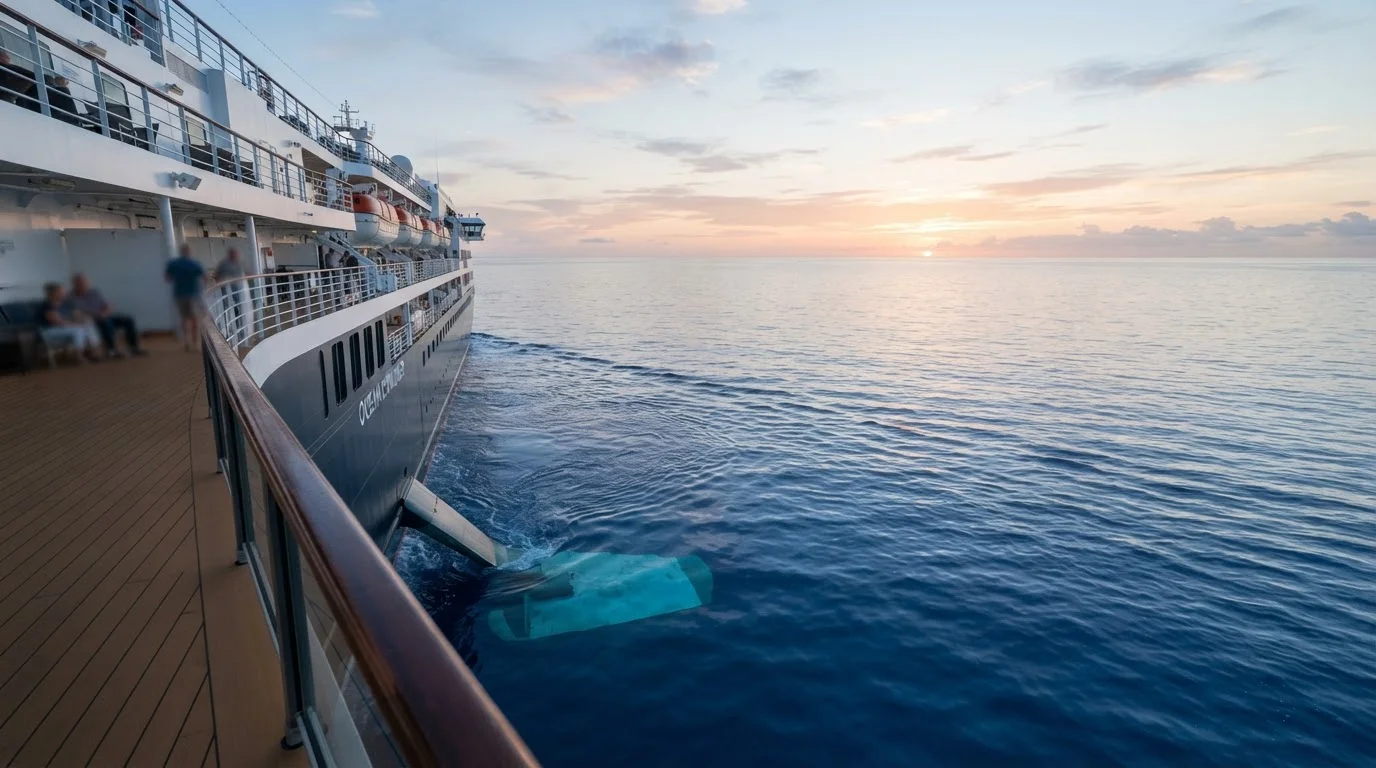
Modern cruise ships use retractable fin stabilisers — wing-like appendages that extend from the hull and counteract rolling motion using hydrodynamic force. These can reduce roll by roughly 50–90% in moderate seas. However, they are less effective against pitch (the bow-to-stern rocking common in head-on swells) and provide no benefit when the ship is at anchor. Larger ships also benefit from greater mass and hull length, which naturally dampen motion — one reason ship size is worth considering if you are motion-sensitive.
Myth
Ginger is a proven cure for seasickness and works for everyone.
Fact
Ginger has some supporting evidence for reducing nausea, but results are inconsistent and it is not a reliable cure for all individuals.
Several small clinical studies have found ginger supplementation modestly effective at reducing nausea symptoms, though evidence quality varies and findings are not uniform across populations. Ginger in food, tea, or supplement form is generally considered low-risk for most people, but it is not a substitute for pharmaceutical options in cases of moderate to severe motion sickness. Acupressure wristbands (targeting the P6 pressure point) are another commonly used non-pharmacological option with mixed but generally benign evidence. Neither should be presented as a guaranteed remedy.
Myth
Looking at the horizon is just an old sailor's tale with no real physiological basis.
Fact
Fixing your gaze on a stable horizon is a well-understood technique that reduces the sensory conflict causing motion sickness.
Seasickness is caused when the brain receives conflicting signals — the inner ear detects motion while the eyes (focused on a stable interior surface) do not. Focusing on the horizon gives the visual system a stable, real-world reference that aligns with vestibular input, reducing that conflict. This is why being on deck generally feels better than being below in an enclosed space. It is a simple, free, and evidence-consistent strategy — especially useful during the first day or two at sea while adaptation occurs.
Practical Steps That Actually Reduce Your Risk
The most effective approach to seasickness is layered prevention rather than relying on a single remedy. Consider these evidence-grounded steps:
- Book midship, lower-deck cabins. The motion difference is measurable and meaningful.
- Choose calmer itineraries. Caribbean, Mediterranean, and Scandinavian fjord routes generally see gentler sea conditions than transatlantic or Southern Ocean crossings. Destination choices affect more than scenery — see our piece on cruise destination myths for seniors for itinerary planning insight.
- Spend time on deck early. The first 24–48 hours at sea are typically when symptoms peak. Fresh air, a fixed horizon, and moderate movement help accelerate adaptation.
- Eat light, frequent meals. An empty stomach tends to worsen nausea; heavy, greasy meals can also aggravate it.
- Discuss pharmacological options with your doctor in advance. Antihistamines and prescription scopolamine patches are used for motion sickness prevention but carry side-effect considerations, particularly for older adults on multiple medications.
Consult Your Doctor Before Using Motion Remedies
Antihistamine-based motion sickness medications and scopolamine patches can interact with other common prescriptions and may cause drowsiness, dry mouth, or confusion — effects that can be more pronounced in older adults. This article provides general information only and is not medical advice. Always speak with your healthcare provider before starting any new medication or supplement for seasickness.
Poor sleep can also heighten motion sensitivity. Our article on staying rested on long cruises covers how to protect your sleep schedule when at sea.
Rough-Sea Routes Carry Real Risk
Itineraries crossing the Drake Passage, the North Atlantic in winter, or the Bay of Biscay are known for unpredictable and sometimes severe swells. If you are highly motion-sensitive, these routes carry a higher likelihood of discomfort regardless of remedies used. Consult itinerary reviews and historical sea-condition data before booking routes with extended open-ocean crossings.
Finally, if seasickness concerns are part of a broader worry about whether cruising suits your needs, our guide on avoiding common cruise booking regrets for seniors addresses this alongside other frequently overlooked planning considerations.
This article is for general informational purposes only and does not constitute medical advice. Consult a qualified healthcare professional before making decisions about medications or supplements related to motion sickness or any health condition.