
Seated Exercise and Movement Breaks: Staying Physically Active on Long Journeys

Key Takeaways
- Prolonged sitting reduces circulation and increases stiffness — short movement breaks every 60–90 minutes help counteract this.
- Most seated exercises require no equipment and can be done discreetly in a plane, train, or car seat.
- Ankle pumps, shoulder rolls, and seated marching are among the safest and most effective in-seat movements for seniors.
- Hydration supports circulation — drinking water regularly complements physical movement breaks.
- Always consult your physician before travel if you have a history of blood clots, joint conditions, or cardiovascular concerns.
What you will need
Why Movement Matters on Long Journeys
Extended sitting — whether in an airplane seat, a train carriage, or the passenger seat of a car — slows circulation and reduces muscle activity. For older adults, this can mean increased stiffness, swelling in the legs and feet, and a general feeling of fatigue that lingers well after arrival. In some situations, prolonged immobility may elevate the risk of circulatory concerns, which is why many healthcare providers routinely discuss in-travel movement with patients who are planning extended trips.
The good news is that you do not need a lot of space or equipment to stay meaningfully active during a journey. A handful of low-impact exercises, performed consistently throughout the trip, can help your body manage the effects of prolonged sitting. These routines are designed to complement — not replace — any medical guidance your doctor has provided. For a broader look at managing your energy across a long trip, see our guide to pacing a long trip.
Consult Your Doctor Before You Travel
This article provides general wellness information and is not a substitute for medical advice. If you have a history of deep vein thrombosis, cardiovascular disease, recent surgery, or joint problems, speak with your healthcare provider before attempting any in-travel exercise routine. They can advise on movements that are safe and appropriate for your specific situation.
What You'll Need Before You Start
The exercises in this guide require almost no preparation, but a few small choices before you board can make your in-seat routine more comfortable and effective.
What you will need
Compression socks
Help support circulation in the lower legs during extended periods of sitting.
Small travel pillow or lumbar roll
Supports the lower back and encourages a posture that makes seated movement easier.
Phone or watch timer
Reminds you to take movement breaks at regular intervals throughout the journey.
If you are traveling on a cruise and looking for broader movement options once you arrive, our article on gentle onboard exercise options covers low-impact activities suited to the ship environment.
Step-by-Step: Your In-Travel Movement Routine
The following steps form a simple, repeatable routine you can begin as soon as you are settled into your seat. Work through each movement in order, and aim to repeat the full sequence every 60–90 minutes throughout your journey. If you can only complete part of the sequence, any movement is better than none.
Set up your seat for comfortable movement
Before you begin any exercises, position yourself so you can move freely. Sit upright with your feet flat on the floor, knees at roughly a 90-degree angle. If your seat is reclining, bring it to a neutral or slightly upright position. Place any bags under the seat in front to give your feet more room to move.
Perform ankle pumps and circles
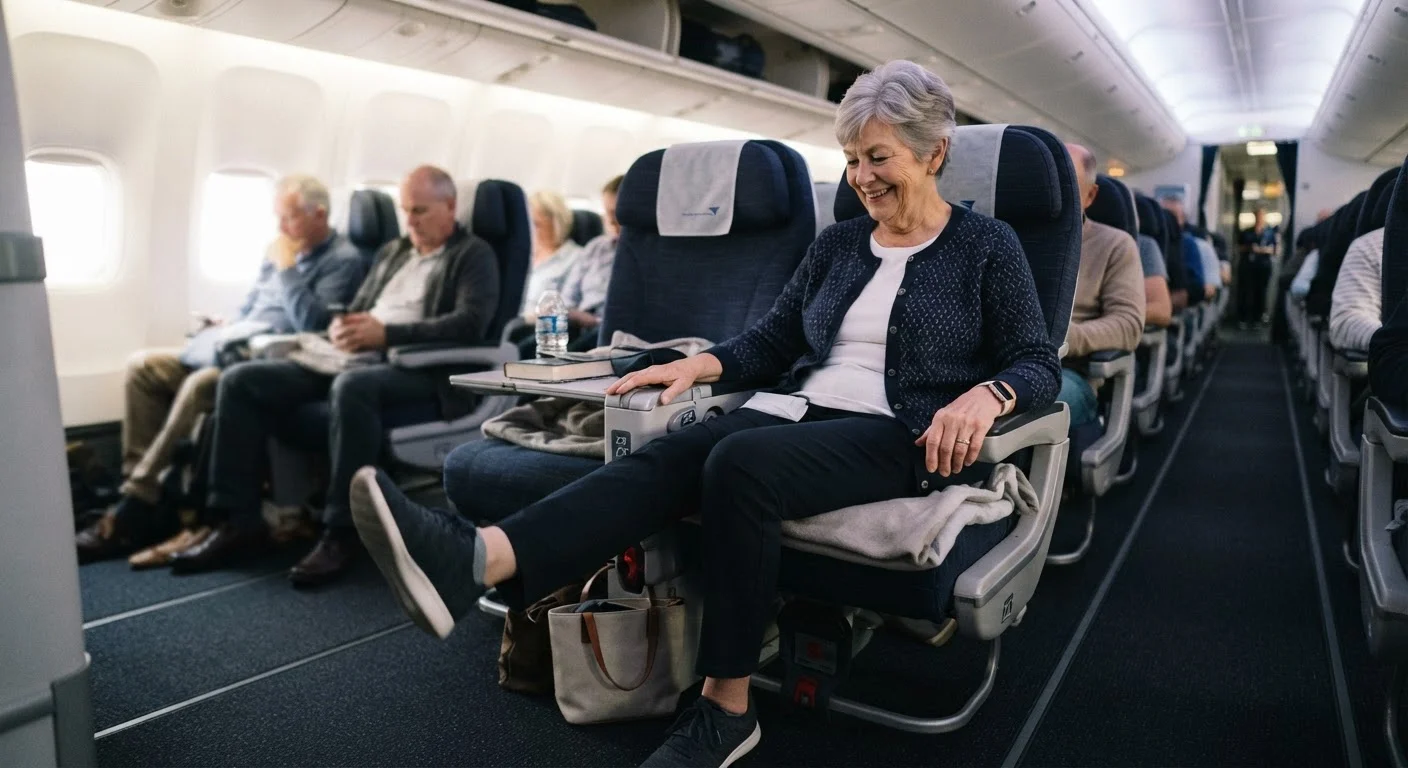
Lift both feet slightly off the floor and flex your feet up toward your shins, then point them downward — this is an ankle pump. Repeat 15–20 times. Follow with slow ankle circles in both directions, 10 rotations each way. These movements promote blood flow in the lower legs and are considered one of the most practical in-seat circulation exercises available to seated travelers.
Do seated marching
With feet flat on the floor, alternately lift each knee toward your chest as if marching in place. Keep the movement controlled and comfortable. Aim for 20–30 lifts per leg. This gently engages the hip flexors and keeps blood circulating through the lower body without requiring you to stand.
Roll your shoulders and stretch your neck gently
Bring both shoulders up toward your ears, roll them back, then down in a slow circle. Repeat 5–8 times, then reverse direction. For your neck, slowly lower your right ear toward your right shoulder and hold for a few seconds, then repeat on the left. Look gently left, then right. These movements release tension that builds in the upper body during long periods of sitting.
Stand and walk the aisle when safe to do so
On planes and trains, take advantage of safe opportunities to stand and walk a short distance — ideally every 60–90 minutes. Even walking to the restroom and back counts. On road trips, plan a stop every 1–2 hours to step out of the vehicle, stretch, and take a brief stroll. Standing briefly with weight evenly distributed through both legs also helps decompress the spine.
Hydrate consistently between movement breaks
Drink water at regular intervals throughout your journey. Dehydration can worsen feelings of stiffness and fatigue, and adequate hydration supports healthy blood flow. Keep a water bottle within easy reach. While limiting caffeine and alcohol can help with hydration, consult your physician about any fluid restrictions specific to your health conditions or medications.
Set a Movement Reminder
Use your phone's alarm or a smartwatch timer to prompt you every 60–90 minutes during a long journey. A simple vibration alert is all it takes to remind you to start your next round of seated exercises. Pairing a movement habit with an existing routine — like after a meal or a cup of water — also makes it easier to stay consistent.
Stop If You Experience Pain or Dizziness
Discontinue any exercise immediately if you feel pain, dizziness, chest tightness, or shortness of breath. These may be signs of a medical issue that requires prompt attention. Notify the crew or seek assistance from a medical professional as soon as possible.
For guidance on managing rest alongside your movement routine — particularly on cruises where schedules can shift significantly — our article on sleep and jet lag on long cruises offers practical strategies for older adults.
Making Movement a Travel Habit
Building a movement habit into long journeys takes a little advance planning, but it becomes easier with repetition. Consider noting your planned movement breaks in the same travel document where you track medications and itinerary details. This approach fits naturally into the broader framework of staying well on extended trips — something we explore in depth in our complete planning guide for comfort and rest on extended trips.
Seniors traveling with companions can encourage one another to take breaks together, which makes the habit feel social rather than clinical. Ultimately, arriving at your destination feeling alert and physically comfortable is well worth the small investment of a few minutes of movement every hour or two. For more resources on navigating travel with physical considerations in mind, explore our Mobility & Accessibility hub.
This article is for general informational purposes only and does not constitute medical advice. Always consult a qualified healthcare professional regarding any health concerns, medical conditions, or questions about physical activity before and during travel.