

Key Takeaways
- Recreating familiar bedtime cues in a hotel room signals your brain that it's time to sleep.
- Small comfort items from home — like a pillowcase or eye mask — can significantly reduce first-night restlessness.
- Managing light, temperature, and noise in your room before bed is as important as the routine itself.
- Pacing your evening activities and limiting stimulation after dinner supports deeper, more restorative sleep.
Why Sleep Is Harder in Hotel Rooms — and Why Routine Helps
Sleep researchers have long recognized what many travelers experience firsthand: the first night in a new environment is often noticeably lighter and less restorative. This is sometimes called the "first-night effect," in which one hemisphere of the brain remains more alert than usual in unfamiliar surroundings. For older adults, who may already experience changes in sleep architecture — including earlier wake times, lighter sleep stages, and more frequent nighttime awakenings — this effect can feel amplified.
The good news is that a consistent pre-sleep routine helps counteract this. Familiar sensory cues — a particular sequence of actions, a habitual scent, or a consistent room temperature — signal to your nervous system that it is safe to wind down. The routine itself becomes a portable comfort, one you carry from home into any accommodation. See our complete planning guide for extended trips for broader strategies on pacing and recovery throughout longer journeys.
Best Practices for Your Hotel Pre-Sleep Routine
The following practices are drawn from general sleep hygiene principles and accessibility-aware travel guidance. As always, individual health needs vary — consult your healthcare provider about any sleep concerns before or during travel.
Begin your wind-down at least 60 minutes before your intended sleep time.
Abruptly transitioning from stimulating activities to bed makes it harder for your body to shift into sleep mode. A gradual wind-down period allows cortisol levels to ease and melatonin production to begin naturally. This buffer is especially valuable when you've had an active travel day.
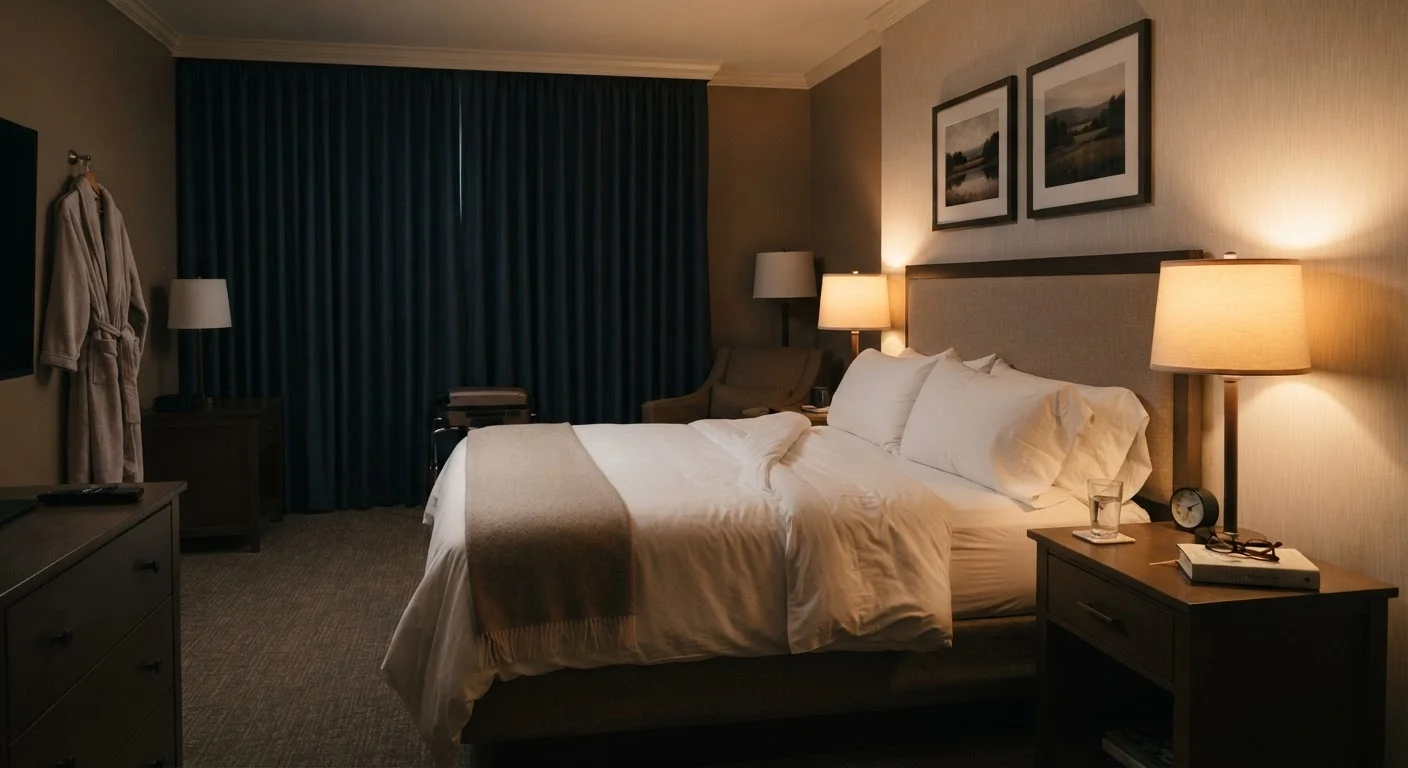
Dim or eliminate overhead lighting and rely on a single bedside lamp.
Bright overhead lighting — common in hotel rooms — suppresses melatonin, the hormone that signals nighttime to your brain. Reducing light exposure in the hour before bed supports your body's natural sleep-onset process.
Bring one or two familiar sensory items from home.
Familiar scents and textures provide comfort cues that a hotel room cannot replicate. Even a small item — a pillowcase from home, a personal scent, or a familiar blanket layer — can reduce the brain's alertness response to an unfamiliar environment.
Limit fluids in the 90 minutes before bed to reduce nighttime awakenings.
Nocturia — waking to use the bathroom at night — is one of the most common disruptors of sleep continuity in older adults. While staying hydrated throughout the day is important, tapering fluid intake in the lead-up to bedtime can help minimize interruptions.
Perform a brief, gentle stretching or relaxation sequence in your room.
Travel days often involve long periods of sitting, which can leave muscles tense and circulation sluggish. A few minutes of gentle movement — such as shoulder rolls, seated stretches, or slow deep breathing — can reduce physical restlessness and prepare the body for rest.
Keep your bedtime consistent with your home schedule, even across time zones.
Your circadian rhythm is anchored by consistent sleep and wake times. Shifting bedtime by more than an hour or two — even for just one or two nights — can compound fatigue and make it harder to recover. Anchoring to your home schedule minimizes disruption on shorter trips.
Setting Up Your Room Before You Wind Down
Your environment shapes your sleep quality just as much as your routine does. Before starting your wind-down sequence, take a few minutes to prepare the room itself. Adjust the thermostat to a cooler setting — most sleep research suggests that a slightly cool room supports the natural drop in core body temperature that accompanies sleep onset. Draw blackout curtains fully closed, or position a sleep mask on your nightstand as a backup. Use the "Do Not Disturb" sign and confirm your phone is on silent to minimize interruptions.
Pack a Small "Sleep Kit" for Every Trip
A compact sleep kit doesn't have to take up much room. Consider including a sleep mask, a pair of soft foam earplugs, your own pillowcase, and any items that are part of your regular nighttime routine at home — such as a lip balm or hand cream with a familiar scent. Keeping these items together in a small pouch means your wind-down routine can begin the moment you unpack, rather than searching through your bag at the end of a long day.
For a deeper look at which room features most reliably support better sleep, room features that genuinely improve sleep quality for older travelers walks through what to look for — and what to request at check-in. And if you're planning an ocean voyage, managing sleep and jet lag on long cruises addresses the added complexity of time zone shifts at sea.
Quick Wins to Start Tonight
Even if you haven't had time to pack a full comfort kit or establish a detailed routine, a few simple actions can make a meaningful difference on any night away from home.
For related safety habits that pair well with a settled bedtime routine — such as locating exits and securing medications — see practical safety habits for seniors in unfamiliar hotels. General wellness strategies for the road are also covered in our Travel Health Tips hub.
This article is for informational purposes only and does not constitute medical advice. If you have concerns about sleep, chronic fatigue, or medication interactions while traveling, please consult a qualified healthcare professional before your trip.