

Key Takeaways
- Walk the hallway on your first night to locate fire exits and the nearest stairwell.
- Store medications in a consistent, secure spot — never in checked luggage or unsecured surfaces.
- Share your room number and a daily check-in schedule with a trusted contact at home.
- Use the door's secondary lock and the room safe for valuables and travel documents.
- Request a ground-floor or elevator-adjacent room when mobility or emergency evacuation is a concern.
Why Hotel Safety Deserves Deliberate Attention
Arriving at an unfamiliar hotel is energizing — and slightly disorienting. Layouts vary, lighting levels differ, and emergency procedures are rarely the same from property to property. For senior travelers, these variables matter more than they might seem at first glance. A fall in a dimly lit bathroom at midnight, or confusion about evacuation routes during a fire alarm, can turn a pleasant trip into a serious incident.
The good news is that a handful of consistent habits — practiced every time you check in — can significantly reduce those risks without adding stress to your travel routine. This guide walks through the most practical ones. For a deeper pre-booking foundation, see our room-by-room accessibility checklist before confirming any reservation.
The First 15 Minutes: Your Orientation Walk
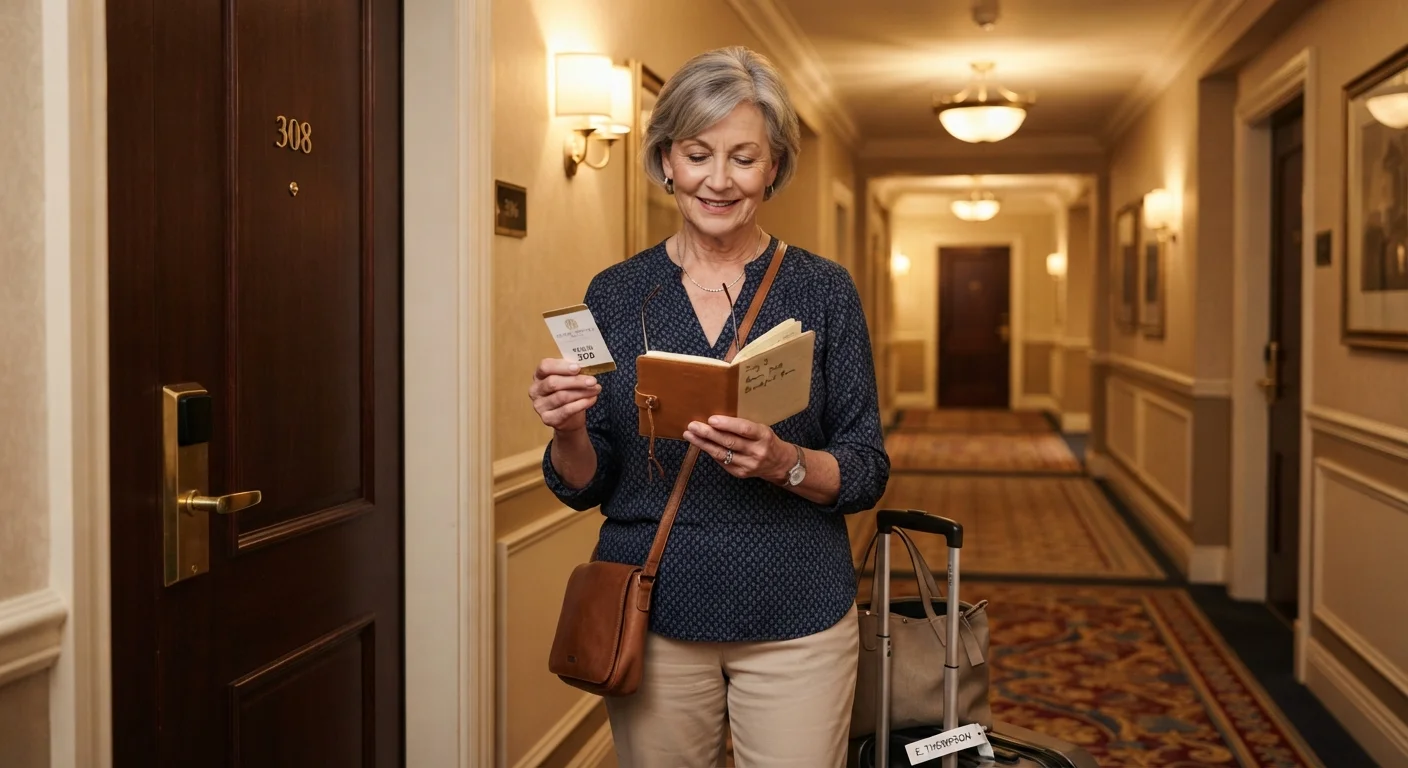
Before unpacking a single bag, take a short walk down the hallway. This single habit is one of the most protective things you can do as a new arrival.
Locate and walk to the two nearest emergency exits before settling in.
Fire alarms and other emergencies require rapid, calm action. Knowing your route before any emergency occurs means you won't need to read signage under stress or in smoke-impaired visibility.
Request a room near an elevator or on a lower floor when mobility is a concern.
Long corridor walks, especially with luggage or a mobility aid, increase fatigue and fall risk. A room close to the elevator reduces daily strain and shortens any emergency evacuation route.
Store all travel documents and cards in the in-room safe every night.
Passports, extra credit cards, and insurance documents are difficult to replace abroad. Using the safe consistently — not just occasionally — eliminates the risk of leaving them exposed during housekeeping or an unplanned departure.
Test the bathroom lighting and place a nightlight before going to bed.
Nighttime bathroom trips are a leading cause of hotel falls among older travelers. Unfamiliar layouts combined with sudden bright lights or total darkness significantly increase risk.
Keep a written list of emergency contacts and your medications accessible — not only on your phone.
If a phone is lost, stolen, or has a dead battery in an emergency, a paper backup ensures that hotel staff or medical responders can reach your family and understand your health situation quickly.
Knowing where exits are while you're calm and rested means you won't need to figure it out under stress. Pay special attention to stairwell doors — elevators are typically taken out of service during fire alarms. Count the number of doors between your room and the nearest exit so you can navigate in low-visibility conditions if needed.
While you're orienting yourself, also note the location of the ice machine, vending area, and any uneven flooring or poor lighting spots along your likely path. Report any burnt-out hallway lights to the front desk immediately.
Securing Your Room: Locks, Valuables, and Medications
Once you're settled, your room security routine matters as much as your hallway orientation.
Use every locking mechanism your door offers — the main deadbolt, the swing bar or chain lock, and the door viewer before answering any knock. If something feels off about a visitor claiming to be hotel staff, call the front desk directly to verify before opening the door.
Medications deserve particular care. Keep them in a consistent location — many travelers use the same inner zipper pocket of a specific bag every trip — so they're never misplaced during a groggy early morning. Never leave medications on the bathroom counter, where they can be knocked into water or picked up by housekeeping in error. For broader strategies on keeping documents and valuables safe, the guide to protecting personal belongings while traveling offers detailed approaches.
Hotel Safes: Useful but Not Infallible
In-room safes provide a meaningful layer of security for most everyday travel scenarios, but they are not bank vaults. For very high-value items, consider whether a hotel's front-desk safe-deposit box offers stronger protection. Always check that the safe is functioning correctly on arrival — some electronic models need a battery replaced. Read the instructions inside the door before setting your own code.
Place your room key, phone, glasses, and any hearing devices on the nightstand in the same arrangement each night. In an emergency evacuation, you'll be able to grab essentials without fumbling.
Staying Connected and Rested for the Duration
Personal security at a hotel isn't only about locks and exits — it includes maintaining the routines and communication habits that keep someone at home aware of your wellbeing.
36 million
Older adults who fall each year in the US
According to the CDC, approximately 36 million falls occur annually among adults aged 65 and older — a figure that underscores why unfamiliar environments like hotel rooms warrant extra caution.
80%
Of falls among older adults occur at night or in low light
Research published in geriatric safety literature consistently identifies nighttime and low-light conditions as the highest-risk periods for falls in unfamiliar settings.
Establish a daily check-in with a trusted contact: a short text or call at a consistent time lets someone know you're fine without requiring elaborate planning. Share your hotel name, room number, and expected check-out date before you leave home. For a complete pre-departure preparation framework, the pre-trip safety checklist covers contacts, medications, and documentation in one place.
Rest also plays a role in safety. Fatigue increases fall risk and impairs judgment. A consistent wind-down routine — even in an unfamiliar room — helps. The senior traveler's pre-sleep routine for hotel stays offers practical adaptations for getting quality sleep away from home. For broader health and wellness strategies on the road, the Travel Health Tips hub is a reliable starting point.
Build a Consistent Check-In Routine for Every Stay
Treating each hotel arrival the same way — orientation walk, door lock check, medication placement, nightlight setup — means the habits become second nature regardless of the property. Consistency is the most reliable safety tool available. If you travel frequently, consider keeping a short personal checklist in your travel bag so nothing is skipped, even after a long or tiring journey.