

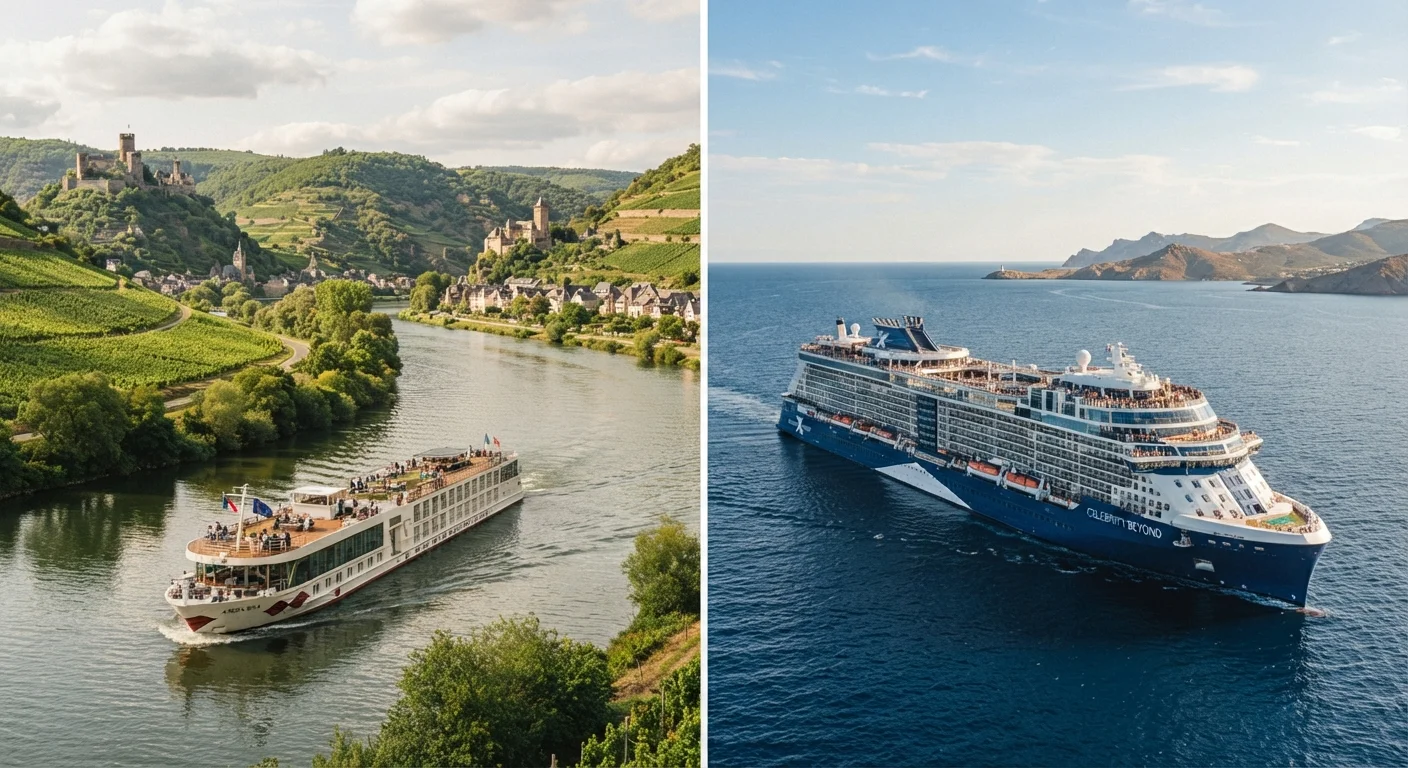
Key Takeaways
- River cruises use smaller ships that dock in town centres, reducing walking distances for seniors.
- Ocean cruises offer more onboard medical facilities, entertainment, and dining variety.
- Motion sickness is generally less of a concern on river cruises due to calmer, inland waterways.
- Ocean cruises often include more formal accessibility infrastructure such as roll-in showers and wider corridors.
- Itinerary pace tends to be slower and more culturally immersive on river cruises.
- Choosing between the two depends largely on mobility needs, health considerations, and personal travel style.
Option A
River Cruise
The intimate, slow-paced option for culturally rich exploration.
Best for: Seniors who prefer smaller ships, calmer waters, and docking directly in historic town centres.
Option B
Ocean Cruise
The grand, amenity-rich voyage across open seas.
Best for: Seniors who want extensive onboard facilities, diverse itineraries, and a self-contained resort experience at sea.
If you have mobility limitations and prefer easy shore access
River Cruise
River ships dock directly at port towns, often within a short, flat walk of major attractions — no tender boats or long pier transfers required.
If you want comprehensive onboard medical care nearby
Ocean Cruise
Larger ocean ships typically carry medical staff and equipped infirmaries, providing greater peace of mind for seniors managing ongoing health conditions.
If you are prone to motion sickness or balance issues
River Cruise
Inland waterways are naturally sheltered, producing minimal vessel movement compared to open-ocean sailing.
If you want a wide variety of onboard dining, entertainment, and activities
Ocean Cruise
Large ocean ships offer multiple restaurants, theatres, pools, and wellness centres that river vessels simply cannot match in scale.
If you prefer an unhurried pace with deep cultural experiences at each port
River Cruise
River itineraries typically visit fewer ports with longer stays, giving seniors more time to explore at a relaxed, self-directed pace.
Ship Size, Motion, and Onboard Comfort
Ship size is one of the most immediate differences between river and ocean cruising, and it has direct consequences for senior comfort. River vessels typically carry between 100 and 200 passengers, while ocean ships range from a few hundred to over 5,000. Smaller river ships mean fewer crowds, simpler layouts, and no overwhelming maze of corridors to navigate. For seniors who find large, busy environments tiring or disorienting, this distinction matters considerably.
Motion is another critical factor. River cruises travel on sheltered inland waterways — the Rhine, Danube, Mississippi, or Mekong — where significant wave action is rare. Ocean voyages, by contrast, cross open seas where swells can cause noticeable ship movement, particularly in the North Atlantic or around Cape Horn. Seniors with balance concerns, inner-ear sensitivities, or a history of seasickness may find river cruising a more comfortable baseline. That said, modern ocean ships use stabiliser systems that reduce rolling, and many routes through the Mediterranean or Caribbean offer relatively calm conditions. Always consult your doctor before travelling if motion or balance is a concern.
For a broader look at how ship dimensions shape daily life onboard, see how ship size affects the senior travel experience.
| Criterion | River Cruise | Ocean Cruise |
|---|---|---|
| Typical passenger count | 100–200 passengers | 500–5,000+ passengers |
| Motion/seasickness risk | Minimal — sheltered waterways | Variable — open-sea conditions |
| Shore access | Direct docking at town centres | Pier or tender, varies by port |
| Onboard medical facilities | Limited; land access nearby | Infirmary and medical staff onboard |
| Accessibility features | Basic; varies by vessel | More robust on larger ships |
| Dining and entertainment variety | Curated, limited options | Extensive, multiple venues |
| Itinerary pace | Slower, fewer ports, longer stays | Variable; can be fast-paced |
| Destination focus | Cultural, riverside towns | Diverse — coastal, island, global |
Accessibility and Shore Excursion Logistics
Accessibility considerations go well beyond the ship itself. How you get from ship to shore — and what awaits when you arrive — differs significantly between the two cruise types.
River ships almost always dock directly alongside the riverbank or town quay, often just steps from pedestrian areas. There are no tender boats (small ferries used to transfer passengers from anchored ships to shore), no long pier walks, and typically minimal elevation changes between ship and land. For seniors using walking aids, wheelchairs, or simply preferring a steady, predictable route ashore, this is a meaningful advantage. River port towns such as those along the Danube or the US inland waterway system also tend to be compact and walkable. US river towns that suit a slower travel pace are a useful reference for those exploring domestic itineraries.
Ocean cruise ports vary enormously. Some allow ships to dock at modern, accessible terminals, while others require tendering, which involves transferring to small boats — a process that can be physically demanding or impractical for some seniors. Port infrastructure and terrain also differ: some Caribbean or Mediterranean ports involve cobblestone streets, hills, or lengthy walks from the pier. It is worth researching each specific port on a prospective itinerary rather than assuming conditions will be consistent.
Confirming Accessibility Before You Book
Accessibility features vary widely between individual ships, even within the same cruise type. River vessels are smaller and may not offer the same cabin configurations or onboard lift access as large ocean ships. Before committing to any cruise, seniors with specific mobility or medical requirements should contact operators directly to confirm cabin dimensions, bathroom fixtures, and boarding arrangements. Travelling with a detailed written list of your needs can help ensure the right fit.
Ocean ships generally have more robust formal accessibility features onboard, including roll-in showers, wider cabin doorways, and lifts on multiple decks — infrastructure that smaller river vessels may not fully replicate. Seniors who use wheelchairs full-time should confirm specific cabin and ship specifications directly with operators before booking.
Onboard Amenities, Medical Support, and Itinerary Pace
The breadth of onboard amenities is one area where ocean cruising holds a clear advantage. Large ships offer multiple dining venues, fitness centres, pools, theatres, spas, and a wide range of organised activities. For seniors who prefer to spend sea days actively engaged onboard, or who enjoy having every comfort within easy reach, this variety is appealing. River ships, given their size, offer a more curated experience: typically one or two dining rooms, a lounge, and a small sun deck. The trade-off is intimacy and simplicity rather than scale.
Medical support is an important consideration. Ocean cruise ships are required to carry medical staff and maintain onboard infirmaries. The standard of care varies by operator and ship size, but larger vessels generally offer more resources. River ships operate close to shore at all times, meaning medical facilities on land are usually accessible within a short period — but the ships themselves carry limited medical infrastructure. Seniors managing significant or complex health conditions should weigh this carefully and discuss travel plans with their healthcare provider before booking. General travel health guidance is not a substitute for personalised medical advice.
Itinerary pace is where river cruising tends to appeal most to older travellers. Ports are visited one or two per day, with longer stays and a cultural emphasis — wine regions, historic cities, riverside monasteries. Ocean itineraries can be similarly paced, but larger ships occasionally lean toward a greater number of ports in quick succession. For seniors who prefer depth over breadth, why European river cruising resonates with senior travellers offers further context. Those open to an alternative slow-travel format may also find value in repositioning cruises as a relaxed ocean option.
For a comprehensive look at planning either type of cruise comfortably, the Senior Traveler's Complete Guide to Cruising Comfortably covers both formats in practical detail.
~60%
River cruise passengers aged 55 and over
Industry estimates consistently show river cruising skews strongly toward older travellers, reflecting the format's appeal to those seeking a relaxed, culturally immersive pace.
100–200
Typical river ship passenger capacity
Compared to large ocean vessels carrying thousands, this smaller scale fundamentally changes the onboard environment and shore logistics for senior travelers.
7–14 days
Common river cruise itinerary length
Most European and US river cruise itineraries fall within this range, offering sufficient time for cultural immersion without an exhausting number of port changes.