

Key Takeaways
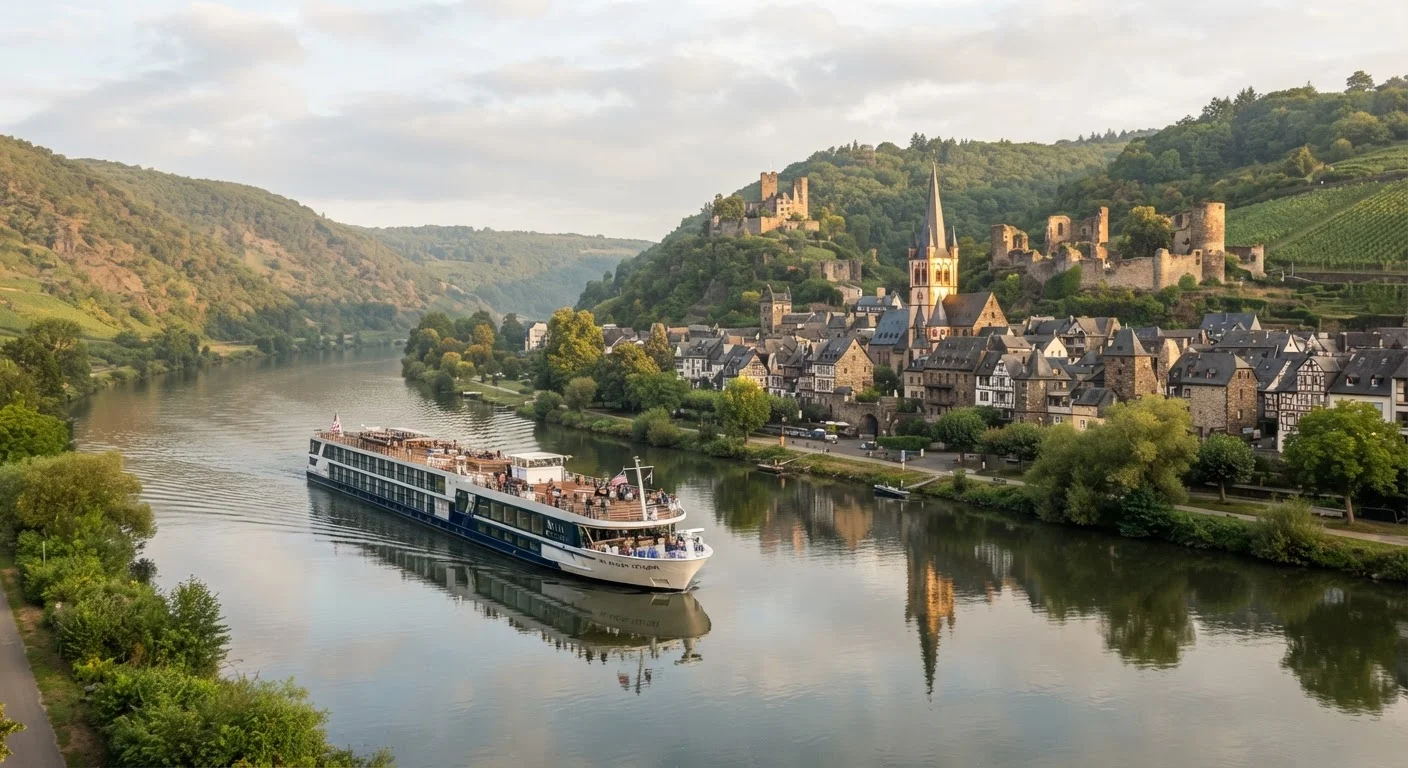
- River ships dock in town centers, eliminating long transfers from port to attractions.
- Calm inland waterways mean virtually no motion sickness — a major draw for seniors.
- Smaller vessel size creates an intimate, low-crowd environment easier to navigate independently.
- Itineraries typically visit one or two destinations daily, reducing decision fatigue.
- River cruising does carry trade-offs, including limited onboard medical facilities and variable accessibility at gangways.
Calm inland waters eliminate motion sickness risk
Rivers do not produce ocean swells or wave-induced rolling. Travelers who have experienced nausea or balance difficulties on open-water voyages typically find river cruising a far more stable, comfortable option.
Docking in town centers reduces walking distances
River ships moor directly at town quays, meaning passengers walk off the ship and are immediately within the historic district. There are no tender boats, shuttle buses, or lengthy terminal corridors to navigate.
Smaller ships create an easier, less crowded environment
With 100–200 passengers rather than thousands, river vessels have no long elevator queues, no crowded buffet lines, and no difficulty orienting yourself onboard. Staff typically recognize and remember individual passengers.
Unhurried daily itinerary reduces decision fatigue
River itineraries are designed around one or two stops per day with structured options for how to spend time ashore. Travelers are not pressured to choose among dozens of competing excursions or activities.
Inclusive pricing often covers excursions and beverages
Many European river cruise operators bundle guided tours, onboard drinks, and gratuities into the fare. This simplifies budgeting and removes on-the-day spending decisions that can add stress to a trip.
Culturally immersive itineraries through historic heartlands
Routes through the Rhine, Danube, and Douro valleys pass medieval towns, vineyard terraces, and UNESCO heritage sites that are inaccessible to large ocean vessels — offering experiences genuinely distinct from Caribbean or Mediterranean ocean itineraries.
Limited onboard medical facilities compared to ocean ships
River vessels do not carry doctors or medical teams equivalent to those on large ocean liners. Travelers managing complex or unpredictable health conditions should evaluate this carefully and consult their physician before booking.
Gangway accessibility varies with water levels
River levels fluctuate seasonally, and gangway angles can become steep during high or low water. Some docking arrangements require passengers to cross through adjacent vessels, which may not suit all mobility needs.
Onboard entertainment and amenities are minimal
River ships do not offer Broadway-style shows, casinos, multiple specialty restaurants, or large pools. Travelers who value extensive onboard programming may find the quieter atmosphere underwhelming.
Occasional itinerary disruptions due to water levels
Drought or flooding can cause operators to substitute bus transport for portions of a river route. While rare, this possibility is worth understanding — particularly for travelers with mobility challenges who may find bus travel uncomfortable.
Higher per-day cost than many ocean cruise options
European river cruises typically carry a higher per-day price point than comparable ocean itineraries. The all-inclusive structure partly offsets this, but the upfront fare can be a barrier for budget-conscious travelers.
Our Verdict
European river cruising consistently appeals to seniors because it removes many of the physical and logistical stressors common to ocean voyages — rough seas, enormous ships, distant ports, and overwhelming crowds. That said, it is not automatically the right fit for every traveler; mobility constraints, medical needs, and personal preferences all deserve careful evaluation before booking.
Seniors who prioritize calm waters, walkable port access, unhurried pacing, and a close-knit onboard atmosphere over large-ship amenities and entertainment variety.
What Makes European River Cruising Different
European river cruises operate on a fundamentally different model from ocean voyages. Ships — often called river vessels or longships — carry between 100 and 200 passengers, compared with thousands aboard a large ocean liner. They travel inland waterways such as the Rhine, Danube, Moselle, and Douro, docking directly alongside town quays rather than at industrial cruise terminals miles from any attraction.
This structural difference cascades into nearly every aspect of the experience: how far you walk, how stable the ship feels, how easy it is to move around onboard, and how much of each destination you can actually explore. For many senior travelers, these practical realities matter more than onboard entertainment options or dining variety. See our comparison of ocean liner and river cruise experiences for a detailed side-by-side look.
The Advantages Senior Travelers Commonly Cite
The appeal of river cruising among older travelers is well-documented by travel specialists and cruise advisers. Several advantages stand out consistently.
Calm inland waters eliminate motion sickness risk
Rivers do not produce ocean swells or wave-induced rolling. Travelers who have experienced nausea or balance difficulties on open-water voyages typically find river cruising a far more stable, comfortable option.
Docking in town centers reduces walking distances
River ships moor directly at town quays, meaning passengers walk off the ship and are immediately within the historic district. There are no tender boats, shuttle buses, or lengthy terminal corridors to navigate.
Smaller ships create an easier, less crowded environment
With 100–200 passengers rather than thousands, river vessels have no long elevator queues, no crowded buffet lines, and no difficulty orienting yourself onboard. Staff typically recognize and remember individual passengers.
Unhurried daily itinerary reduces decision fatigue
River itineraries are designed around one or two stops per day with structured options for how to spend time ashore. Travelers are not pressured to choose among dozens of competing excursions or activities.
Inclusive pricing often covers excursions and beverages
Many European river cruise operators bundle guided tours, onboard drinks, and gratuities into the fare. This simplifies budgeting and removes on-the-day spending decisions that can add stress to a trip.
Culturally immersive itineraries through historic heartlands
Routes through the Rhine, Danube, and Douro valleys pass medieval towns, vineyard terraces, and UNESCO heritage sites that are inaccessible to large ocean vessels — offering experiences genuinely distinct from Caribbean or Mediterranean ocean itineraries.
100–200
Typical passenger capacity on river vessels
River cruise ships carry a fraction of the passengers found on large ocean liners, which can hold 3,000 to 6,000 guests.
7–14 days
Common duration of European river itineraries
Most European river cruise programs run one to two weeks, a length travel advisers frequently describe as well-suited to senior travelers' energy and pace preferences.
Docking in town centers is arguably the single most meaningful benefit. On an ocean cruise, port calls often require shuttle buses, tender boats, or lengthy walks through port infrastructure before reaching anything of interest. On a river cruise, you step off the gangway and you are already in the old town. For travelers with mobility considerations, this distinction can determine whether a destination is genuinely enjoyable or simply exhausting.
For a practical look at what to verify before you book — including gangway angles and excursion terrain — see what seniors should check before booking a European river cruise.
The Limitations Worth Knowing Before You Book
Balanced planning means understanding what river cruising does not offer, not just what it does.
Limited onboard medical facilities compared to ocean ships
River vessels do not carry doctors or medical teams equivalent to those on large ocean liners. Travelers managing complex or unpredictable health conditions should evaluate this carefully and consult their physician before booking.
Gangway accessibility varies with water levels
River levels fluctuate seasonally, and gangway angles can become steep during high or low water. Some docking arrangements require passengers to cross through adjacent vessels, which may not suit all mobility needs.
Onboard entertainment and amenities are minimal
River ships do not offer Broadway-style shows, casinos, multiple specialty restaurants, or large pools. Travelers who value extensive onboard programming may find the quieter atmosphere underwhelming.
Occasional itinerary disruptions due to water levels
Drought or flooding can cause operators to substitute bus transport for portions of a river route. While rare, this possibility is worth understanding — particularly for travelers with mobility challenges who may find bus travel uncomfortable.
Higher per-day cost than many ocean cruise options
European river cruises typically carry a higher per-day price point than comparable ocean itineraries. The all-inclusive structure partly offsets this, but the upfront fare can be a barrier for budget-conscious travelers.
Medical Preparedness on River Voyages
Unlike large ocean liners, river vessels generally do not have onboard physicians or infirmaries. European cities along major river routes typically have accessible hospitals and clinics nearby, which provides some reassurance — but it is not a substitute for onboard care. Travelers with ongoing health needs should discuss this with their doctor before booking and review what medical assistance their travel insurance covers. This information is general in nature and does not constitute medical or insurance advice; consult a qualified professional for guidance specific to your situation.
Travelers managing significant mobility limitations should specifically ask operators about gangway gradient and whether accessible shore excursions are available at each port. River vessel gangways vary by water level — in high-water conditions, the angle can become steep. Some itineraries also require passengers to cross through a neighboring ship moored alongside to reach the dock. These are solvable logistical challenges, but they benefit from advance research rather than assumptions.
For a broader look at how river and ocean cruising compare across multiple dimensions, our guide to choosing between river and ocean cruises for older travelers offers additional perspective.
Destinations and Pacing: Why the Danube Is a Popular Starting Point
The Danube remains one of the most traveled European river routes for seniors, largely because it connects cities with well-developed tourism infrastructure — Vienna, Budapest, Bratislava, and Regensburg among them. Flat riverbank promenades, accessible public transport, and English-language signage in most major stops make independent exploration manageable even without a guided excursion.
A typical river itinerary visits one port in the morning and another in the afternoon, or spends a full day in a larger city. This pacing suits travelers who want genuine engagement with each place rather than a checklist of rushed stops. Our port-by-port Danube overview for senior travelers covers terrain, mobility notes, and cultural highlights for the route's most popular stops.
Seniors who enjoy the slower pace of river travel may also find value in Europe's most accessible cities for senior travelers, which highlights urban destinations with strong mobility infrastructure.
This article provides general travel information for educational purposes. Accessibility conditions, itinerary details, and onboard facilities vary by operator and vessel. Always verify specifics directly with your cruise provider and consult a qualified healthcare professional regarding any personal health or mobility considerations before travel.