

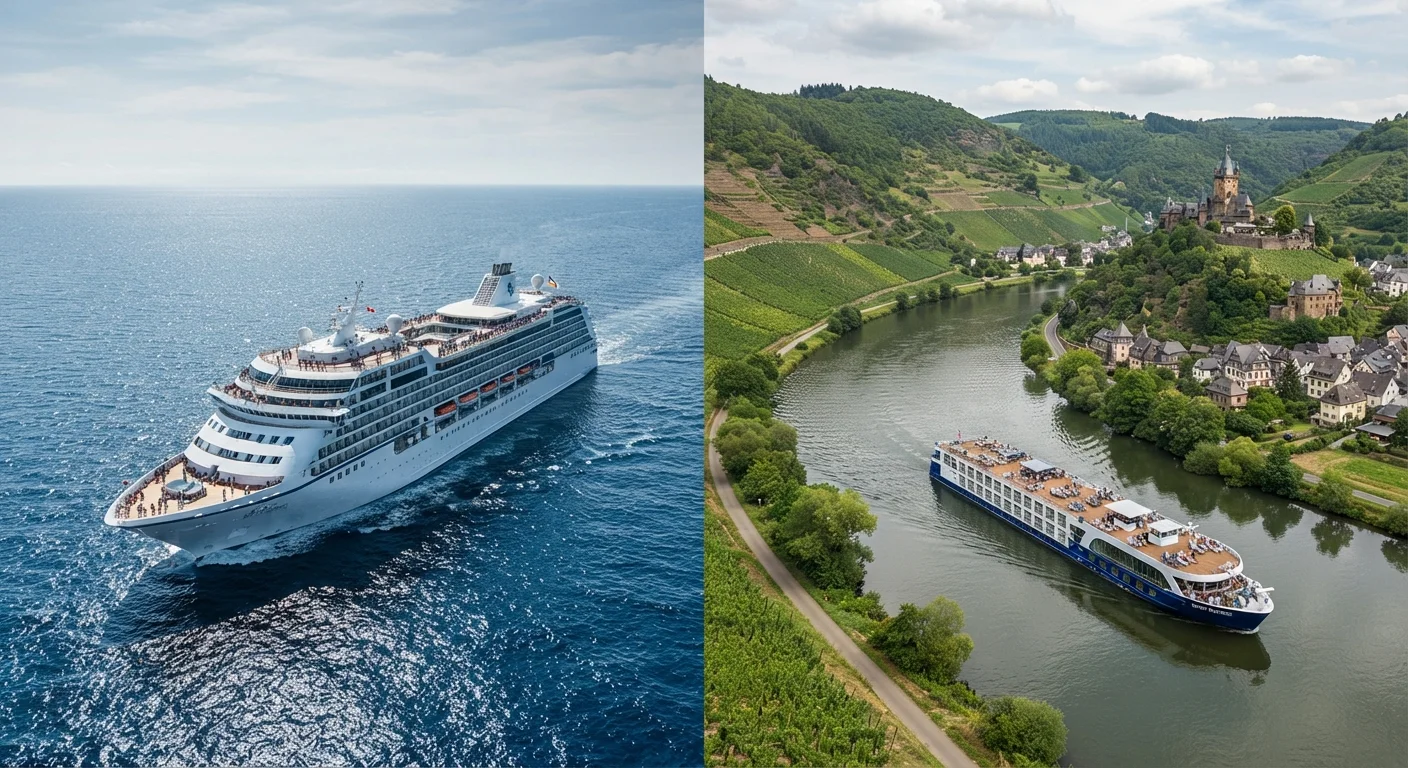
Key Takeaways
- River cruises offer calmer water, reducing motion sickness risk for seniors with balance or vestibular concerns.
- Ocean liners typically carry far more passengers and require significantly more walking to navigate the ship.
- River cruise ports are often docked steps from town centers, minimizing transfer distances for mobility-limited travelers.
- Ocean liners tend to have more onboard medical facilities and staff than smaller river vessels.
- Both cruise types can suit seniors well — the right choice depends on health, mobility, and travel priorities.
Option A
Ocean Liner Cruise
The grand, resort-style voyage on open water.
Best for: Seniors who want extensive onboard amenities, a wide range of entertainment, and multi-destination itineraries across open seas.
Option B
River Cruise
The intimate, slow-paced journey through scenic inland waterways.
Best for: Seniors who prefer calmer waters, walkable port towns, and a more relaxed, close-to-shore style of travel.
If motion sensitivity or seasickness is a concern
River Cruise
River waterways are largely sheltered, producing far less vessel movement than open ocean sailing, which can be particularly beneficial for those with inner-ear or balance issues.
If onboard medical support is a priority
Ocean Liner Cruise
Larger ocean ships commonly carry medical staff and onboard infirmaries. River vessels typically have limited or no dedicated medical facilities; passengers rely on nearby shoreside healthcare.
If minimizing walking distances matters most
River Cruise
Compact river ships mean shorter distances between cabin, dining, and deck areas. Port towns are often reachable on foot directly from the dock.
If a wide range of onboard amenities and entertainment is important
Ocean Liner Cruise
Ocean liners typically offer multiple restaurants, pools, theaters, and wellness facilities that keep passengers comfortably engaged during sea days.
If cultural immersion and relaxed shore access is the goal
River Cruise
Docking in the heart of historic towns makes it easier for seniors to step ashore briefly, explore at their own pace, and return to the ship without lengthy excursions.
Ship Size, Layout, and Daily Walking Distances
For seniors managing mobility challenges or chronic fatigue, the physical layout of a ship matters as much as its itinerary. Ocean liners — sometimes carrying 2,000 to 5,000 passengers or more — can span 15 or more decks. Getting from a cabin to the dining room, pool deck, or disembarkation point may involve considerable walking and multiple elevator waits. Ship size shapes daily experience in ways that are easy to underestimate until you're onboard.
River cruise ships, by contrast, typically carry between 100 and 200 passengers across three or four decks. The entire vessel is navigable in a few minutes. Cabins, dining areas, and the sun deck are never far apart — a meaningful advantage for anyone using a cane, walker, or wheelchair. Corridors on river ships can be narrow, however, so wheelchair users should confirm specific dimensions before booking.
| Criterion | Ocean Liner | River Cruise |
|---|---|---|
| Typical passenger capacity | 2,000–5,000+ | 100–200 |
| Onboard walking distances | Extensive; multiple decks | Minimal; compact layout |
| Motion and stability | Variable; open-sea swells | Very stable; sheltered waterways |
| Onboard medical facilities | Typically staffed infirmary | Usually none; shoreside reliance |
| Port access | Terminals or tendering required | Direct docking near town centers |
| Onboard amenities | Extensive; multiple venues | Limited; focused and intimate |
| Social atmosphere | Large, resort-style crowd | Small, familiar group dynamic |
Motion, Stability, and Health Considerations at Sea
Open-ocean sailing introduces the possibility of significant vessel movement, particularly during rough weather or crossing exposed stretches of water. For seniors with vertigo, inner-ear conditions, or a susceptibility to motion sickness, this is a genuine consideration — not merely a comfort issue. Stabilizers on modern ocean liners reduce rolling substantially, but they cannot eliminate it entirely.
River vessels travel on enclosed, sheltered waterways and experience minimal motion. The gentle drift of a river cruise is something most passengers barely notice. This makes river cruising a naturally lower-risk environment for those sensitive to movement.
On the medical support side, large ocean ships typically maintain an infirmary staffed by at least one physician and nursing personnel. River cruise ships generally do not carry dedicated medical staff; passengers requiring care are referred to shoreside facilities, which are usually close given the inland routing. Seniors managing complex health conditions should weigh this carefully and discuss travel plans with their own healthcare provider before booking either type of cruise.
Medical Preparedness for Both Cruise Types
Regardless of cruise type, seniors should carry sufficient prescription medication for the full voyage plus extra days, and bring a written summary of their medical history and current medications. Travel health insurance that covers emergency medical evacuation is worth considering for either format. Policies vary widely in coverage and exclusions — review the actual policy document and consult a licensed insurance adviser to understand what applies to your situation.
This article provides general travel information and is not a substitute for personal medical advice. Seniors with specific health conditions should consult a qualified healthcare professional before planning any cruise travel.
Port Access, Shore Transfers, and Excursion Pacing
How a ship connects with its ports is one of the most practical distinctions for senior travelers. Many ocean liner itineraries require tendering — transferring passengers from ship to shore via small boats — when ports lack deep-water berths. This process can be physically demanding, involving steps, rocking motion, and waiting in queues. Even when docking directly, ocean liner ports often involve lengthy walks through terminal buildings or bus transfers to town centers.
River cruise ships dock directly in town centers or within short walking distance of them. In many European river ports, passengers step off the gangway and find themselves within a few hundred meters of historic squares, cafes, and cultural sites. European river cruising is particularly well-regarded for exactly this kind of low-effort shore access.
Gangway angle is a separate consideration on both types. River ships sometimes moor side-by-side, requiring passengers to walk through another vessel to reach shore. Steep gangway slopes can pose challenges for anyone with limited lower-body strength or balance issues. Verifying gangway and terrain conditions before booking is strongly recommended. For guidance on balancing shore time with rest, see our comparison of shore excursions versus ship-stay days.
~130–190
Typical river cruise ship passenger capacity
Most European river cruise vessels carry under 200 passengers, according to industry vessel specifications, contributing to their quieter, more personal atmosphere.
3–4
Average decks on a river cruise ship
Compared to 15 or more decks on large ocean liners, the compact vertical layout of river ships significantly reduces the physical demands of daily navigation.
Varies
Gangway slope at river ports
Gangway incline on river ships depends on water levels and mooring position; seniors with mobility concerns are advised to ask cruise operators about specific access conditions.
Onboard Amenities, Pace, and Social Environment
Ocean liners are essentially floating resorts. Multiple specialty restaurants, pools, live entertainment venues, spas, fitness centers, and enrichment programs fill the schedule. For seniors who enjoy variety and do not mind navigating a larger vessel, this breadth of choice is a genuine asset — particularly on itineraries with long sea days between ports.
River cruises offer a more curated, quieter atmosphere. Dining is typically at a single restaurant with set or semi-set menus, and evening entertainment is more modest — a lecturer, a local musician, or a documentary screening. The smaller passenger count (often under 200) creates an intimate social dynamic where fellow travelers become familiar faces quickly. Many seniors find this less overwhelming than the anonymity of a large ship.
For a broader framework on matching cruise style to individual needs, the Senior Traveller's Complete Guide to Choosing a Cruise walks through the full decision process. Exploring how to choose the right cruise based on your health, pace preference, and destination priorities is the most reliable starting point for any senior planning their first or next voyage.