
Japan for Seniors: Navigating a World-Class Destination at a Comfortable Pace

Key Takeaways
- Japan's rail network is among the world's most punctual and accessible, with elevators at major stations.
- Many attractions offer senior discounts; ask at ticket windows with a passport showing age.
- Japan has very low violent crime rates, making it one of the safer international destinations for solo seniors.
- Uneven temple grounds and hilly city streets can be challenging — route planning matters.
- Comprehensive travel insurance covering pre-existing conditions is strongly recommended before departing.
- English signage is common in tourist corridors, but a translation app helps in rural areas.
Why Japan Works So Well for Senior Travelers
Japan consistently earns high marks as a senior-friendly destination, and the reasons are concrete rather than promotional. The country's infrastructure prioritizes orderliness, cleanliness, and predictability — qualities that reduce travel stress considerably for older adults. Public restrooms are plentiful and exceptionally well-maintained. Streets are generally safe at all hours. Locals are courteous and often go out of their way to assist confused visitors.
Japan also has one of the world's oldest populations, which means its society has adapted with seniors in mind. Elevators are standard in major train stations, pharmacies are widely available, and many cultural sites offer age-based admission discounts. As a category, Japan compares favorably against many popular international destinations on the factors that matter most to older travelers — explore how analysts weigh those factors in our guide to what makes a country truly senior-friendly.
99.9%
On-time rate for Shinkansen bullet trains
JR Central has reported average Shinkansen delays of under one minute annually, making it one of the world's most reliable transit systems.
28%
Share of Japan's population aged 65 or older
Japan has the world's highest proportion of elderly citizens, driving widespread accessibility adaptations in public infrastructure.
Top 10
Global ranking for personal safety
Japan consistently places among the safest countries in the world in annual Global Peace Index rankings.
Getting Around: Trains, Taxis, and Transit Tips
Japan's Shinkansen (bullet train) network and regional rail lines are the backbone of senior-friendly travel here. Trains run on schedule to the minute, platforms are clearly marked in English and Japanese, and reserved seating is widely available — meaning you won't be standing on a crowded commuter car. The JR Pass, available for purchase before departure, covers most Shinkansen routes and can simplify multi-city travel considerably.
At major stations such as Tokyo, Kyoto, and Osaka, elevators connect concourses to platforms. Smaller regional stations may rely on stairs, so it's worth checking station accessibility maps in advance on the JR or local transit website. Taxis are metered, widely available in cities, and drivers typically do not expect tips — a relief for those unfamiliar with local customs.
Purchase your JR Pass before leaving the US — it cannot be bought at the same price once you're in Japan, and the savings on multi-city Shinkansen trips are substantial for itineraries covering Tokyo, Kyoto, and Hiroshima.
JR Passes are sold through authorized overseas agents and must typically be exchanged for a physical pass at a Japanese station upon arrival. Planning ahead avoids both added cost and confusion on arrival.
When entering a Shinkansen or metro car, look for the priority seating section near the car doors — these seats are designated for elderly passengers and those with mobility needs, and it's entirely appropriate for seniors to use them.
Priority seating is a formalized, socially accepted courtesy in Japan's transit culture, and using it reduces fatigue significantly on longer travel days.
For travelers who prefer a guided experience with less logistical planning, cruise itineraries that include Japanese ports such as Yokohama or Kobe offer an alternative way to sample the country with less transit complexity.
Senior-Friendly Cities and Regions to Prioritize
Kyoto remains a top choice for seniors seeking cultural depth at a slower pace. The city's historic districts — Gion, Arashiyama, and the Philosopher's Path — are best explored on foot or by rickshaw. Many temples and shrines are close together, allowing shorter walking distances between sites. The city is also well-connected by bus and subway.
Tokyo rewards those who plan selectively. Rather than attempting the sprawling metropolis wholesale, focus on manageable neighborhoods: Yanaka for traditional streetscapes, Ueno for major museums (including the Tokyo National Museum), and Asakusa for the Senso-ji temple complex, which has wide, flat approaches. Avoid peak commuter hours on the subway.
Hiroshima and Miyajima offer profound historical and natural experiences with relatively flat terrain. The Hiroshima Peace Memorial Museum is accessible and deeply moving. Miyajima Island's famous floating torii gate is reachable by ferry in under 15 minutes from the mainland.
Use the IC Card for Hassle-Free Transit
An IC card (such as Suica or ICOCA) functions like a rechargeable transit card usable on most buses, subways, and local trains — and even at many convenience stores. Load it with yen at any station kiosk and tap to enter and exit. It eliminates the need to purchase individual tickets at confusing vending machines and works seamlessly across most of Japan's major cities.
Hakone, while hillier, offers spectacular views of Mt. Fuji and can be experienced largely via ropeway and scenic trains — minimal walking required if you plan the route carefully.
Accessibility, Terrain, and What to Watch For
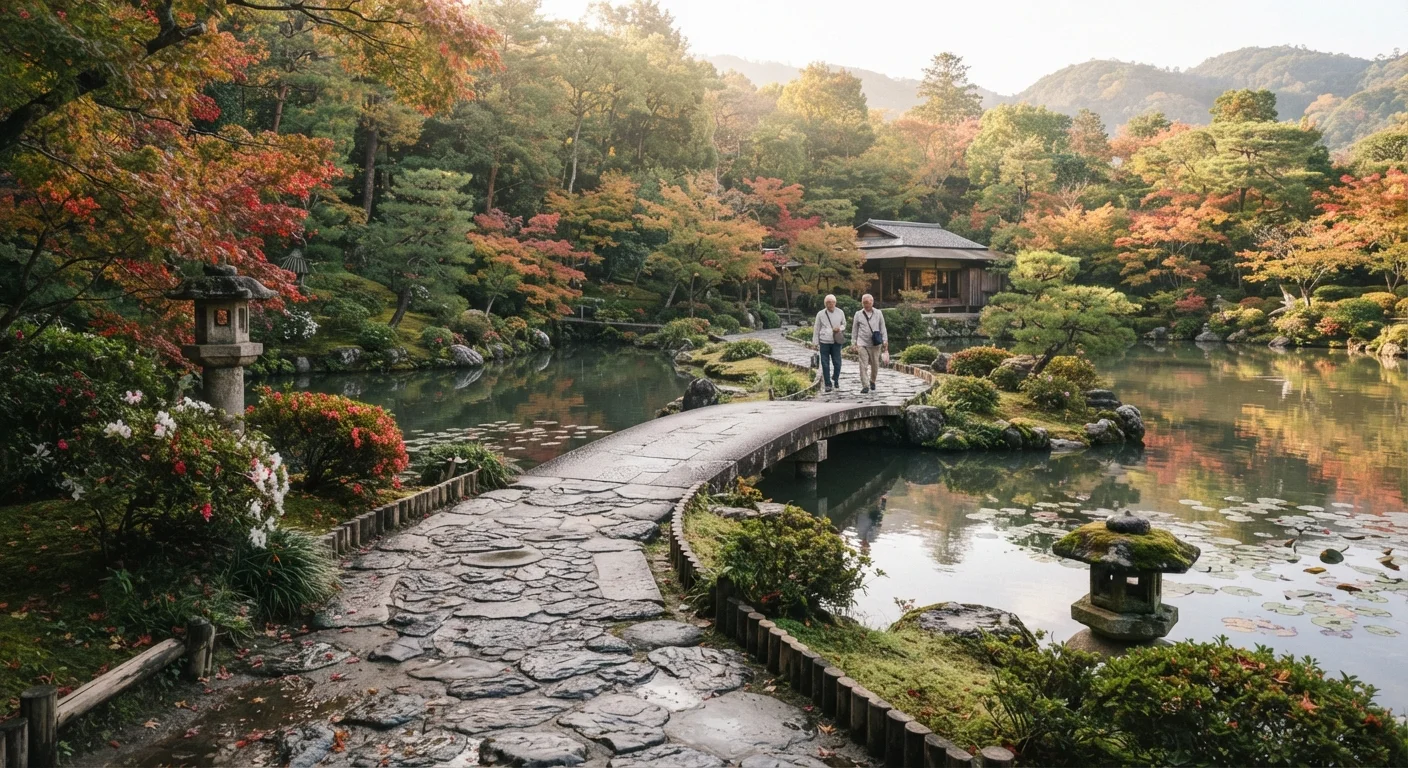
Japan's modernity coexists with ancient architecture, and that contrast creates accessibility challenges that seniors should assess honestly. Many of the country's most celebrated temples and shrines feature cobblestone paths, uneven stone steps, and steep hillside approaches. Fushimi Inari in Kyoto, for example, involves a significant uphill climb that is not suitable for those with limited mobility or joint pain — though the lower gate area is still worth visiting.
Cities themselves vary considerably by terrain. Nagasaki is famously hilly. Osaka and Hiroshima are largely flat. When evaluating any destination, reviewing the safety and accessibility factors seniors should assess before booking can help structure your planning.
Assess Your Mobility Needs Honestly Before Booking
Japan's most iconic sites — historic temples, mountain towns, traditional inns — were not built with modern accessibility standards in mind. Steps, gravel paths, and tight interiors are common. Travelers who use a wheelchair, rollator, or have significant balance concerns should research specific site accessibility before committing to an itinerary. Many wonderful experiences remain accessible; the key is targeted planning rather than assuming all sites will accommodate all mobility levels.
Mobility aids, including folding canes and lightweight wheelchairs, can be brought from home or sometimes rented through hotels. Ryokan (traditional inns) often have floor-level sleeping arrangements that may not suit those with knee or hip conditions — confirm room types when booking.
Healthcare, Safety, and Staying Prepared
Japan has a strong, modern healthcare system. Major cities have hospitals with English-speaking staff or interpretation services, and urban pharmacies are well-stocked. That said, your US health insurance is unlikely to cover treatment abroad, and navigating reimbursement without appropriate travel insurance is a real financial risk. Seniors should review how travel insurance works for seniors, including coverage for pre-existing conditions well before departure.
For a broader look at how Japan's medical system handles foreign visitors, our international healthcare access reference guide covers what to expect and how to prepare documentation. Japan's crime rate is extremely low by international standards — petty theft and violent crime affecting tourists are rare, though standard precautions always apply. General travel health strategies for seniors are also worth reviewing before any long-haul international trip.
Bring Sufficient Medication Supplies
Japan has strict import regulations on certain medications, including some common US prescriptions for ADHD, chronic pain, and anxiety. Some drugs legal in the US are controlled or prohibited in Japan. Contact the Japanese Embassy or consulate well in advance of your trip to verify whether your medications require advance permission. Carry a physician's letter and original pharmacy packaging for all prescription drugs.
Practical Planning Tips Before You Depart
The long-haul flight from the US to Japan — typically 12 to 14 hours — is a significant physical consideration. Selecting an aisle seat, moving regularly, staying hydrated, and discussing any circulation concerns with your physician beforehand all reduce risk. Our complete senior flight planning guide addresses these logistics in detail.
A few additional pre-departure essentials: bring a printed copy of all prescriptions using generic drug names, as many US brand names are not recognized at Japanese pharmacies. Download an offline translation app (several free options exist) for navigating menus and signs in less-touristed areas. Carry a pocket Wi-Fi device or international SIM — these can be rented at major Japanese airports — to ensure reliable navigation access throughout your trip.
Cash Still Matters in Japan
Despite Japan's technological sophistication, many smaller restaurants, rural ryokans, and local shops remain cash-only. ATMs at 7-Eleven convenience stores and Japan Post offices reliably accept US-issued cards. Withdraw a reasonable amount of yen early in your trip to avoid being caught without local currency when you need it most.
Japan rewards unhurried travel. Building rest days into your itinerary, limiting yourself to one or two major sites per day, and choosing centrally located accommodation to minimize transit all contribute to a more comfortable and memorable experience.
This article is for general informational purposes only. Medical, insurance, and safety decisions should be made in consultation with qualified professionals and verified against official sources before travel.