

Key Takeaways
- The snowbird migration generally runs from October through April, with peak arrivals in November and December.
- Popular Sun Belt destinations include southern Arizona, the Texas Gulf Coast, Florida, and the lower Rio Grande Valley.
- Securing a site at a preferred park often requires planning six to twelve months in advance.
- Many snowbird RV parks offer amenity-rich, community-focused environments that suit senior travelers well.
- Healthcare access, mail forwarding, and domicile considerations are practical logistics every snowbird should address.
- Snowbirding can be a part-time arrangement — spending a portion of winter away does not require full-season commitment.
Snowbird RV Living
Snowbird RV living describes the seasonal pattern of heading south in an RV each fall or winter to escape cold northern climates, then returning home — or moving on — when warmer weather arrives in spring. It is a structured lifestyle choice, not simply a vacation, and often involves reserving the same park or region year after year. Many seniors treat it as a predictable rhythm that combines travel freedom with the comfort of familiar warm-weather communities.
Snowbirding differs from full-time RV living in that participants typically maintain a northern home base and relocate seasonally rather than continuously traveling year-round.
What the Snowbird Migration Actually Looks Like
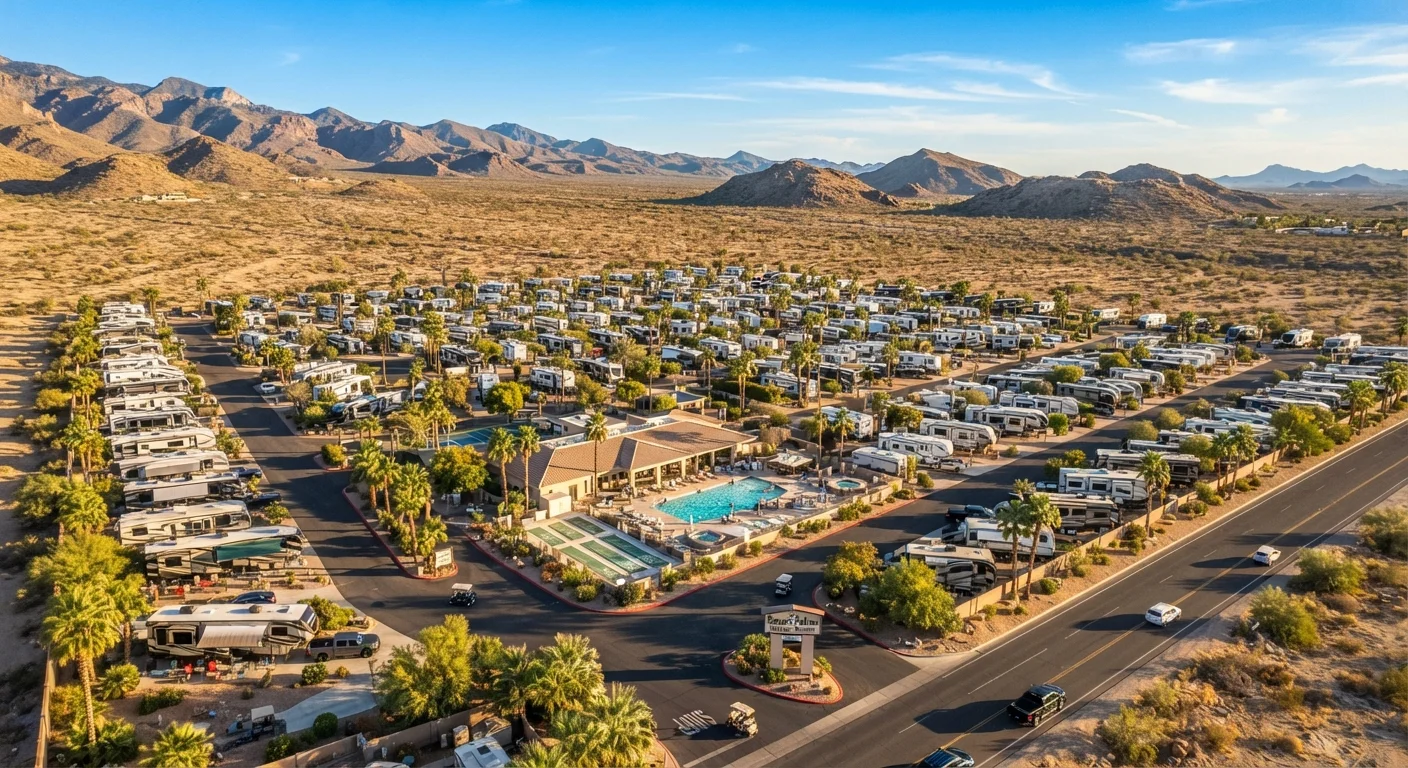
Each autumn, hundreds of thousands of RV owners pack up and point their rigs toward the Sun Belt — a broad arc of warmer states stretching from Southern California through Arizona, New Mexico, Texas, and across to Florida. This seasonal movement is orderly and largely predictable: most snowbirds leave their northern homes between October and early December, settle into a park for the bulk of winter, and return north by April.
The migration is less a chaotic scramble than an established annual routine. Many snowbirds return to the same park — sometimes the same numbered site — year after year, building friendships and a genuine sense of community. Understanding this rhythm helps new participants plan with confidence rather than improvising on the road.
For a broader look at what seasonal RV life involves day to day, the senior RV living introduction covers the practical realities of life on the road after 60.
1M+
Estimated seasonal snowbird RVers annually
Industry observers and RV advocacy groups estimate over one million RV owners participate in some form of seasonal southern migration each winter, though exact figures vary by source.
3–5 months
Typical snowbird stay duration
Most snowbird RVers spend between three and five months at their winter destination, generally spanning November through March or April.
6–12 months
Advance reservation lead time for popular parks
Site managers at high-demand Sun Belt RV resorts commonly advise reserving six months to a year ahead for prime winter slots.
The Major Snowbird Regions and What They Offer
Four distinct regions draw the majority of winter RV migrants, each with its own character:
- Southern Arizona — Areas around Tucson, Yuma, and the Sonoran Desert corridor attract seniors with dry desert heat, extensive hiking, and large age-targeted RV resort communities. The terrain is generally flat, which matters for mobility.
- Texas Gulf Coast and Rio Grande Valley — The Lower Rio Grande Valley in particular has a well-established snowbird culture, with affordable long-term rates, mild winters, and proximity to Mexican border towns for day trips.
- Florida — Florida's Gulf Coast draws snowbirds seeking humid warmth, beaches, and flat campground terrain. Sites fill quickly. Our article on the Florida RV experience covers what seniors should know before arriving.
- The American South — States like Georgia, Alabama, and Mississippi offer gentler winters at lower elevation, often with less competition for sites. See RV travel across the American South for a region-by-region breakdown.
Book Early for the Best Sun Belt Sites
If you have a specific park or region in mind, contact campgrounds directly in early spring for the following winter season. Many of the most senior-friendly resorts in Arizona, Texas, and Florida maintain waitlists once their regular snowbird slots fill. Flexibility on arrival date by even one or two weeks can sometimes open otherwise unavailable sites.
The Logistics Behind a Successful Snowbird Season
Snowbirding requires more upfront planning than a short road trip. The most important logistical tasks include:
- Reserving your site early. Popular winter parks in Arizona and Florida often open reservations for the following season as early as March or April. Waiting until fall frequently means settling for a less-preferred location.
- Mail and healthcare continuity. Setting up mail forwarding or a mail scanning service before departure is essential. Equally important is identifying healthcare providers near your winter destination — many snowbirds confirm that their insurance is accepted in the destination state before leaving home.
- Understanding residency rules. Spending more than a certain number of days in a state can trigger residency implications for taxes or vehicle registration. Rules vary by state, so it is worth consulting a professional familiar with the RV lifestyle.
- Route planning. The drive south is often a journey in itself. For seniors approaching the Southwest for the first time, planning a first RV trip through the Southwest desert offers practical route and timing guidance.
For comprehensive trip-planning frameworks applicable to any snowbird season, the RV trip planning hub is a useful starting resource.
Health Insurance Coverage Across State Lines
Medicare coverage generally travels with you across the U.S., but Medicare Advantage plans can have network restrictions that limit access outside your home region. Before heading south for the winter, contact your plan provider to confirm what services are covered at your destination. This is general informational guidance — consult your insurer or a licensed benefits counselor for advice specific to your plan.
Snowbirding vs. Full-Time RV Living: Knowing the Difference
Snowbird RV living is often confused with full-time RV living, but the two differ in important ways. Snowbirds typically maintain a permanent northern home and relocate for three to five months. Full-timers live in their RV year-round, with no fixed residential base.
Snowbirding generally involves lower complexity — you are not managing a full domicile change, and you return to familiar routines each spring. It is also a lower-commitment way to test whether extended RV travel suits your lifestyle before making larger changes. The comparison article on full-time vs. seasonal RV travel for seniors explores how each approach fits different health needs, budgets, and lifestyle goals.
For those still exploring the overall landscape of senior RV life, the Senior RV Living hub offers a broad collection of comfort, safety, and accessibility guidance tailored to older adults.