

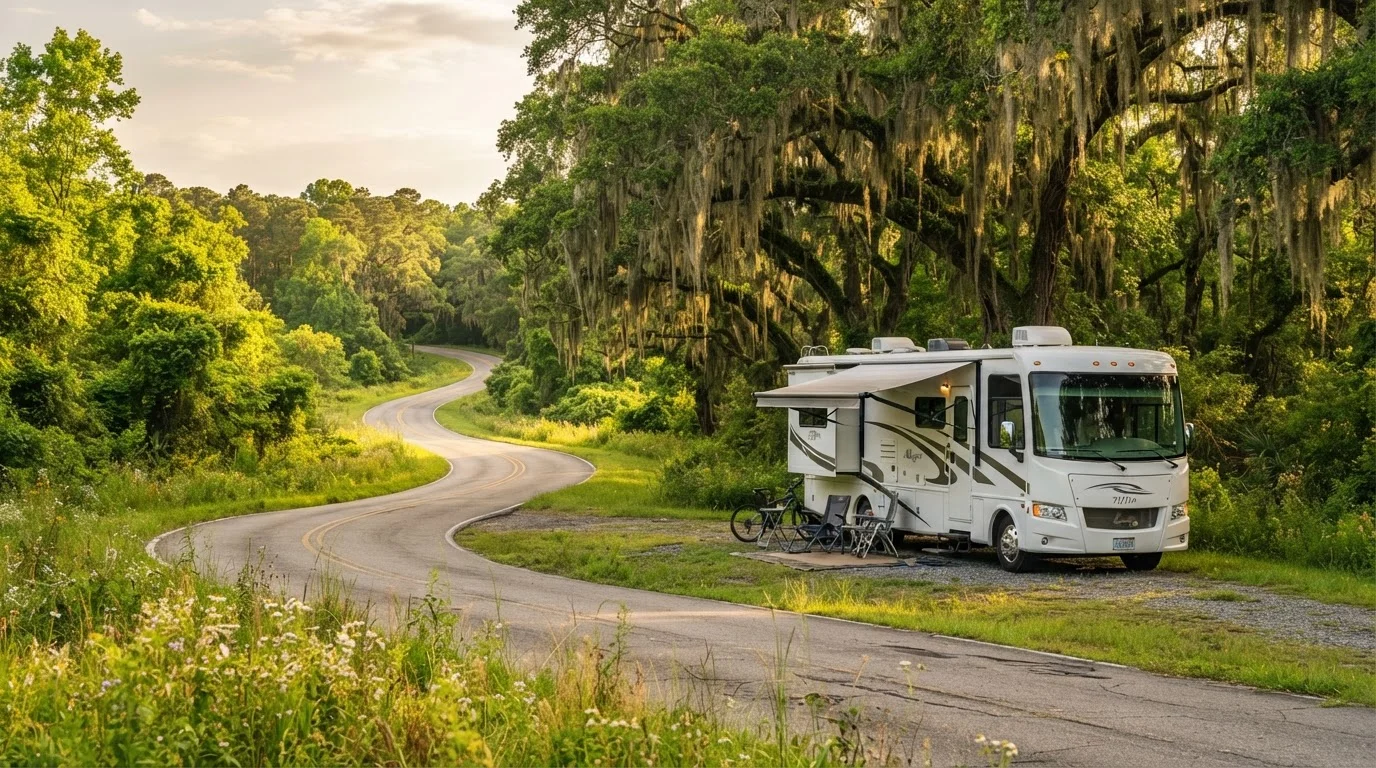
Key Takeaways
- The American South spans several distinct RV regions, each offering different terrain, climate, and amenities.
- Gulf Coast campgrounds tend to be flat, warm, and densely equipped — popular with winter snowbirds.
- The Atlantic Coastal Plain includes historic cities and state parks with wide pull-through sites.
- Appalachian foothills offer cooler temperatures and scenic drives, though some roads require extra care.
- Timing your visit around spring or fall generally means milder weather and less campground congestion.
- Healthcare access varies by region — researching nearby facilities before finalizing a route is wise.
Start here
Why the South Works Well for Senior RV Travelers
Explore by region
The Gulf Coast: Flat, Warm, and Well-Equipped
Go deeper
The Appalachian Foothills: Cooler Air and Slower Roads
Plan your trip
Planning Your Southern RV Trip: Practical Starting Points
Why the South Works Well for Senior RV Travelers
The American South is one of the most accommodating regions in the country for senior RV travelers. Its relatively flat terrain in many areas, mild winters, and abundance of full-hookup campgrounds make it a practical choice — not just a scenic one. For those new to RV travel, the South's density of well-maintained state parks, national forests, and private campgrounds means that planning a route with reliable overnight stops is generally straightforward.
The region also rewards slower travel. Small towns, historical sites, and coastal drives are well-suited to the kind of unhurried pace that makes RV travel meaningful in retirement. If you're just getting started, the RV road trips for seniors guide covers foundational planning before you set out.
Full hookup
A campsite that provides connections for electricity, water, and sewer — the most convenient setup for extended RV stays.
Pull-through site
A campsite you can enter from one end and exit from the other without reversing your RV — particularly useful for longer rigs or drivers who find backing up challenging.
Snowbird
A traveler — often a retiree — who relocates to a warmer southern region during winter months and returns north in spring.
Class A motorhome
The largest and most bus-like style of motorhome, offering maximum living space but requiring more care on narrow or mountainous roads.
RV-specific GPS
A navigation device or app programmed with your RV's height, weight, and length to route you around bridges, tunnels, and roads unsuitable for large vehicles.
The Gulf Coast: Flat, Warm, and Well-Equipped
Stretching from the Florida Panhandle through Alabama, Mississippi, and into Louisiana, the Gulf Coast is arguably the most RV-developed corridor in the South. Campgrounds here tend to be large, level, and loaded with amenities — full hookups, laundry facilities, and on-site activities are standard at many parks. Winters are mild, which is why the Gulf Coast draws a significant snowbird population each year. Snowbird RV living is a well-established pattern here, with many seniors booking extended stays from December through March.
Coastal drives between towns like Pensacola, Biloxi, and Gulfport are low-stress and scenic. Be aware that hurricane season (June–November) can bring severe weather, and campground availability in peak winter months fills quickly — reserving well in advance is essential.
Book Gulf Coast Sites Early
Peak Gulf Coast campground season runs from late November through March, when snowbirds arrive in large numbers. Many popular parks require reservations three to six months in advance for winter stays. If you're planning a first visit, consider arriving in October or April when sites are more available and the weather is still pleasant.
The Atlantic Coastal Plain: History, Charm, and Mild Seasons
From the Carolinas down through Georgia and into northern Florida, the Atlantic Coastal Plain offers a blend of historic cities, barrier islands, and inland waterways. This region is especially appealing for seniors who enjoy slow exploration of cultural destinations alongside outdoor stops. Cities like Savannah and Charleston are well-regarded for their walkability and accessible historic districts — a comparison of these cities for senior visitors is explored in detail in The American South for Seniors.
Campgrounds along this corridor vary widely. State parks along the Georgia and Carolina coasts often have well-maintained pull-through sites and paved pads. Cell service is reliable near coastal towns, which matters for navigation and staying connected with family.
The Appalachian Foothills: Cooler Air and Slower Roads
The Appalachian foothills — spanning parts of Virginia, Tennessee, North Carolina, and Georgia — offer a noticeably different RV experience. Elevations bring cooler summer temperatures, making this an appealing escape from Gulf Coast heat. Fall foliage draws many travelers between October and early November. The scenic character of routes through this area is part of what makes America's most scenic RV routes include portions of the Southern highlands.
The trade-off is road complexity. Narrow two-lane roads, steep grades, and low-clearance bridges exist in parts of the region. Larger Class A motorhomes and fifth wheels require more careful route planning here. Always use RV-specific navigation and research any tunnel or bridge restrictions for your rig's dimensions before heading into the mountains.
Research Mountain Roads Before You Go
Some roads through the Appalachian foothills have posted weight limits, low-clearance tunnels, or grades exceeding 6% — all of which can be hazardous for larger RVs. Standard car GPS apps do not account for RV dimensions. Use an RV-specific navigation tool and cross-check road conditions through state transportation department websites before committing to a mountain route.
The Interior South: River Towns, State Parks, and Open Miles
Alabama, Mississippi, Arkansas, and Tennessee's interior offer a quieter, less-traveled RV landscape. River towns along the Tennessee, Cumberland, and Mississippi rivers provide interesting overnight anchors, and state parks throughout this region tend to be uncrowded compared to coastal destinations. This stretch is well-suited to seniors who prefer open roads and less campground congestion.
Healthcare infrastructure is thinner in rural stretches, so it's important to identify the nearest hospitals and urgent care facilities as part of route planning. For comprehensive guidance on managing health needs and day-to-day logistics while traveling, the end-to-end senior RV living resource covers these considerations in depth.
Planning Your Southern RV Trip: Practical Starting Points
A successful Southern RV trip begins with matching the region to your priorities. If warmth, amenities, and social campground life matter most, start with the Gulf Coast. If history and coastal culture are the draw, look at the Atlantic Coastal Plain. If cooler air and mountain scenery appeal, plan your timing for late spring or early fall in the Appalachian foothills.
Whatever the region, give yourself more time than you think you need. Two-week itineraries that rush between destinations tend to be exhausting; a slower rhythm — two or three nights per stop — allows genuine rest and exploration. The Senior RV Living hub has ongoing guidance on making the RV experience comfortable and accessible as you refine your approach over multiple trips.
This article provides general travel orientation and is not a substitute for checking current campground availability, road conditions, or local advisories before you travel. Conditions and amenities vary by location and season.