

| Full Hookup Definition | Water, electric (30 or 50 amp), and sewer at the individual campsite |
| Reservation Platform | Recreation.gov (most national park campgrounds) |
| Booking Window | Up to 6 months in advance for most national parks |
| Parks with Full Hookups | Relatively rare; fewer than 20% of NPS campgrounds offer them (General NPS campground data) |
| Minimum Planning Lead Time | 3–6 months recommended for peak season sites |
| Key Accessibility Check | Paved pad, slide-out clearance, ADA restroom proximity |
Why Full Hookups Matter in National Park Campgrounds
Most national park campgrounds offer rustic, back-to-basics camping — pit toilets, no electric connections, and gravel pull-throughs that challenge even seasoned RV drivers. For senior travelers managing medical equipment, mobility considerations, or simply the desire for reliable overnight comfort, those limitations matter. A full-hookup site changes the equation entirely.
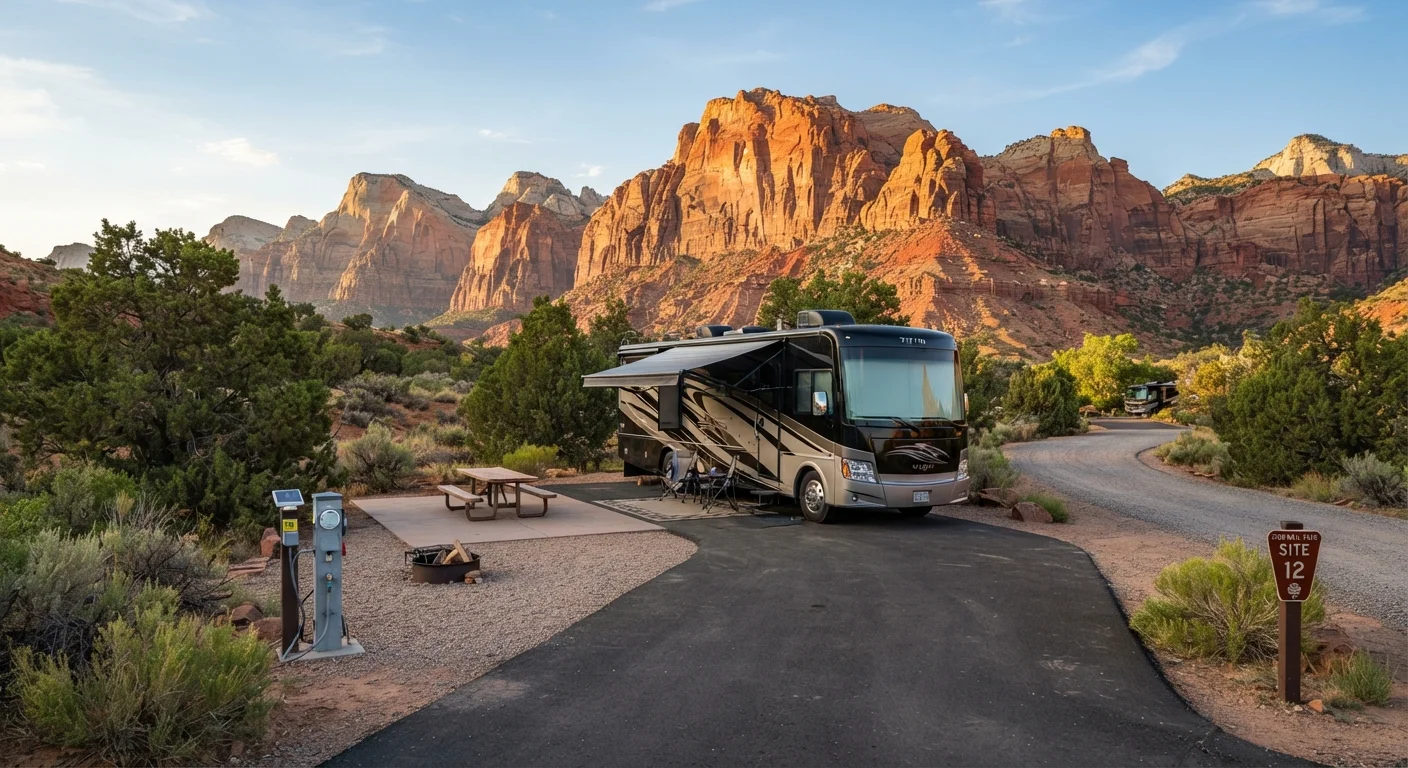
Full hookups explained in plain language — typically water, sewer, and electric (30 or 50 amp) at the site — eliminate the need to conserve tank space, run generators, or locate dump stations. That frees up mental energy for enjoying the park itself.
Finding these sites inside national park boundaries takes research. They are less common than in private RV parks, and reservation windows fill quickly. Understanding which parks offer them — and what conditions to expect — is worth knowing before you plan your route.
| Full Hookup Definition | Water, electric (30 or 50 amp), and sewer at the individual campsite |
| Reservation Platform | Recreation.gov (most national park campgrounds) |
| Booking Window | Up to 6 months in advance for most national parks |
| Parks with Full Hookups | Relatively rare; fewer than 20% of NPS campgrounds offer them (General NPS campground data) |
| Minimum Planning Lead Time | 3–6 months recommended for peak season sites |
| Key Accessibility Check | Paved pad, slide-out clearance, ADA restroom proximity |
National Parks Known to Offer Full or Near-Full Hookup Sites
The following parks have campgrounds with full or partial hookups available in at least some loops. Site conditions, road surfaces, and accessibility features vary by specific loop and season. Always verify current availability and site specs directly through the Recreation.gov reservation system or by calling the park's visitor center before booking.
- Zion National Park (Utah) — Watchman Campground: Offers electric hookup sites with water access. Paved sites accommodate larger rigs. Proximity to shuttle stops reduces the need to drive inside the canyon, which is a meaningful advantage for senior visitors.
- Shenandoah National Park (Virginia) — Loft Mountain & Mathews Arm: Select sites have electric hookups. Skyline Drive access is well-maintained, though its curves require attentive driving. Cooler mountain temperatures make it comfortable across a wide travel season.
- Acadia National Park (Maine) — Blackwoods & Schoodic Woods: Schoodic Woods in particular offers electric hookup sites with paved pads and accessible restrooms. Its location on the quieter Schoodic Peninsula also means lower congestion.
- Rocky Mountain National Park (Colorado) — Moraine Park Campground: Electric hookup sites are available in select loops. Altitude (roughly 8,000 feet) is worth factoring into pacing, particularly for anyone with heart or respiratory considerations. Consult a healthcare provider before visiting high-elevation destinations.
- Big Bend National Park (Texas) — Rio Grande Village: One of the few national park campgrounds offering full hookups (water, electric, sewer on some sites). Remote location requires planning for fuel and supplies well in advance.
For a broader look at what separates genuinely accessible campgrounds from those that simply claim to be, see our guide on accessibility features worth checking before booking.
Full Hookup
A campsite with water, sewer, and electric connections all available at the site itself. This eliminates the need to manage gray/black water tanks or seek out a dump station.
Amp Rating (30 vs. 50)
The electric capacity at a campsite pedestal. Larger RVs with multiple appliances typically need 50-amp service; smaller rigs often run on 30-amp. Running a 50-amp rig on 30-amp power requires an adapter and limits simultaneous appliance use.
Pull-Through Site
A campsite shaped so that an RV can drive in from one end and exit from the other without backing up. These are particularly practical for longer rigs and drivers who prefer to avoid maneuvering in reverse.
Recreation.gov
The official U.S. federal government online reservation system for national park campgrounds, day-use areas, and permits. Reservations open on a rolling schedule, often months in advance.
Dump Station
A shared facility where RVers empty holding tanks when sewer hookups are not available at the site. Parks with full hookups allow travelers to skip the dump station entirely.
ADA Accessible Site
A campsite designed to meet Americans with Disabilities Act standards, typically featuring a level paved pad, wider pathways, and proximity to accessible restroom facilities.
Planning Tips for Senior RV Travelers Targeting These Sites
Securing a full-hookup site inside a national park requires advance planning. Recreation.gov reservations open up to six months ahead for most parks, and popular sites fill within minutes of release. Set a calendar reminder and know your rig's length, slide-out clearance, and amp requirements before you search.
Road conditions matter as much as site amenities. Some national park roads have low-clearance tunnels, tight switchbacks, or steep grades that limit which RV sizes can safely enter. The park's official website publishes vehicle size restrictions — review these before finalizing your booking.
What makes a campground genuinely senior-friendly goes beyond hookups alone. Look for level pads, accessible bathhouses with grab bars, proximity to the campground host station, and cell signal or Wi-Fi for health monitoring devices.
If a national park's full-hookup sites are booked, nearby state park options are worth exploring. Our article on state parks that surprise full-time RVers outlines accessible alternatives that many seniors haven't yet considered. For deeper guidance on the full planning process, the RV Trip Planning hub covers essential pre-trip steps tailored to older adults.
This article provides general travel information. Site availability, road conditions, and accessibility features change seasonally. Always verify details directly with the national park before traveling. Seniors managing health conditions should consult a qualified healthcare provider when planning trips to high-altitude or remote destinations.