

Key Takeaways
- Full hookup means electricity, fresh water, and sewer are all available at your individual campsite.
- Partial hookup sites typically offer electricity and water but require you to use a shared dump station for sewer.
- Amp rating (30-amp vs. 50-amp) determines which RVs can connect directly — always verify before booking.
- Dry camping or boondocking means no hookups at all — you rely entirely on your RV's onboard resources.
- Knowing campsite terms in advance prevents booking surprises and helps seniors choose sites with the right amenities.
Full Hookup Campsite
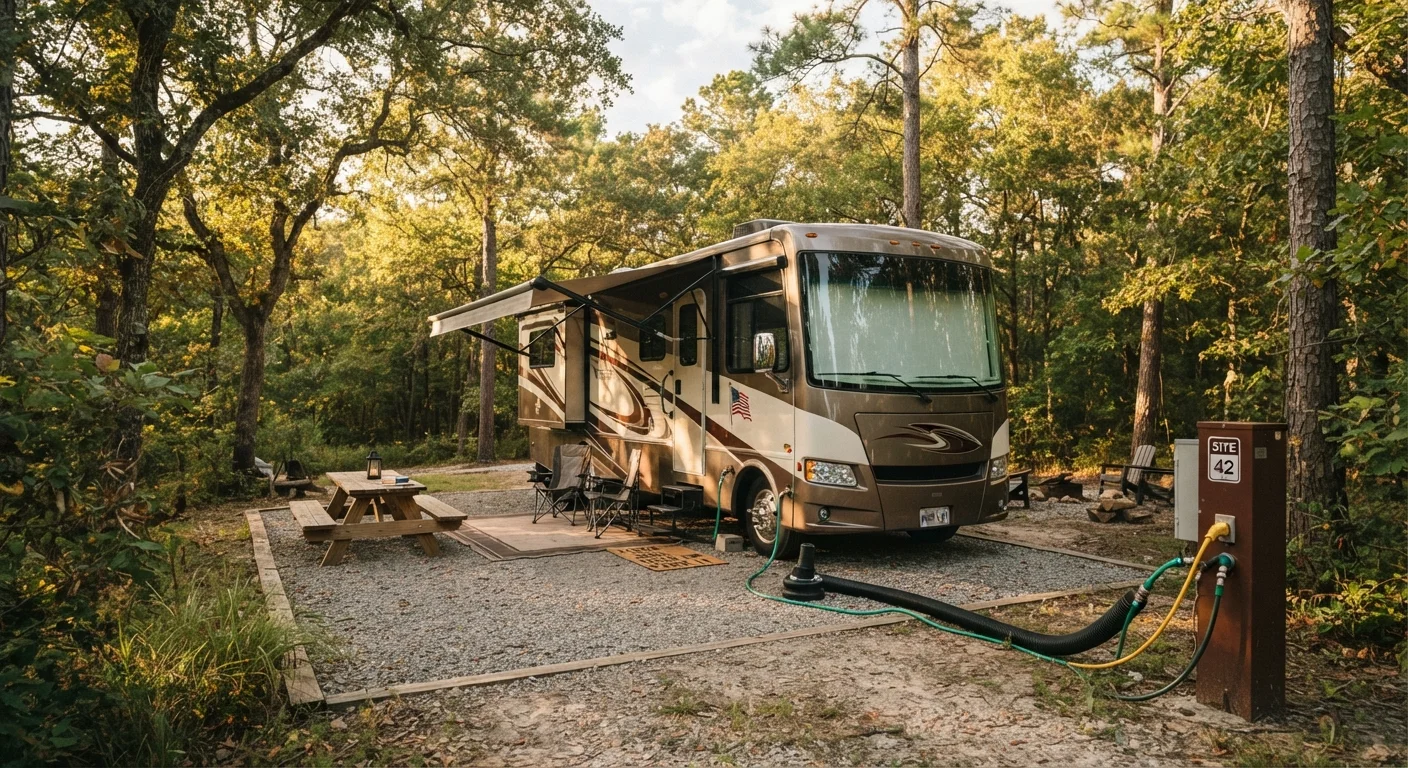
A full hookup campsite provides three separate connections for your RV: electricity, fresh water, and sewer. Together, these three services allow you to run appliances, have running water, and drain waste without ever needing to move your rig. It's the most self-sufficient type of campsite available at most commercial RV parks.
Full hookup sites are often rated at either 30-amp or 50-amp electrical service — an important distinction that affects which RVs can connect safely without an adapter.
The Big Three: Electricity, Water, and Sewer Explained
When a campsite listing says "full hookup," it means three separate utility connections are available right at your parking pad. Here's what each one provides:
- Electricity (shore power): A pedestal at your site delivers power so you can run your air conditioner, refrigerator, TV, and other appliances without draining your battery. Sites are rated at either 30 amps or 50 amps — check your RV owner's manual to confirm which your rig requires.
- Water: A standard outdoor spigot connects directly to your RV's fresh water inlet via a drinking-water-safe hose. This keeps your onboard tank continuously filled so taps and the shower work normally.
- Sewer: A drain opening at the site connects to your RV's waste outlet hose, allowing gray water (sinks and shower) and black water (toilet) to drain continuously. You won't need to visit a shared dump station.
Together, these three connections are what make full hookup sites the most comfortable option — especially for seniors who value convenience and want to avoid extra tasks like manually emptying tanks.
Medical Equipment and Electrical Needs
If you use a CPAP machine, oxygen concentrator, or other electrically powered medical device, a full hookup site with reliable shore power is particularly important. Some devices can run on battery for limited periods, but consistent shore power removes the uncertainty. Always consult with your healthcare provider about power requirements for any medical equipment you travel with.
Partial Hookup, Dry Camping, and Everything In Between
Not every site offers all three connections. Here's how the common categories break down:
- Partial hookup (electric and water only)
- These sites provide shore power and fresh water but no sewer connection. You'll need to periodically drive to the campground's shared dump station — a centralized facility for emptying waste tanks. Fine for short stays, but less convenient for a week-long trip.
- Electric only
- Power is available, but you must rely on your fresh water tank and visit the dump station. Common at state parks and some national park campgrounds.
- Dry camping / boondocking
- No utilities whatsoever. You depend entirely on your RV's battery bank, propane, and onboard tanks. This style suits experienced travelers who know exactly how long their resources last. It's generally not recommended for those new to RV travel or those who rely on consistent power for medical equipment.
- Primitive site
- Similar to dry camping but often in a more remote or undeveloped location — sometimes not even a defined parking pad. These are best left for seasoned off-grid campers.
For seniors prioritizing comfort and ease, full hookup sites at established RV parks typically offer the most predictable, stress-free experience. Our guide on what campground features matter most for seniors covers additional factors worth considering beyond hookup type.
Always Confirm Hookup Details Before Booking
Campground listings vary in how precisely they describe site types. Before finalizing a reservation, call the park directly and confirm the amp rating, whether sewer is included, and the site dimensions — especially if you have slide-outs. A quick phone call can prevent day-of surprises. Our guide on what makes an RV park truly senior-friendly can also help you know what questions to ask.
Amp Ratings, Site Types, and a Few More Terms Worth Knowing
Beyond hookup categories, a few other terms appear frequently in campsite listings and deserve a quick explanation:
30A vs. 50A
Two standard RV electrical service ratings
Most campgrounds offer one or both; 50-amp delivers significantly more power for large RVs with multiple appliances.
3 connections
Components in a true full hookup site
Electricity, fresh water, and sewer — all three must be present for a site to qualify as full hookup.
Electrical Amperage
30-amp service is standard for smaller RVs and many older coaches. It runs basic appliances but may struggle to power two air conditioning units simultaneously. 50-amp service delivers roughly four times the power and is needed by most large Class A motorhomes and fifth wheels with multiple AC units. Adapters exist to connect a 30-amp RV to a 50-amp pedestal (and vice versa), but they do not change the actual power available — they simply allow the physical connection.
Pull-Through vs. Back-In Sites
A pull-through site lets you enter from one end and exit from the other without reversing — ideal if backing a large vehicle feels difficult. A back-in site requires reversing into position. If you're traveling solo or find maneuvering stressful, always filter for pull-through availability when booking.
Slide-Out Clearance
Many RVs have sections that extend outward to create more interior space — called slide-outs. When booking, confirm the site is wide enough to open your slides fully without encroaching on neighbors or landscaping. Reputable parks list site widths in their descriptions.
Amp Pedestal / Power Pedestal
The pedestal is the metal post at your site that houses the electrical outlets, circuit breakers, and sometimes a water spigot. Before plugging in, visually check for any obvious damage and use a surge protector — a simple precaution that protects your RV's electronics.
For a broader picture of what comfortable RV living looks like day to day, see our introduction to senior RV life after 60. And if you're still early in your planning, the Senior RVer's Complete Planning Guide walks through every stage from choosing a rig to budgeting for your first trip.